
If you ask a Chinese person what art form best represents the beauty of China’s traditional stage, many would answer without hesitation — Peking Opera.
Peking Opera, also known as Jingju in Chinese, is the most influential and widely performed form of traditional Chinese theatre. It is often referred to as the “National Opera” of China. Born in Beijing, it has a history spanning more than two hundred years. To foreign visitors, Peking Opera may at first seem mysterious: performers wear vividly painted faces, sing in soaring tones, and move with gestures that are both dramatic and graceful. Yet once you begin to understand it, you will discover a world of extraordinary richness and wonder.
How Peking Opera Came into Being
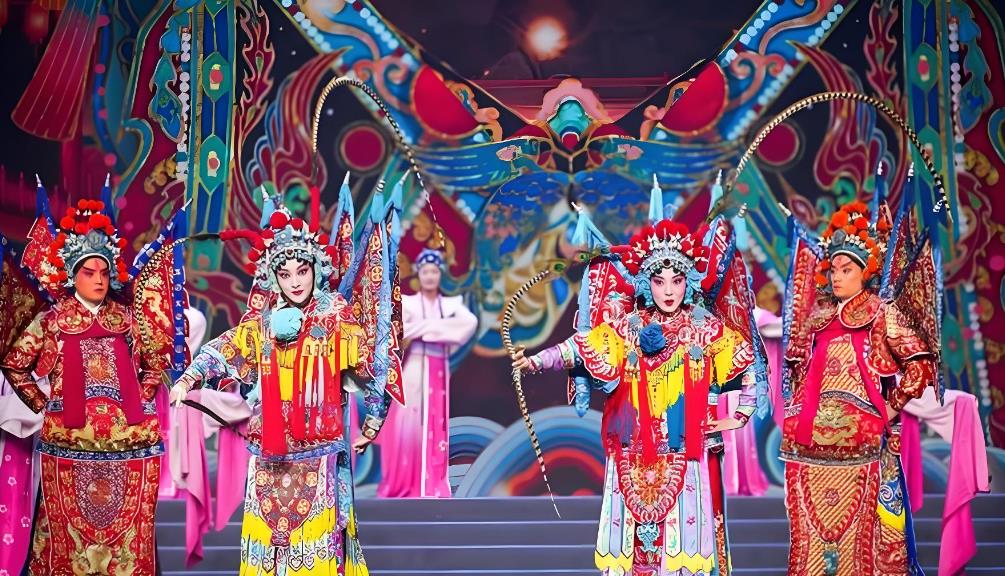
The story of Peking Opera begins in the Qing Dynasty, during the reign of Emperor Qianlong. In 1790, to celebrate the emperor’s eightieth birthday, four renowned theatre troupes from Anhui Province travelled to Beijing to perform. These troupes brought with them the musical styles and performance traditions of Anhui local opera, Hubei Han opera, Kunqu theatre, and elements of the Beijing dialect. Over the following decades, these diverse influences blended together, gradually giving rise to an entirely new theatrical form — Peking Opera.
In a sense, Peking Opera is like a great tree: its roots draw nourishment from many regional traditions, while its blossoms unfold in the sunlight of Beijing, creating something truly unique.
The Four Core Performance Skills
Peking Opera follows a highly disciplined system of performance, traditionally described as the “Four Skills and Five Methods.” The four essential skills are singing, recitation, acting, and martial arts.
Singing(唱) — Telling Stories Through Song
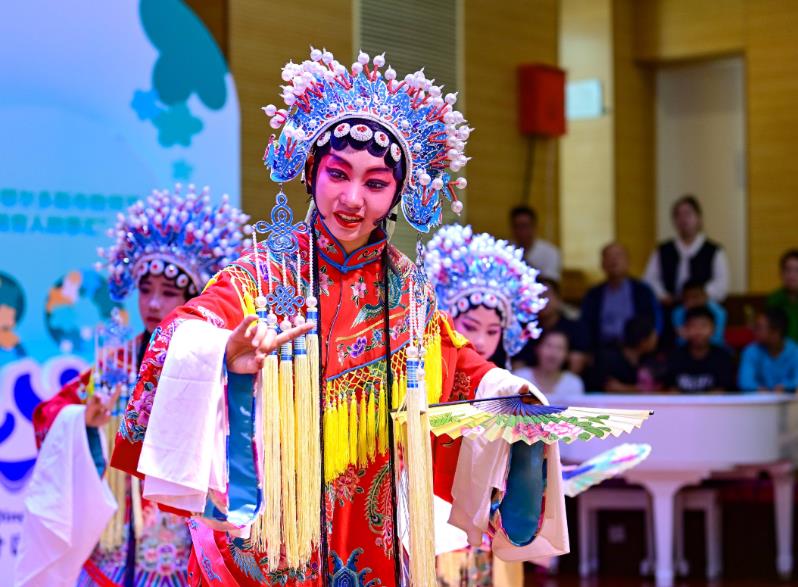
The vocal music of Peking Opera is built upon two main melodic systems: Xipi and Erhuang. Xipi features bright, lively melodies and is often used to convey joy or excitement. Erhuang, by contrast, has a deeper and more measured quality, making it well suited to moments of sorrow or reflection. The singers’ voices are the result of years of rigorous training, producing tones that are clear, resonant, and remarkably powerful.
Speaking(念) — Speech with Musical Rhythm
The spoken parts in Peking Opera are far from ordinary conversation. They are delivered in a rhythmic, almost musical style known as Nianbai. There are two main types: Yunbai, which follows classical Chinese tones and sounds dignified and elegant, and Jingbai, which is closer to the Beijing dialect and feels warm and natural.
Acting (做)— The Art of Silent Expression
“Acting” in Peking Opera refers to the performer’s body movements, facial expressions, and gestures. On stage, a single glance, a subtle turn of the hand, or a graceful step can carry deep meaning. For example, gently brushing a sleeve may suggest shyness, while clasping both hands together expresses respect. These movements appear simple, but each one has been carefully shaped and passed down through generations.
Fighting(打)— The Thrill of Stage Combat
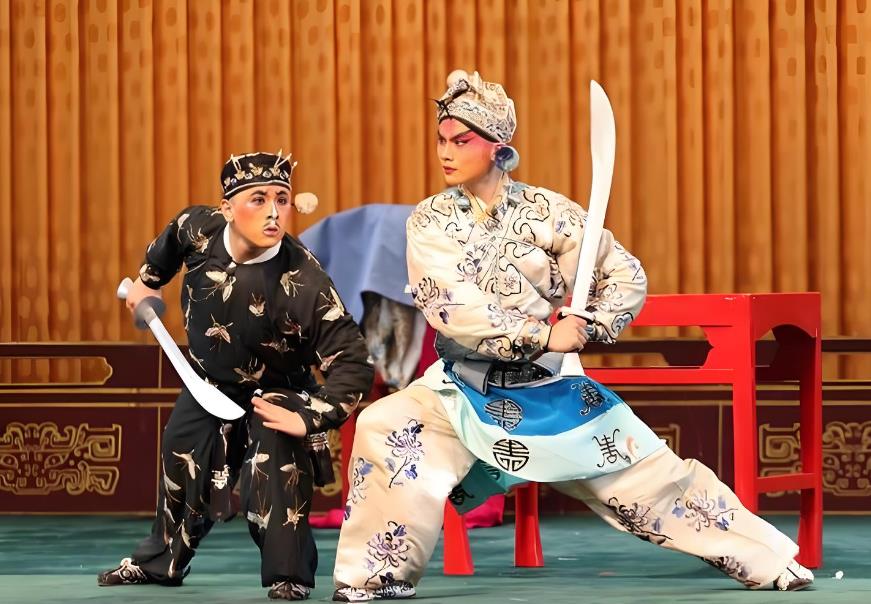
The martial scenes in Peking Opera are among its most exciting features. Performers use weapons such as swords, spears, staffs, and halberds, and every movement is stylised to combine strength with beauty. High leaps, rapid turns, and acrobatic flips often leave audiences breathless with admiration.
The Four Main Role Types
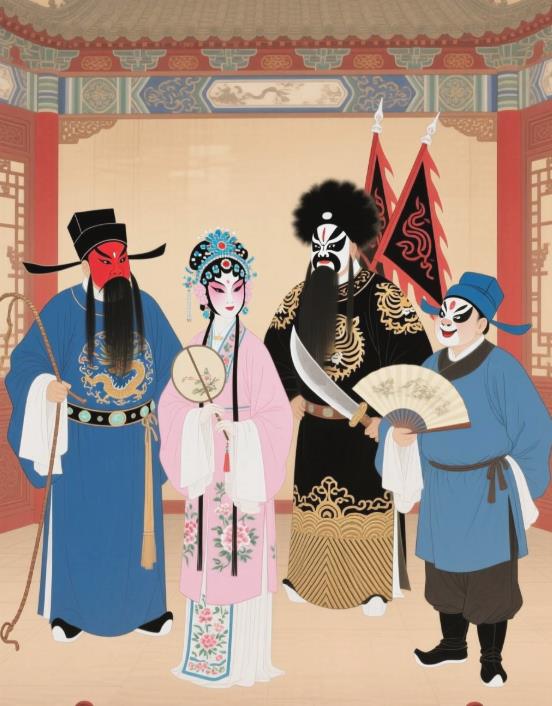
Peking Opera classifies its characters into four major categories, known as the “Four Role Types”: Sheng, Dan, Jing, and Chou.
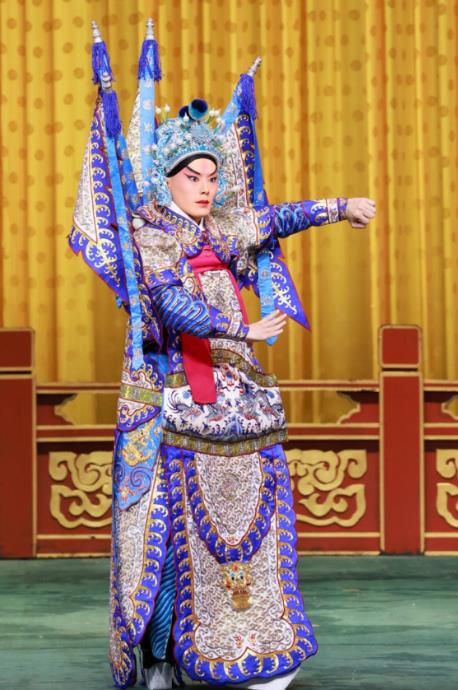
Sheng — Male Roles
Sheng refers to the male characters in Peking Opera. Depending on age, status, and personality, this category includes Laosheng — older, dignified men who often wear beards; Xiaosheng — young, handsome gentlemen; and Wusheng — martial heroes skilled in combat. Each type has its own distinctive style of movement and expression.
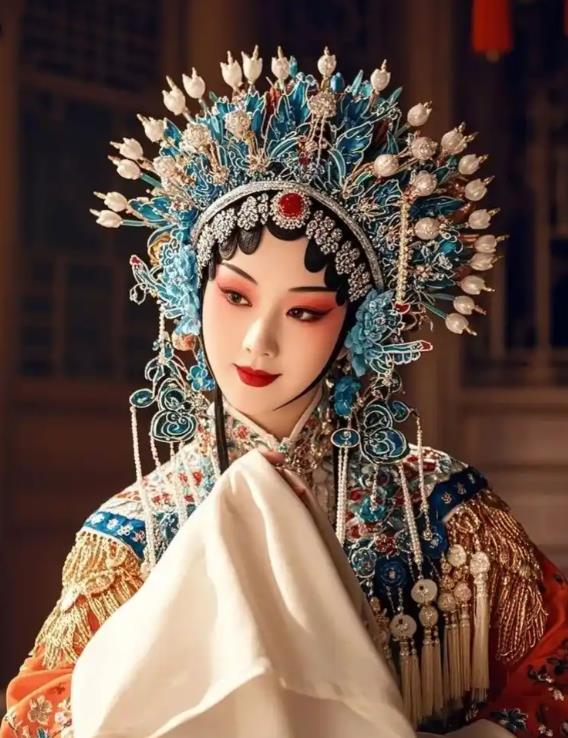
Dan — Female Roles
Dan is the general term for female characters. Among the most celebrated are the Qingyi, who portrays virtuous and graceful adult women, and the Huadan, who represents lively and charming young women. There are also Wudan, female warriors, and Laodan, elderly women. The performance of Dan roles demands extraordinary delicacy — even the faintest smile or a single tear must feel perfectly natural.
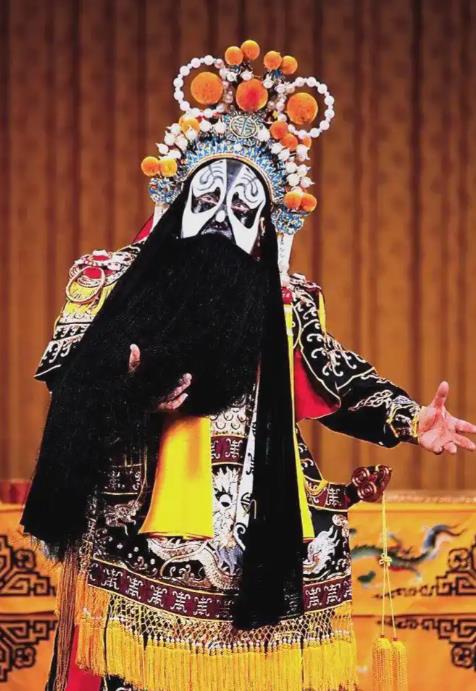
Jing — The Painted-Face Roles
The Jing roles are instantly recognisable because of the bold, colourful patterns painted on the performers’ faces, which is why they are often called “painted-face” characters. These facial designs are not merely decorative; they carry specific meanings. Different colours and patterns reveal different personality traits, allowing the audience to understand a character at a glance.
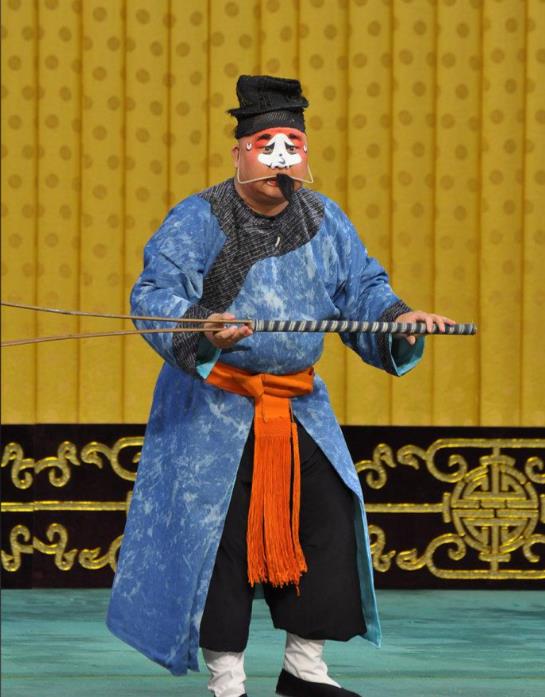
Chou — The Comic Roles
The Chou characters bring humour and liveliness to the stage. They usually have a small white patch painted on the face and are known for their witty words and playful movements. Though they often appear lighthearted, Chou roles play an important part in the drama, helping to ease tension and move the story forward.
Facial Makeup: Character Written on the Face
The facial makeup of Peking Opera is perhaps its most iconic visual feature. To those seeing it for the first time, the brightly coloured faces may resemble abstract paintings, but each design actually functions as a kind of visual biography.
Red represents loyalty and courage, and is closely associated with the famous general Guan Yu from the Three Kingdoms period. Black symbolises integrity and fearlessness, often used for characters such as Judge Bao Zheng. Blue and green are commonly given to heroic outlaws or forest warriors, while gold and silver are reserved for gods, immortals, or supernatural beings.
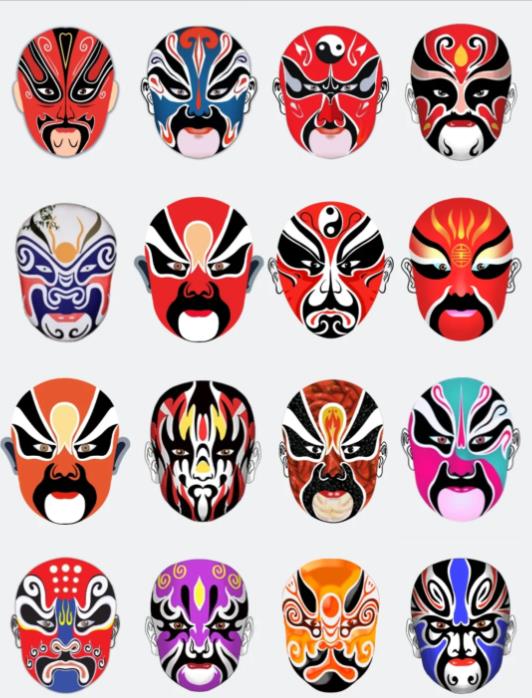
Through these painted faces, the audience can immediately sense a character’s nature and destiny — one of the most fascinating aspects of Peking Opera.
Costumes and Stage Props
The costumes of Peking Opera are equally breathtaking. Every garment is carefully designed, with rich colours, delicate embroidery, and symbolic patterns. The clothing not only looks magnificent but also helps the audience identify a character’s social status and personality.
An emperor wears a yellow dragon robe, a general appears in armour, and a scholar dresses in a simple, elegant robe. The embroidery also carries meaning: dragons and phoenixes represent imperial nobility, peonies suggest wealth and prosperity, and plum blossoms symbolise purity and resilience.
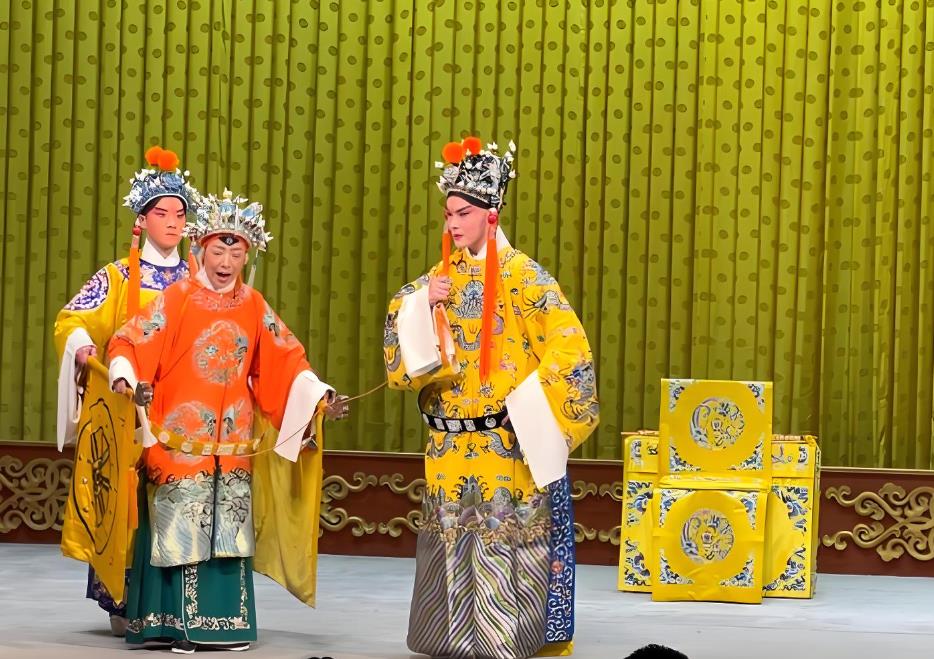
The stage props in Peking Opera are equally distinctive. The stage is usually free of elaborate scenery. Instead, performers use simple objects and stylised movements to suggest a setting. For instance, holding a riding whip while performing a particular sequence of steps tells the audience that the character is riding a horse. Holding a paddle and swaying gently suggests travelling by boat. This imaginative way of representing reality is one of the most beautiful features of Chinese theatre.
Classic Stories Worth Knowing
If you would like to begin exploring Peking Opera, starting with some of its most famous works is a wonderful choice.
- Farewell My Concubine tells the tragic and deeply moving story of the heroic leader Xiang Yu and his beloved consort Yu Ji.
Farewell My Concubine, the first Chinese-language film to win the prestigious Palme d’Or at the Cannes Film Festival, also shares its name with this classic Peking Opera piece. The film’s two lead actors became widely renowned for their captivating performances of this very stage masterpiece.
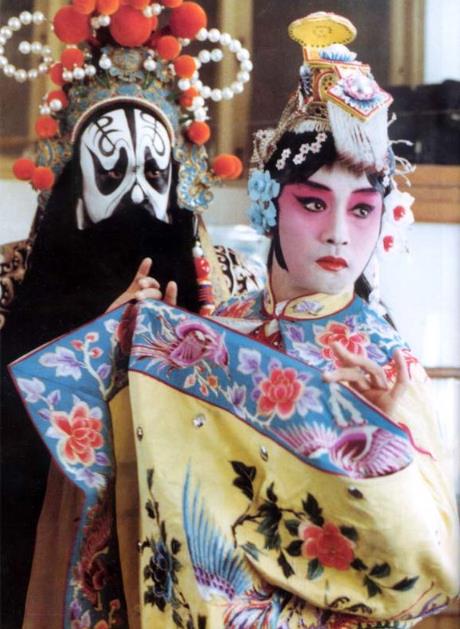
- The Drunken Concubine portrays the emotional journey of Consort Yang as she waits for the emperor, moving from hopeful anticipation to quiet disappointment. It is considered one of the greatest masterpieces of Dan role performance.
- The Empty City Stratagem is drawn from the stories of the Three Kingdoms. It shows the brilliant strategist Zhuge Liang using wisdom and courage to frighten away an enemy army.
- The Crossroads is a thrilling martial piece in which two heroes meet by chance in the dark, leading to a dazzling display of stage combat.
Why Peking Opera Deserves a Place in the World’s Heart
Peking Opera is far more than a form of entertainment. It brings together literature, music, dance, visual art, martial arts, and storytelling, making it one of the most complete expressions of traditional Chinese culture.
In 2010, Peking Opera was inscribed on the UNESCO Representative List of the Intangible Cultural Heritage of Humanity — a recognition of its outstanding artistic value shared by the whole world.
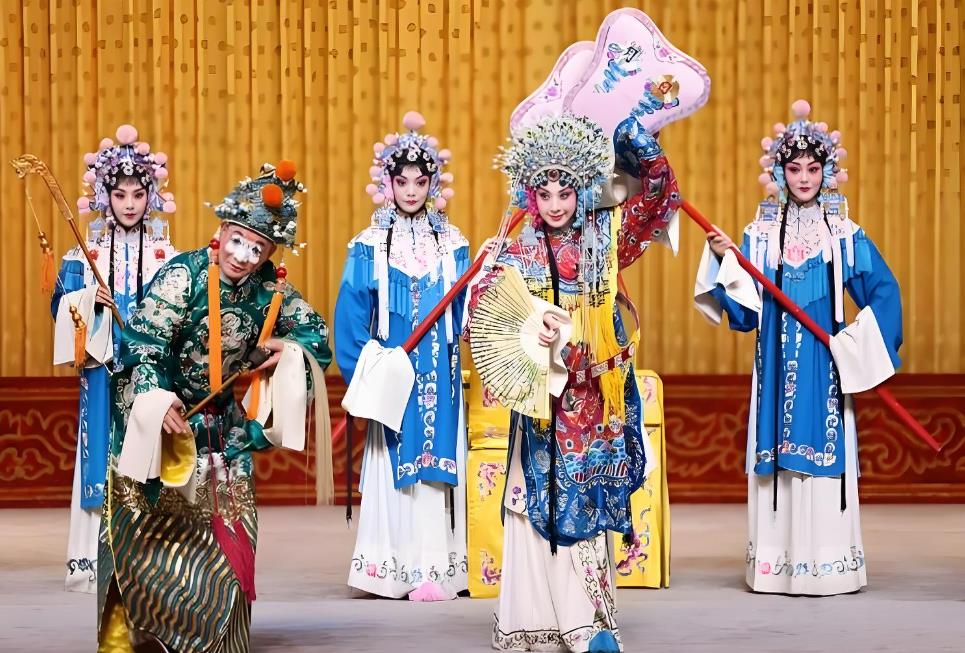
For people outside China, watching Peking Opera is like opening a window onto Chinese civilisation. Through its magnificent costumes, expressive singing, and timeless stories, you can feel the Chinese appreciation for beauty, honour, loyalty, and the richness of human emotion.
The first time you watch a Peking Opera performance, you may find it unfamiliar. But if you sit quietly and let yourself be drawn into its world, those soaring voices, graceful movements, and vivid colours will surely touch your heart in unexpected ways.
Welcome to the world of Peking Opera — a place where ancient beauty still shines brightly today.



There are no comments yet, come and comment~