Chinese ceramics are rarely decorated at random. The patterns painted, carved, or molded onto a vessel usually carry meaning. A lotus may suggest purity. A peony may signal wealth and honor. A dragon may represent imperial authority. A fish may express the hope for abundance.
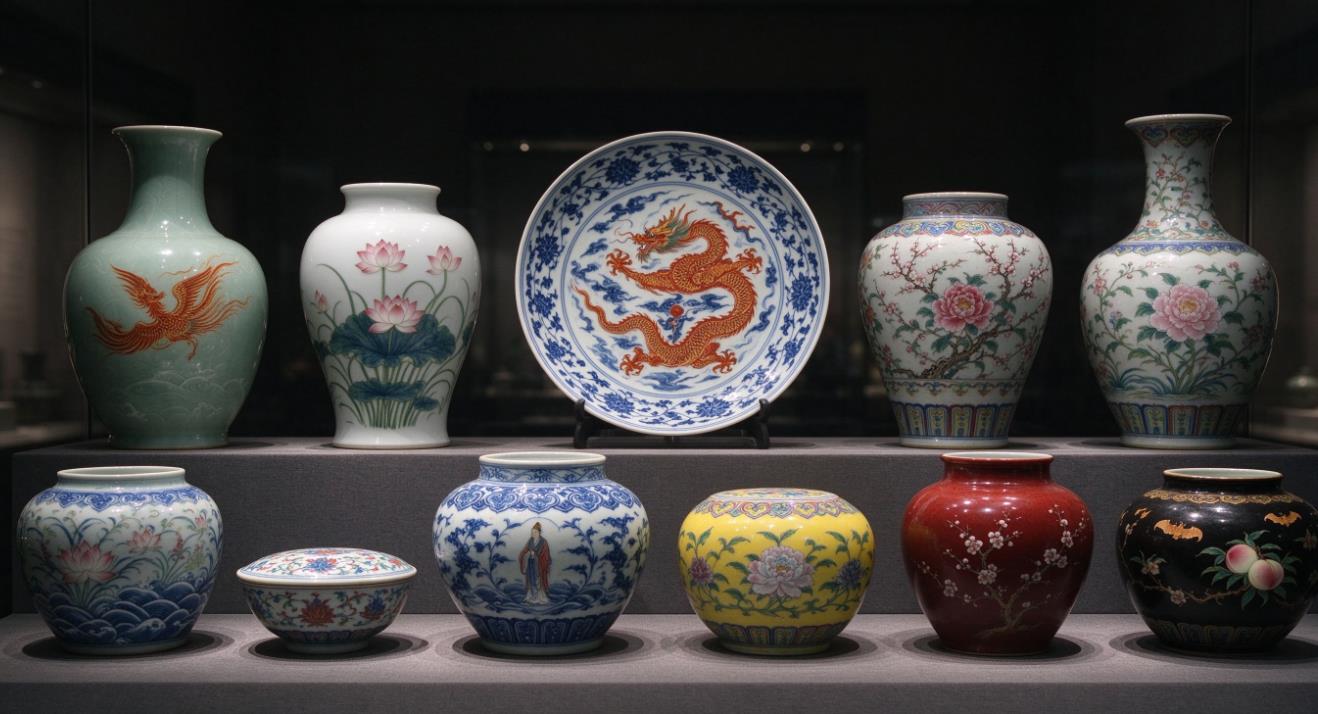
This principle is often summarized in Chinese as “every image has a meaning, and every meaning is auspicious.” For viewers today, learning to read these patterns turns a beautiful object into a readable cultural text.
Why Patterns Matter on Chinese Ceramics
Patterns are one of the most direct ways Chinese ceramics communicate values. Shape and glaze tell us about technology and taste. Decoration tells us about belief, social aspiration, and everyday hope.
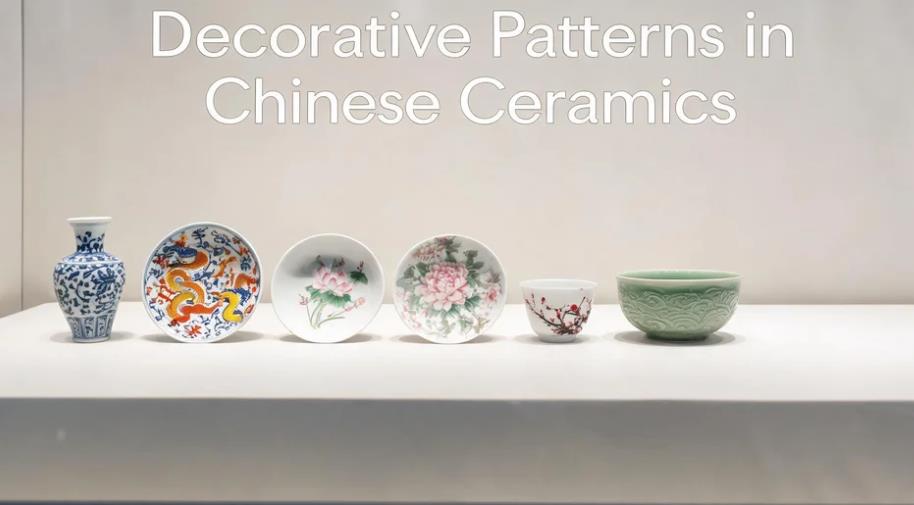
Chinese ceramic motifs can be grouped into several broad categories:
- Floral patterns: lotus, peony, chrysanthemum, plum blossom, crab apple, hibiscus.
- Animal and mythical creature patterns: dragon, phoenix, crane, fish, deer, lion, bat.
- Landscape and nature patterns: cloud, wave, mountain, water, rock.
- Figural patterns: scholars, children at play, immortals, historical stories.
- Geometric and repeating patterns: interlocking scrolls, ruyi heads, coin bands, border motifs.
Many designs also work as visual puns. In Chinese, similar-sounding words allow objects to stand for abstract wishes. This makes ceramic decoration especially rich in layered meaning.
Dragon and Phoenix: Power, Harmony, and Auspicious Union
The dragon is one of the most important symbols in Chinese art. On ceramics, it often appears among clouds, waves, or flames, chasing a flaming pearl. The dragon symbolizes power, authority, good fortune, and control over rain and water.
During the Ming and Qing dynasties, five-clawed dragons were closely associated with the imperial court, while three- or four-clawed dragons appeared more often on non-imperial wares. Dragon motifs evolved over time, from early cloud dragons to sea dragons, coiled dragons, and flying dragons.
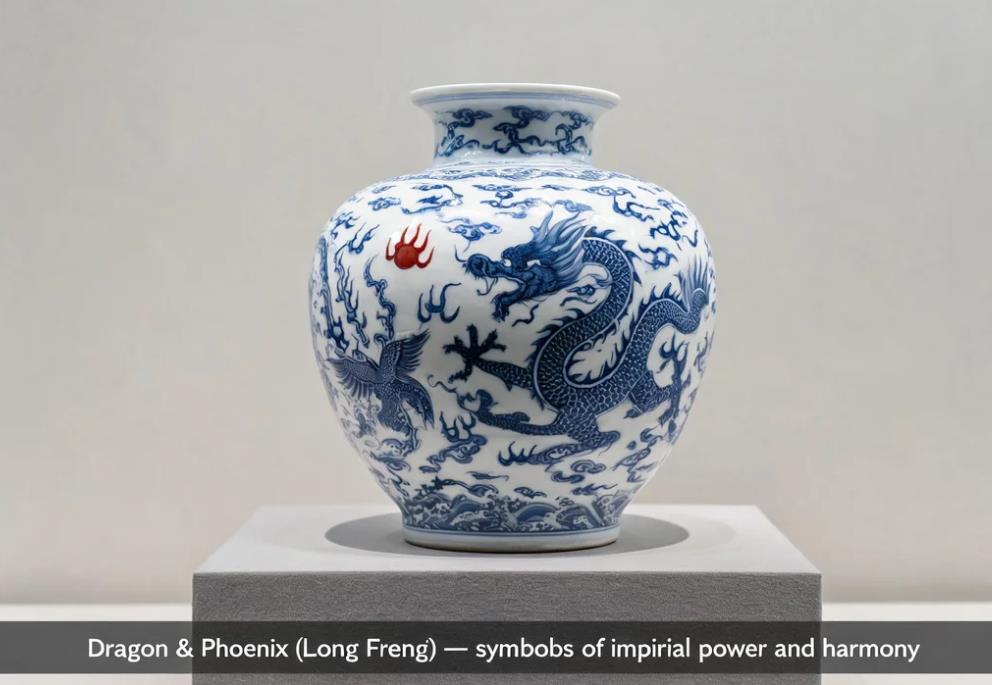
The phoenix, or fenghuang, is a mythical bird associated with grace, virtue, and renewal. It is often called the “king of birds” in Chinese tradition. When dragon and phoenix appear together, the design is usually read as longfeng chengxiang, or “dragon and phoenix bringing auspicious harmony.”
Phoenix motifs also changed across periods. Yuan dynasty phoenixes often have strong, eagle-like heads. Ming phoenixes are more graceful, with spreading wings and flowing tail feathers. Qing examples tend to be highly refined and decorative.
Lotus: Purity, Buddhism, and Moral Integrity
The lotus is one of the earliest and most enduring floral motifs in Chinese ceramics. It became especially popular after Buddhism spread into China, because the lotus is regarded as a sacred flower representing purity and spiritual awakening.
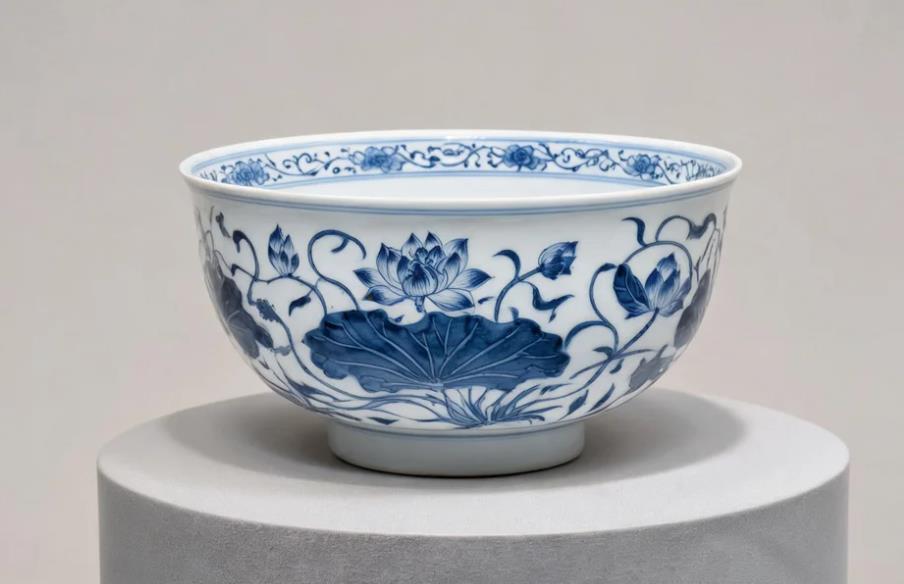
Common lotus-related designs include:
- Lotus petal bands: often placed around the shoulder or foot of a vessel.
- Interlocking lotus: scrolling lotus stems that suggest continuity and endless growth.
- Spray lotus: a single lotus branch, elegant and self-contained.
- Lotus pond scenes: lotus flowers shown with fish, mandarin ducks, or waterfowl.
The lotus also carries moral meaning. Zhou Dunyi’s famous essay Ai Lian Shuo praises the lotus for rising from mud without being stained, making it a symbol of personal integrity. Because the word for lotus, lian, sounds like words meaning “continuous” or “incorruptible,” lotus patterns can also suggest liannian youyu “abundance year after year” or yipin qinglian “high official purity.”
Peony: Wealth, Honor, and Courtly Beauty
If the lotus represents purity, the peony represents prosperity. Known as the “king of flowers,” the peony has long been associated with wealth, honor, and refined beauty.
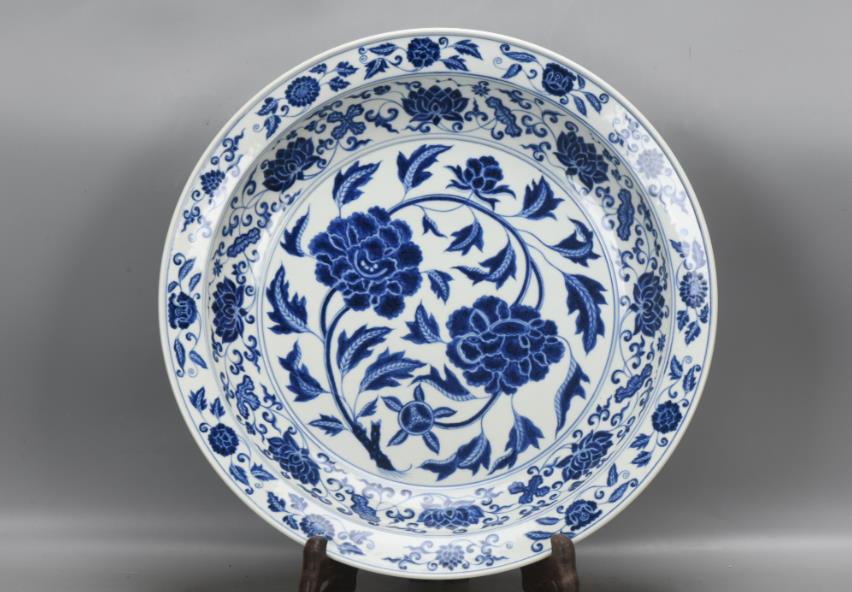
Peony motifs became especially prominent from the Tang dynasty onward. On Song dynasty Cizhou-type pillows, bold carved peonies appear with confident brush-like strokes. On Yuan and Ming blue-and-white porcelain, peonies often form large, scrolling compositions that fill the surface with lush floral energy.
Peonies are also frequently combined with other plants. Peony and crab apple together can suggest mantang fugui, “may the whole household enjoy wealth and honor.” This makes peony decoration especially common on objects intended for domestic spaces, gifts, and celebratory occasions.
Plum Blossom, Chrysanthemum, and the Three Friends of Winter
Not all floral patterns celebrate wealth. Some express moral character.
The plum blossom blooms in late winter and early spring, often while snow is still present. It symbolizes resilience, elegance, and the scholar’s independence. The chrysanthemum blooms in autumn and is associated with longevity, refinement, and retreat from worldly ambition. The bamboo, though technically a grass, is often grouped with these plants because it bends without breaking.
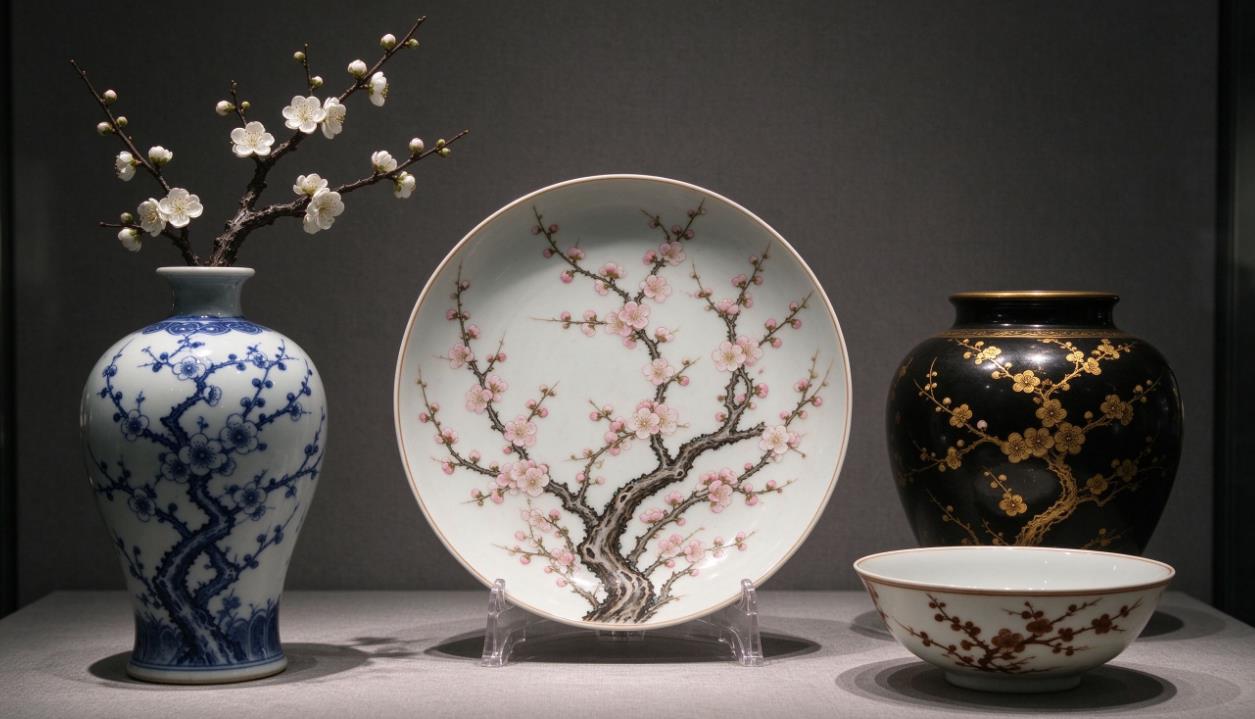
Together, pine, bamboo, and plum blossom form the suihan sanyou, or “Three Friends of Winter.” This motif became popular in literati culture and later appeared frequently on ceramics. It expresses admiration for people who remain principled under pressure.
Cloud, Wave, and Ruyi: Patterns of Heaven and Earth
Cloud and wave patterns are among the oldest decorative motifs in Chinese art. Clouds were associated with rain, harvest, heaven, and divine presence. Waves represented water, abundance, movement, and sometimes the power of the sea.
Cloud motifs evolved from early cloud-and-thunder patterns into scrolling clouds, ruyi-shaped clouds, layered clouds, and flowing cloud bands. On Ming and Qing porcelains, clouds often frame dragons, phoenixes, cranes, or bats, giving the composition a sense of upward movement.
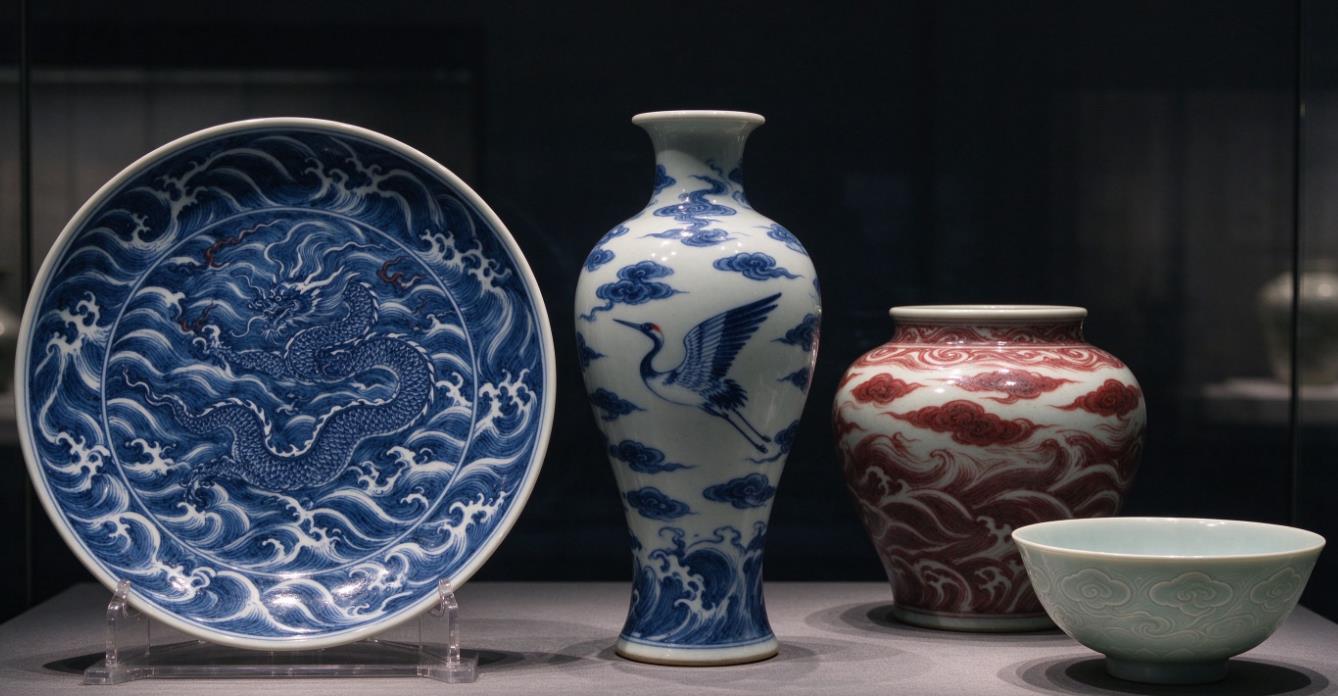
Wave patterns appear as gentle ripples, rolling billows, or dramatic sea waves. In imperial contexts, wave motifs combined with rocky cliffs form the jiangya haishui, or “sea-water and cliff” pattern, which symbolized stable rule and enduring territory.
The ruyi motif, shaped like a ceremonial scepter or a stylized cloud head, is itself an auspicious symbol. Its name suggests “as you wish,” making it a frequent companion to floral and animal designs.
Visual Puns: How Chinese Ceramics Speak in Homophones
One of the most distinctive features of Chinese ceramic decoration is its use of homophones. A picture may look like a simple plant or animal, but its name can sound like a word for blessing, rank, wealth, or longevity.
Common examples include:
- Bat: fu sounds like “fortune.” Five bats around a longevity character represent the five blessings.
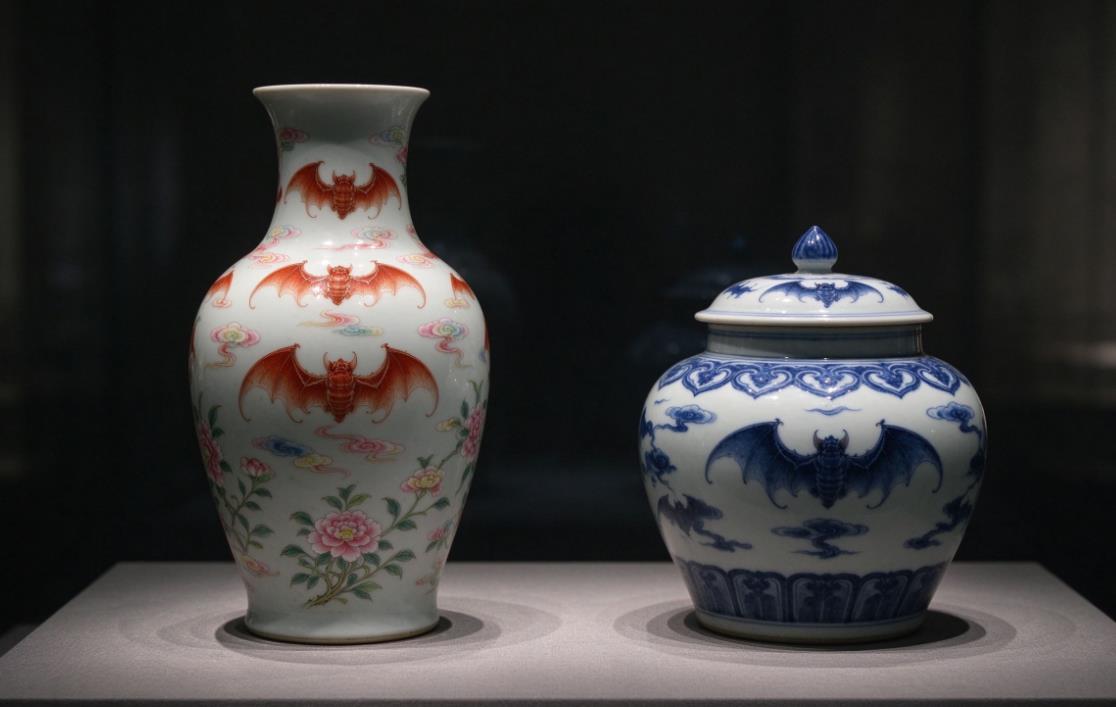
- Deer: lu sounds like “official salary.” Deer motifs suggest career success.
- Fish: yu sounds like “surplus.” Fish and lotus together suggest “abundance year after year.”
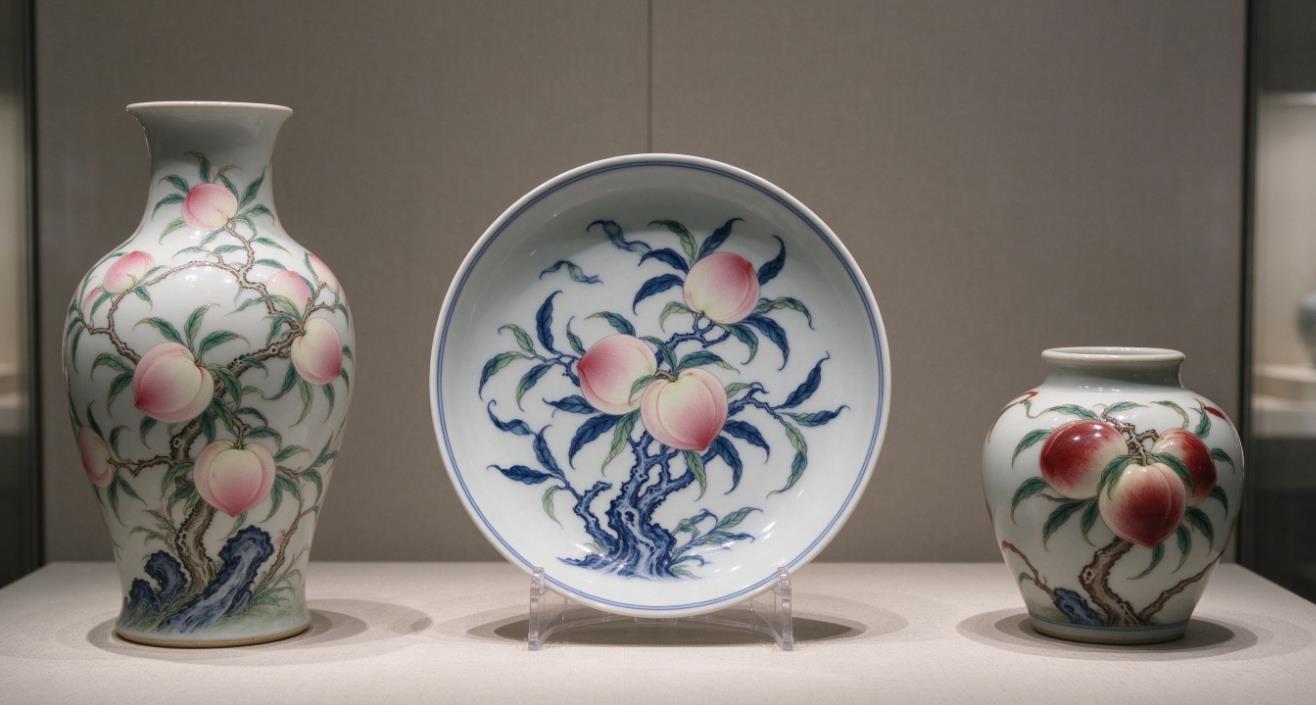
- Peach: a symbol of longevity, often shown with bats or cranes.
- Pomegranate: many seeds suggest many children and family continuity.
- Cat and butterfly: mao and die echo maodie, meaning old age, so the pair wishes longevity.
- Lion and ball: the lion, shi, can pun on “matter” or “affair,” making lion-and-ball motifs read as “good things to come.”
These designs are not merely decorative. They function as compact visual blessings, especially on objects used in daily life.
Figural Patterns: Stories Painted on Porcelain
Chinese ceramics also carry narrative scenes. Yuan dynasty blue-and-white wares are especially famous for painted stories drawn from history, drama, and popular literature.
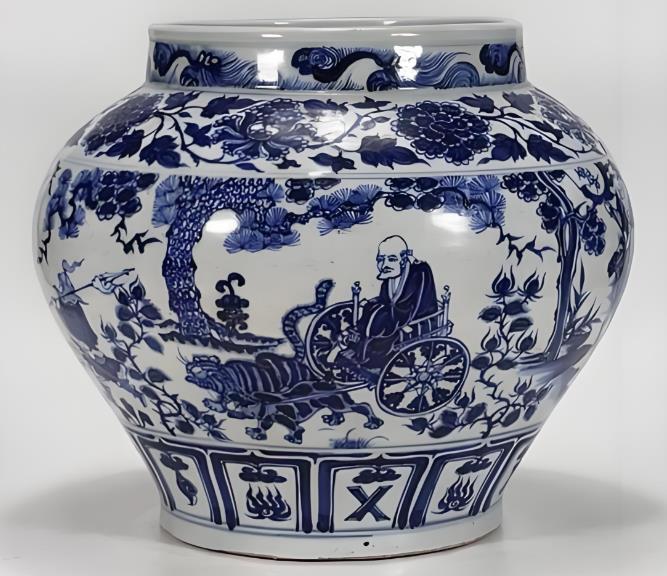
A well-known example is the Yuan blue-and-white jar depicting Guiguzi descending from the mountains. The scene shows the strategist Guiguzi traveling to rescue his student Sun Bin. The composition reads almost like a frozen theatrical moment, with figures, horses, rocks, and trees arranged in a continuous landscape.
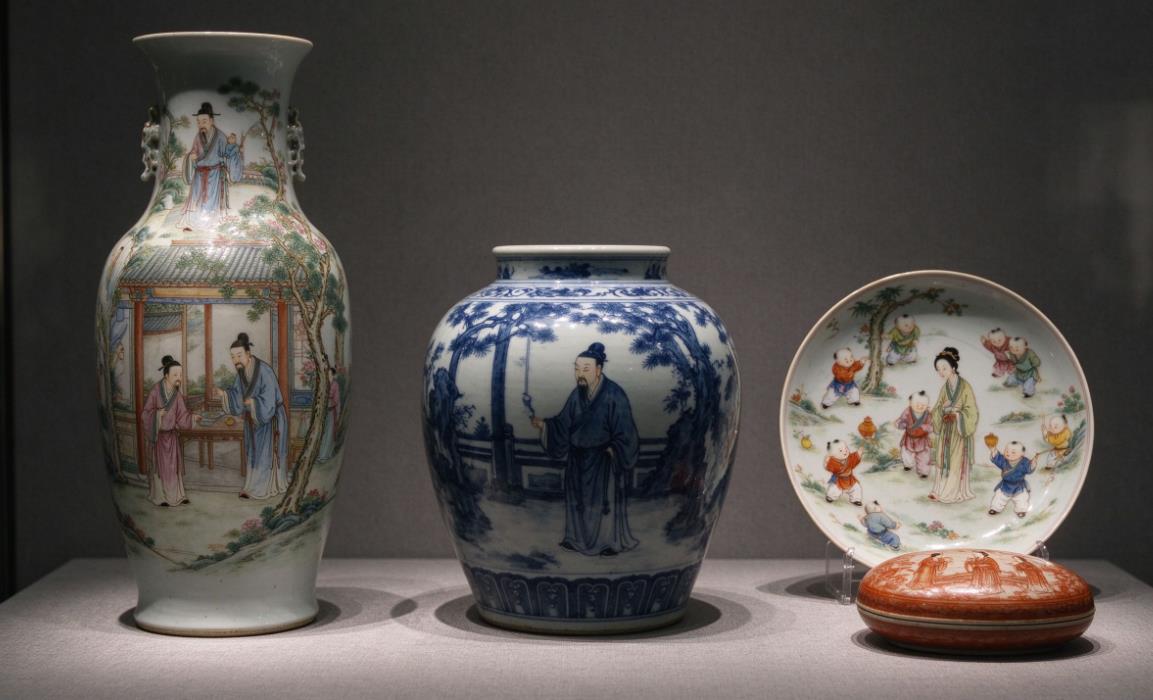
Other figural motifs include children at play, scholars in gardens, the Eight Immortals, and scenes of “bringing a qin to visit a friend.” These designs reveal how ceramics absorbed painting, theater, literature, and folk belief.
How to Read a Chinese Ceramic Pattern
When you look at a decorated Chinese ceramic, try asking four questions:
What is the main motif?
Identify the dominant plant, animal, figure, or landscape element.
Is it a single symbol or a combination?
Many meanings appear only when two or more elements are paired.
Does the name sound like an auspicious word?
Check whether the motif may be a visual pun.
What object is it decorating?
A tea bowl, vase, pillow, or export plate may carry different social meanings.
This approach works for museum objects, auction pieces, antique market finds, and modern designs inspired by traditional motifs.
Frequently Asked Questions
What is the most common flower on Chinese ceramics?
Lotus and peony are among the most common. Lotus is associated with purity and Buddhism, while peony symbolizes wealth and honor.
Why do Chinese ceramics show so many bats?
In Chinese, fu “bat” sounds like fu “fortune.” Bat motifs are therefore auspicious, not frightening.
What does a dragon on Chinese porcelain mean?
The dragon represents power, protection, rain, and imperial authority. Its meaning depends on context, claws, and accompanying motifs.
What is the “Three Friends of Winter” pattern?
It shows pine, bamboo, and plum blossom together, symbolizing endurance, integrity, and scholarly virtue.



There are no comments yet, come and comment~