
When people look at Chinese ceramics, the first thing they notice is often color. A soft green celadon bowl, a bright blue-and-white vase, a warm white Ru ware dish — each glaze gives the piece its character.
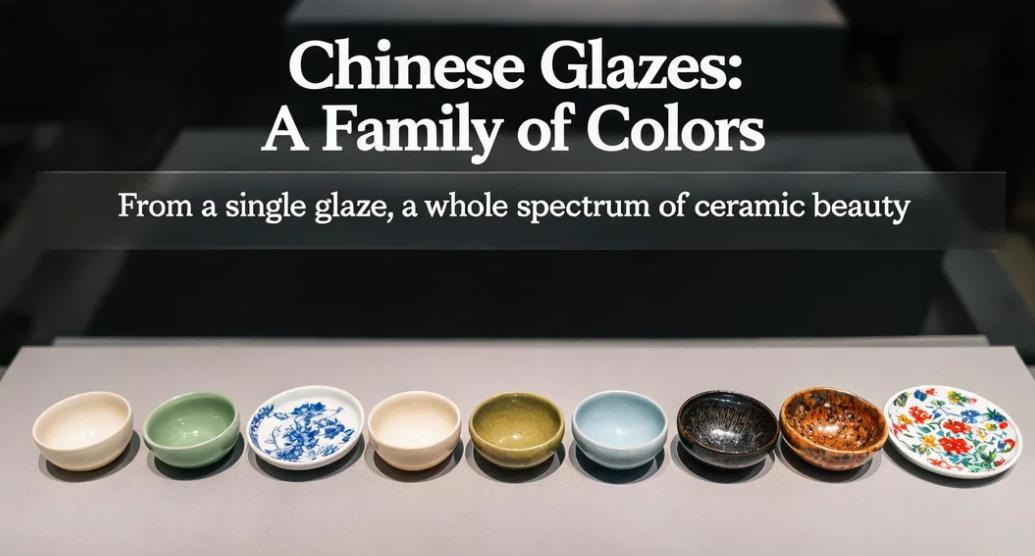
But Chinese ceramic glazes are not just decoration. They are the result of centuries of experimentation with minerals, temperature, kiln atmosphere, and artistic taste. A single glaze can carry the history of a kiln site, the preferences of an imperial court, or the demands of an overseas market.
This guide explains the major types of Chinese ceramic glazes, how they developed, and why they still matter to collectors, designers, and anyone interested in Chinese art.
What Is a Ceramic Glaze?
A glaze is a glass-like coating applied to a ceramic body before firing. When heated to high temperature, the glaze melts and forms a smooth, hard surface.
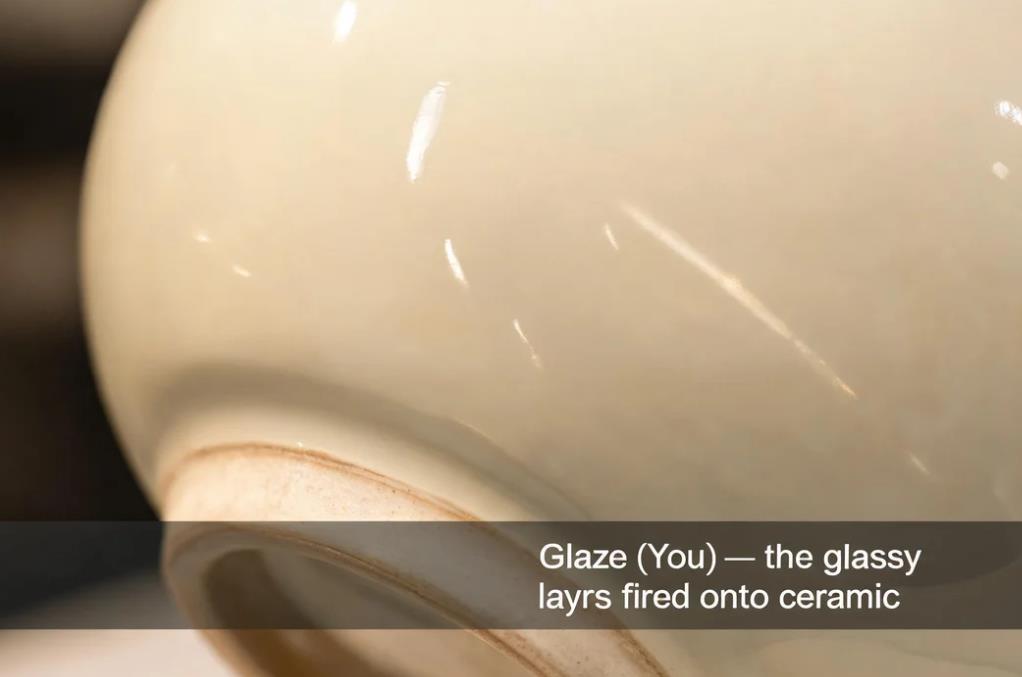
Glazes serve several purposes:
- They make vessels easier to clean.
- They protect the clay body from moisture.
- They add color, shine, and visual depth.
- They help define the identity of a ceramic type.
In Chinese ceramics, glaze is often as important as shape. Two vessels may have similar forms, but different glazes can make them belong to entirely different artistic traditions.
Celadon Glaze: The Color of Jade
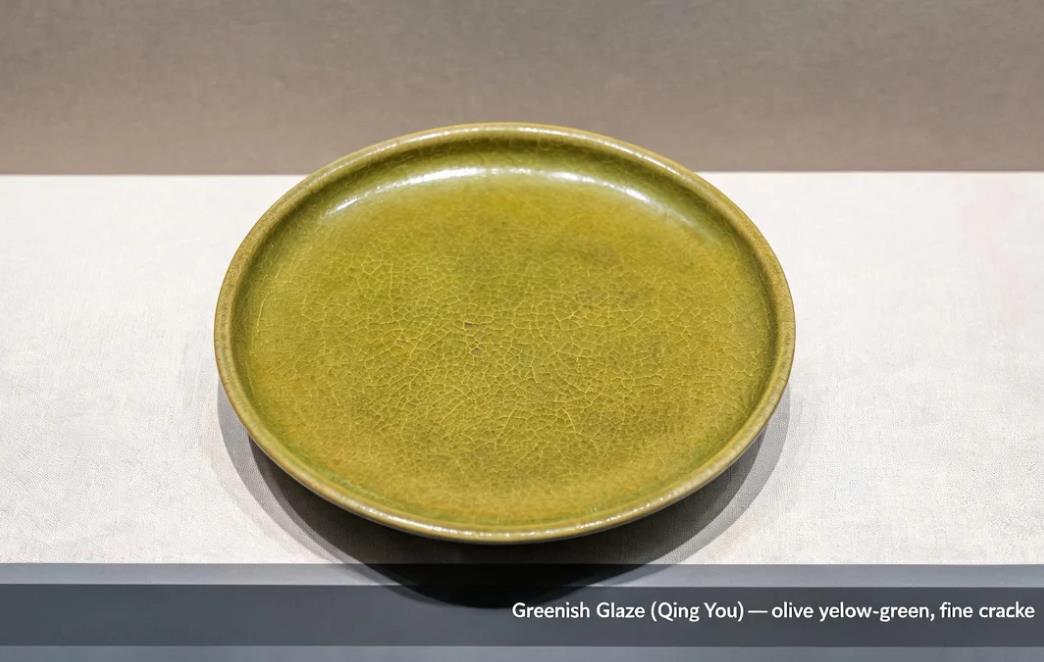
Celadon is one of the most celebrated glaze families in Chinese ceramics. Its colors range from pale green to gray-green, olive green, and blue-green. The most prized celadons often resemble jade, a material long associated with virtue and refinement in Chinese culture.
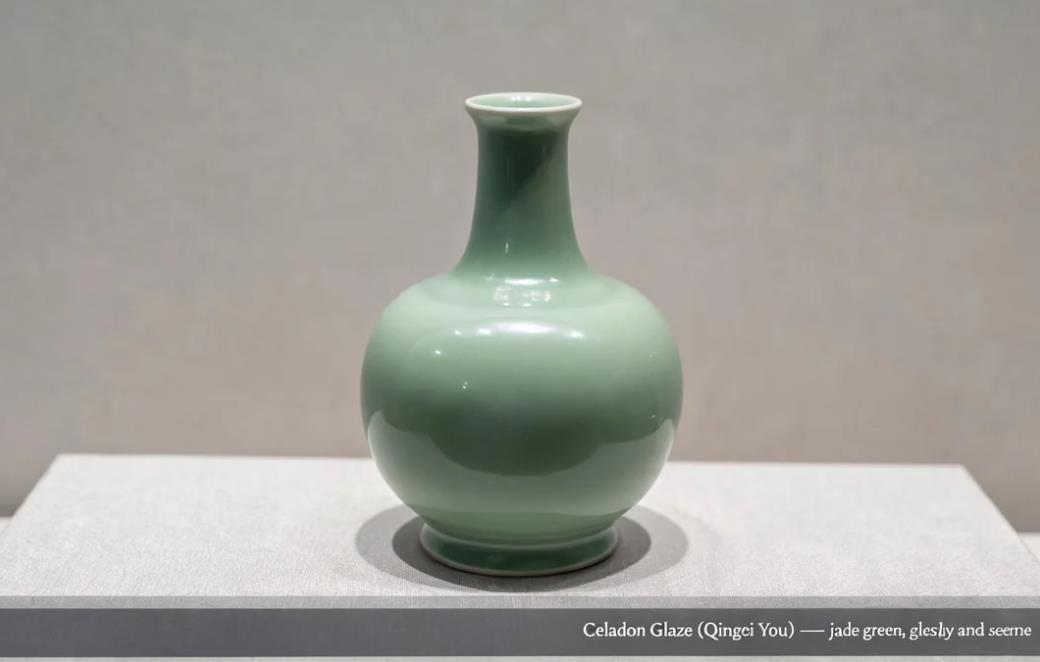
Celadon glaze gets its color mainly from iron oxide. The final tone depends on the clay body, glaze composition, firing temperature, and whether the kiln atmosphere is oxidizing or reducing.
Important celadon traditions include:
- Yue ware: One of the earliest major celadon traditions, produced in Zhejiang province.
- Longquan ware: Famous for thick, jade-like green glazes, especially during the Song and Yuan dynasties.
- Goryeo celadon: Korean celadon strongly influenced by Chinese techniques, showing how Chinese glaze culture spread across East Asia.
Celadon was admired not only in China but also in Japan, Korea, Southeast Asia, and the Islamic world. Its quiet elegance made it suitable for tea, incense, flower arrangement, and scholarly use.
Blue-and-White Glaze: China’s Most Recognizable Style
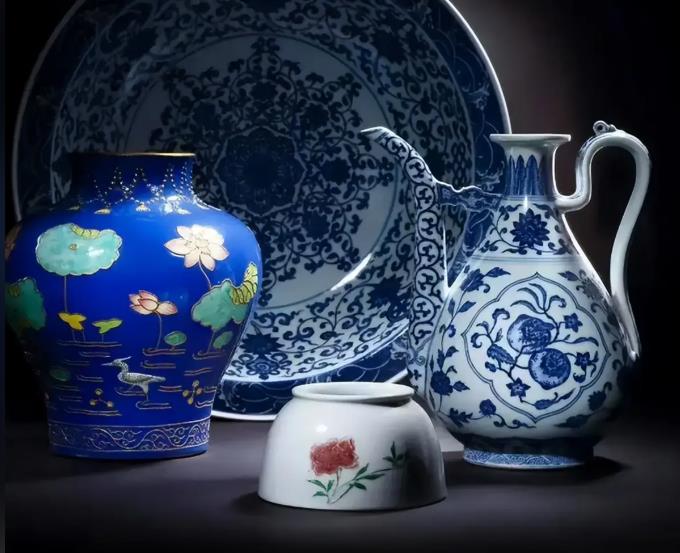
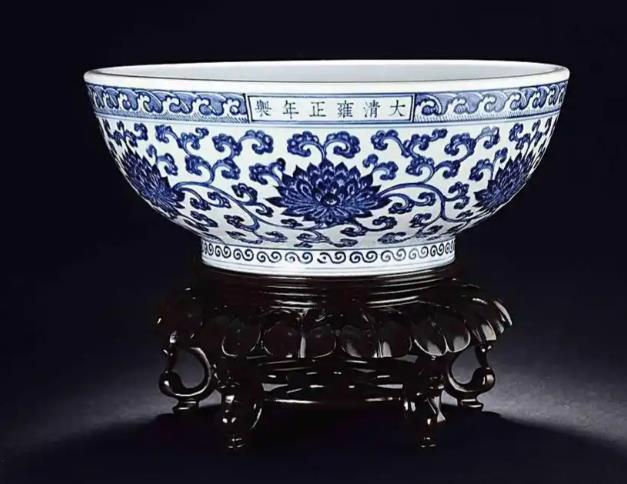
Blue-and-white porcelain is perhaps the most familiar Chinese ceramic style worldwide. It features cobalt blue decoration painted on a white porcelain body, then covered with a clear glaze and fired at high temperature.
The cobalt pigment used in early blue-and-white porcelain often came from Persia. During the Yuan dynasty, large dishes, jars, and vases with dense blue patterns became especially popular in the Islamic world.
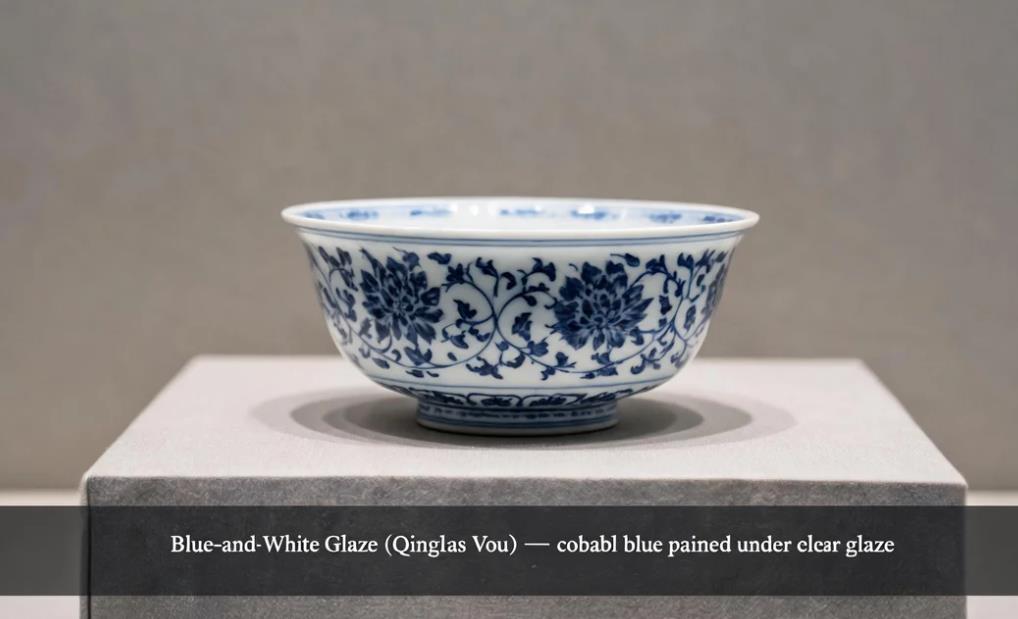
Under the Ming dynasty, blue-and-white production became more refined. Imperial kilns at Jingdezhen set high standards for shape, painting, and glaze quality. Export pieces later reached Europe, Southeast Asia, the Middle East, and the Americas.
Blue-and-white succeeded because it was visually striking, durable, and adaptable. The same technique could produce imperial treasures, temple offerings, household bowls, and export wares.
White Glaze and the Beauty of Simplicity
White-glazed ceramics may look simple, but they are technically demanding. A good white glaze must be even, pure, and free of unwanted color.
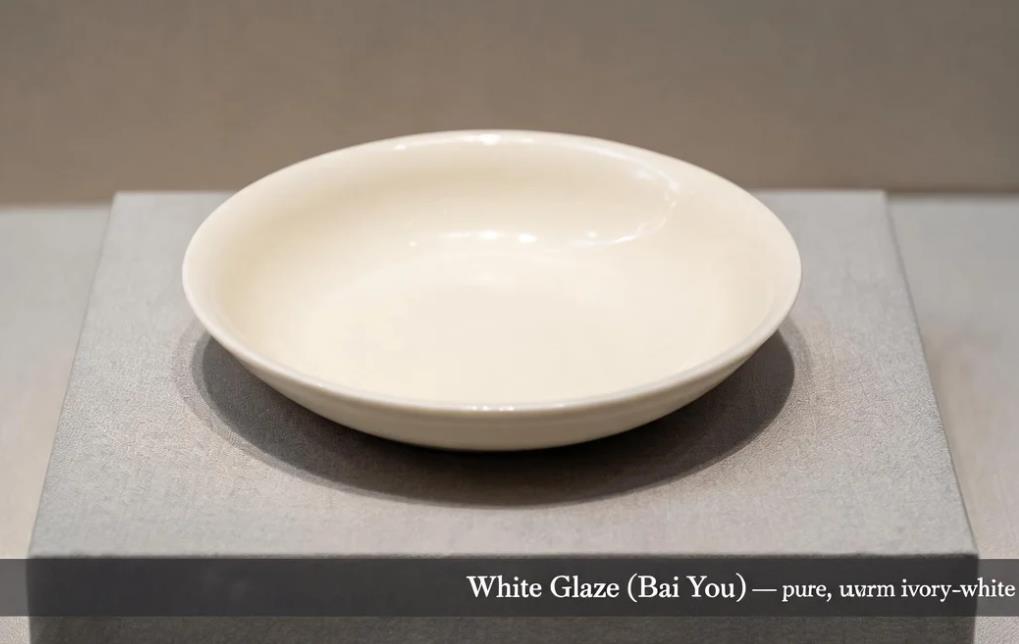
Ding ware, produced in Hebei province, is one of the most famous white-glazed traditions. Ding ware often has a warm ivory tone rather than a cold pure white. Many pieces were fired upside down in molds, leaving an unglazed rim that was later covered with metal bands.
White glaze also prepared the ground for later painted decorations. Without a clean white surface, blue-and-white and overglaze enamel styles would not have developed in the same way.
Jun Ware: Glaze That Changes in the Fire
Jun ware is known for its thick, opalescent glazes that can appear blue, purple, lavender, or sky-blue. Some pieces show dramatic color changes caused by subtle differences in kiln temperature and atmosphere.
Jun glazes often contain copper and iron, which contribute to their rich tonal variations. Unlike painted decoration, Jun ware’s beauty comes from the glaze itself. No two Jun pieces look exactly alike.
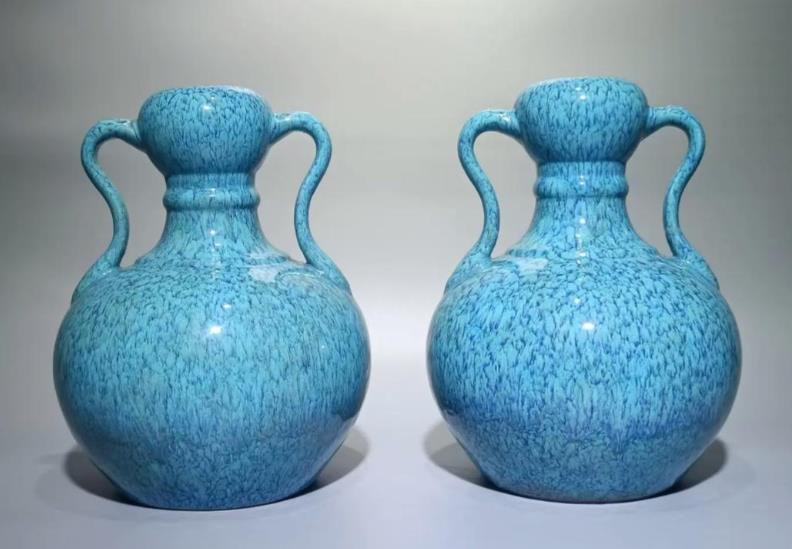
Jun ware was especially admired for its natural, unpredictable effects. It reflects an important idea in Chinese aesthetics: beauty does not always come from precise control, but sometimes from harmony between material, fire, and chance.
Ru Ware: The Rare Imperial Glaze
Ru ware is one of the most revered ceramic types in Chinese history. Produced for the Northern Song court, it is famous for its soft sky-blue glaze, fine crackles, and restrained elegance.
Ru ware was never mass-produced. Surviving pieces are extremely rare, which adds to its legendary status. The glaze is often described as having a gentle, almost oily softness, quite different from the bright gloss of later porcelains.
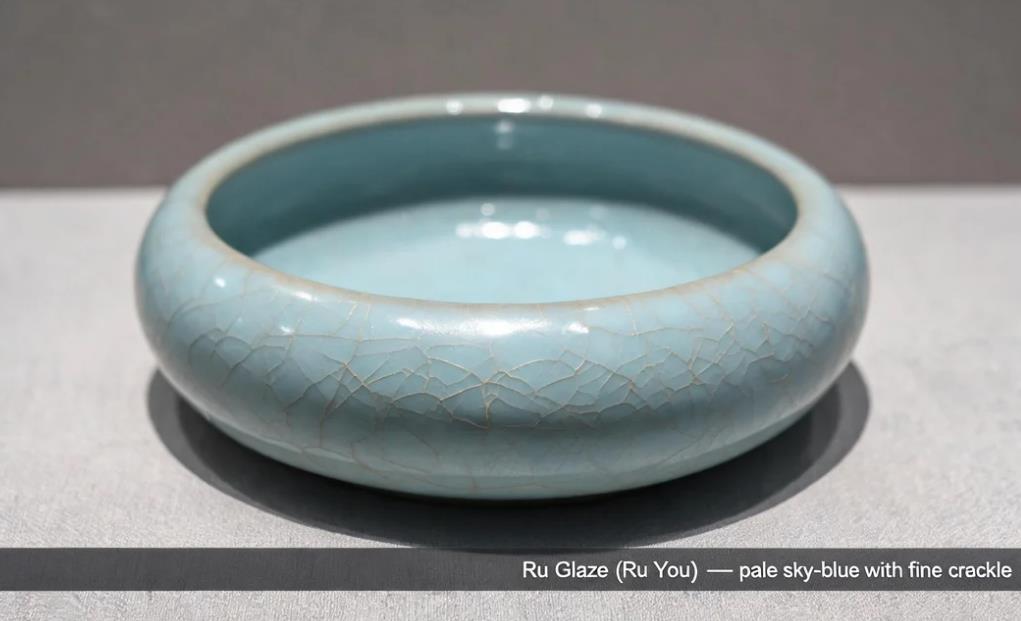
Ru ware represents the Song dynasty ideal of refined simplicity. It appeals to viewers who value subtlety over ornament, and quiet presence over bold display.
Black and Brown Glazes: Tea, Temple, and Taste
Black and brown glazes were widely used in southern China, especially at kilns such as Jian and Jizhou. These wares became closely connected with tea culture.
During the Song dynasty, whipped tea was popular among elites. Dark bowls made the white foam of beaten tea easier to see, so black-glazed tea bowls became highly prized.
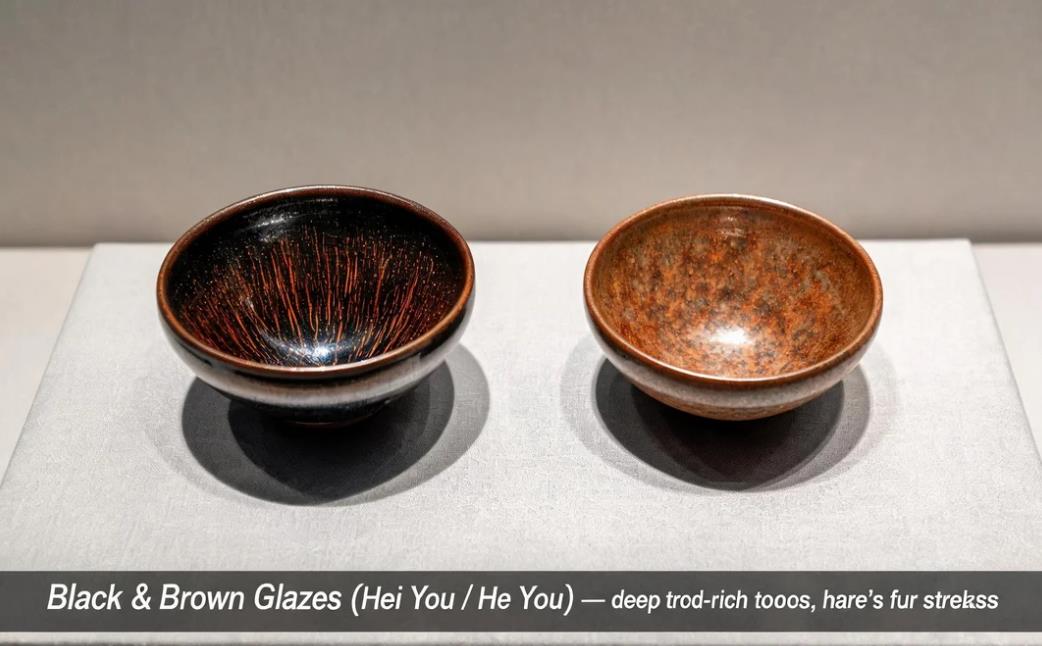
Jian ware is known for its “hare’s fur” and “oil spot” effects, created when iron crystallizes in the glaze during cooling. Jizhou ware is famous for leaf impressions and paper-cut patterns, giving ordinary bowls a poetic, almost magical appearance.
These wares later influenced Japanese tea ceramics, especially the tea bowl tradition associated with chanoyu, the Japanese tea ceremony.
Famille Verte and Famille Rose: Color After the Glaze
Not all Chinese ceramic color comes from the main glaze. Some of the most colorful wares use overglaze enamels, which are painted onto an already glazed and fired surface, then fired again at a lower temperature.
Famille verte, popular during the Kangxi period of the Qing dynasty, uses green, yellow, aubergine, blue, and red enamels. The palette is bright and graphic, often used for flowers, birds, figures, and narrative scenes.
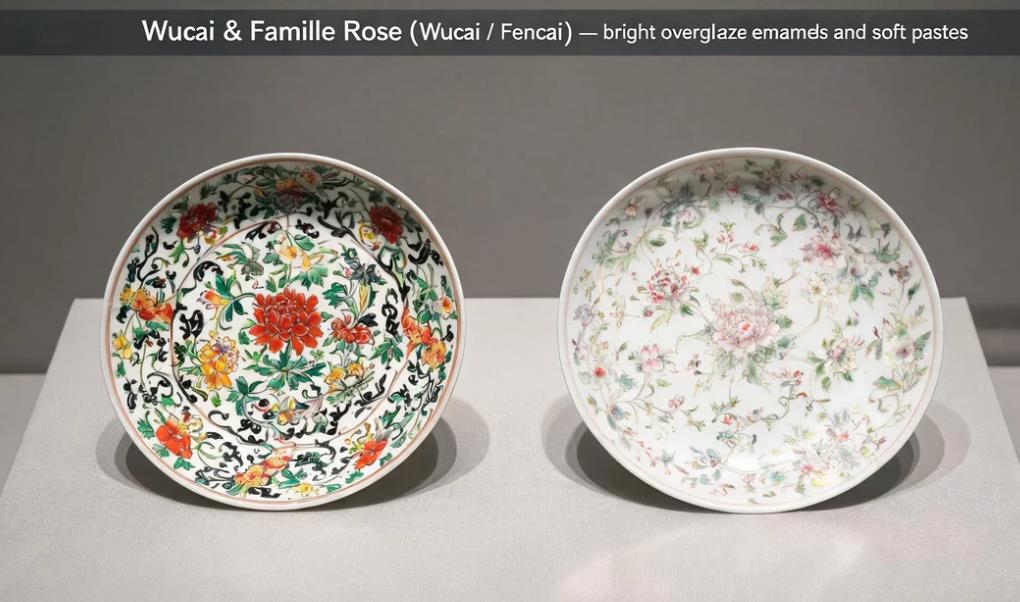
Famille rose, which became prominent in the 18th century, includes opaque pink made with gold-based pigment. This allowed painters to create softer shading and more delicate tonal transitions.
These styles were especially important for export ceramics. European buyers loved colorful Chinese porcelain, and many pieces were made specifically for Western interiors, dining tables, and collections.
How Glaze Styles Changed Over Time
Chinese ceramic glazes did not develop in a straight line. Different dynasties favored different aesthetics.
- Tang dynasty: Rich sancai glazes and early high-fired wares.
- Song dynasty: Refined monochrome glazes such as celadon, white, black, and sky-blue.
- Yuan dynasty: Rise of blue-and-white porcelain and large export forms.
- Ming dynasty: Imperial blue-and-white, colorful wucai, and expanding overseas trade.
- Qing dynasty: Technical mastery, famille rose, export porcelain, and experimental glazes.
Each period added new possibilities. Together, they created one of the richest glaze traditions in world ceramics.
Why Glazes Matter for Understanding Chinese Ceramics
Glaze is not just a surface effect. It carries information about technology, trade, taste, and cultural values.
A celadon bowl can reveal Song ideals of jade-like beauty. A blue-and-white dish can show connections between China, Persia, and Europe. A black tea bowl can connect ceramics to daily ritual. A famille rose plate can illustrate how Chinese artisans responded to global demand.
For collectors and designers, learning to read glazes makes Chinese ceramics much more rewarding. For general readers, it turns a beautiful object into a story about materials, fire, and human imagination.
Frequently Asked Questions
What gives celadon its green color?
Celadon’s green tone mainly comes from iron oxide in the glaze. The final color depends on the clay, glaze formula, firing temperature, and kiln atmosphere.
Why is blue-and-white porcelain so famous?
Blue-and-white porcelain became famous because it combined durable porcelain, striking cobalt decoration, and flexible design. It appealed to imperial courts, domestic buyers, and overseas markets.
What is the difference between glaze and enamel?
Glaze is usually fired at high temperature and forms the main glassy surface. Overglaze enamels are painted on top of an already glazed piece and fired again at a lower temperature to fix the color.
Which Chinese glaze is the rarest?
Ru ware is among the rarest and most celebrated Chinese ceramic glazes, because it was produced in limited quantities for the Northern Song court.



There are no comments yet, come and comment~