
When we think of the Silk Road, we often imagine silk, spices, tea, or gold moving between East and West. But one of the most important goods traveling along these ancient routes was something even more everyday and enduring: Chinese ceramics.
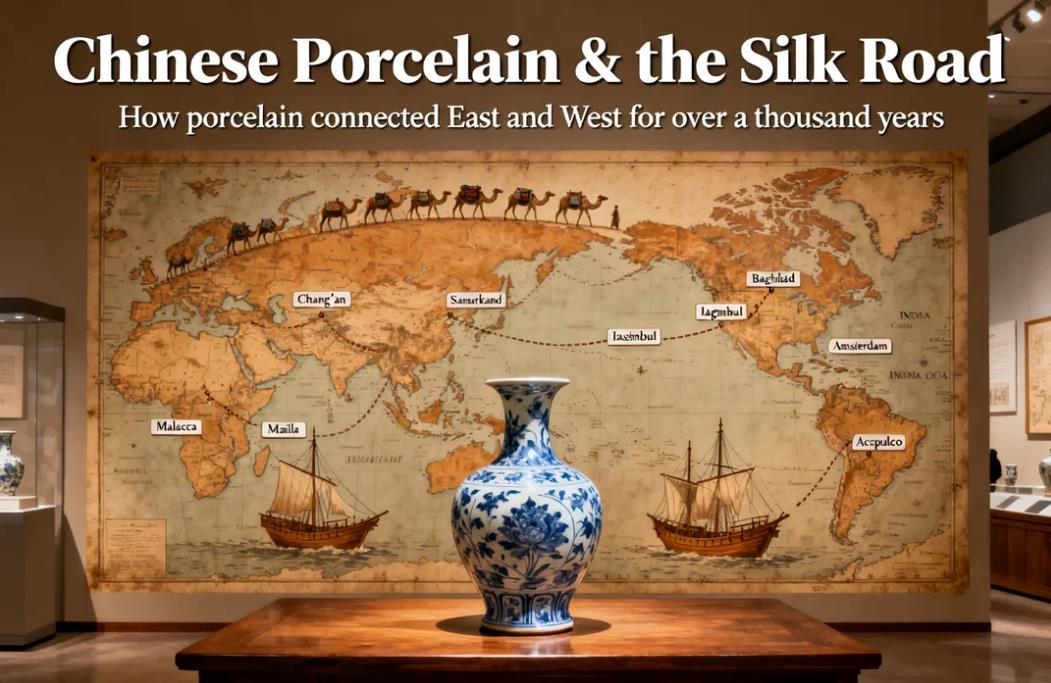
For over a thousand years, Chinese porcelain traveled across deserts and seas, reaching markets from Baghdad to Bangkok, from Istanbul to Amsterdam. Along the way, it influenced local crafts, inspired new styles, and helped shape the material culture of entire regions. Chinese ceramics were not just objects for sale — they were messengers of Chinese aesthetics, technology, and taste.
The Early Days: Ceramics Before the Silk Road
Long before the Silk Road became a formal trade network, Chinese communities were already making pottery and exchanging it with neighbors. Archaeological findings show that simple ceramic vessels were traded within China and with nearby regions as early as the Neolithic period.
What made Chinese ceramics special was not just their usefulness, but their quality. As Chinese potters improved their techniques — learning to fire at higher temperatures, develop glazes, and create more refined shapes — their products became increasingly prized by people beyond China’s borders.
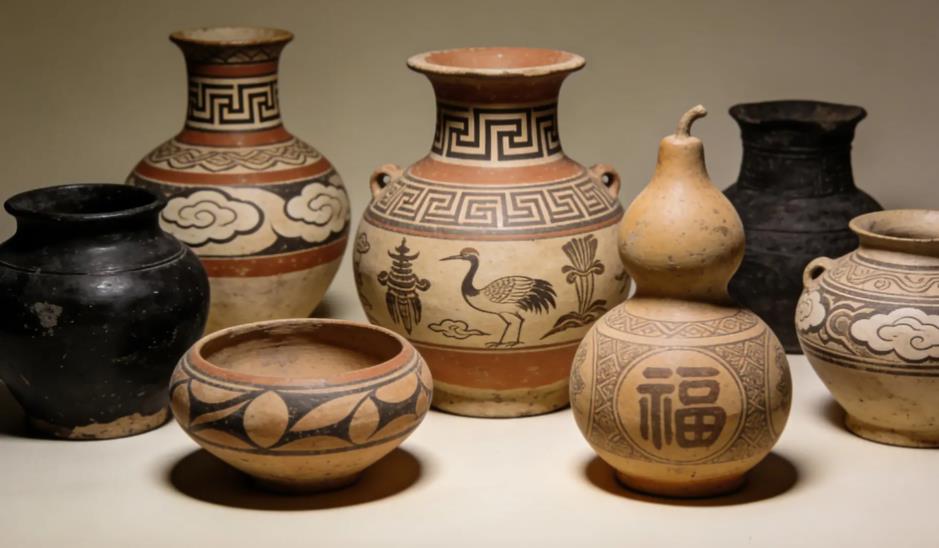
By the Han dynasty (206 BCE–220 CE), Chinese ceramics were already being exported along early trade routes, traveling westward through Central Asia and reaching as far as Persia and the Roman Empire.
The Tang Dynasty: Ceramics Enter the Global Market
The Tang Dynasty (618–907 CE) was a golden age of openness and international exchange. Chang’an, the Tang capital, was one of the largest and most cosmopolitan cities in the world.
During this period, Chinese ceramics moved from occasional trade goods to regular export commodities. Tang Sancai, the famous three-color glazed pottery, was among the most sought-after Chinese ceramics abroad. Its vibrant colors and imaginative forms appealed to buyers in Central Asia, the Middle East, and beyond.
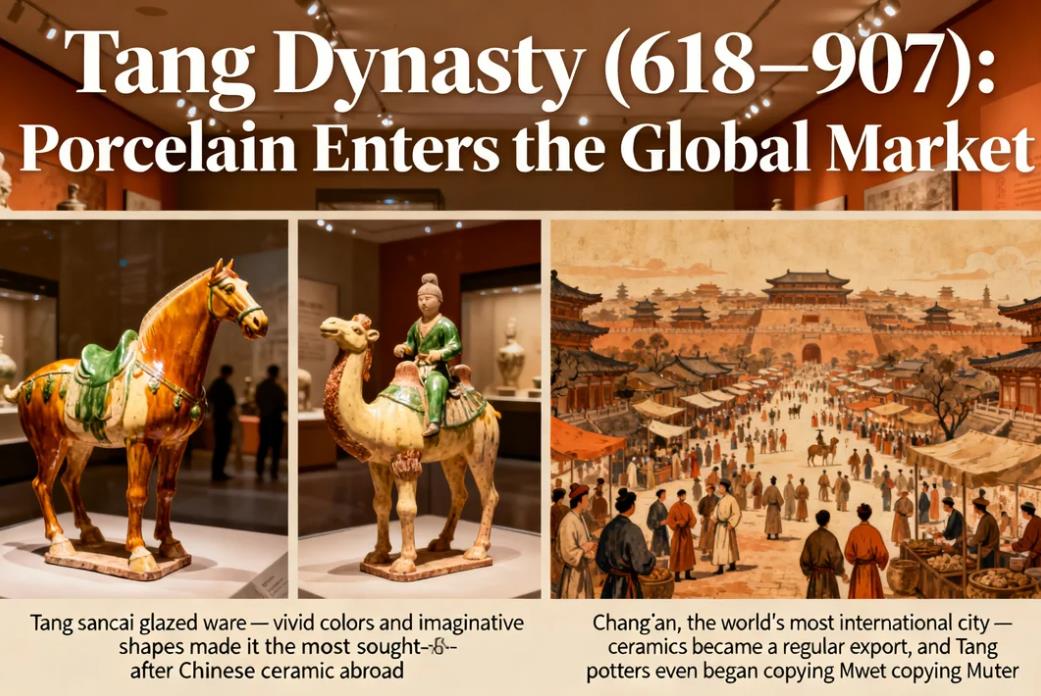
Chinese ceramics also began to take on new forms that responded to foreign tastes. Some Tang ceramic vessels were shaped like Middle Eastern metalware, suggesting that Chinese potters were already thinking about what their international customers wanted.
The Song Dynasty: Building a Ceramic Export Industry
The Song Dynasty (960–1279 CE) saw the rise of China’s great ceramic kiln centers and the beginning of a true export industry. Kilns along the coast — especially in Fujian, Zhejiang, and Guangdong — produced ceramics on a massive scale for overseas markets.
Archaeological excavations have recovered thousands of Song dynasty ceramic fragments from shipwrecks across Southeast Asia. These findings tell a vivid story: Chinese merchant ships loaded with porcelain were sailing regularly between Chinese ports and markets in Vietnam, Indonesia, Malaysia, and beyond.
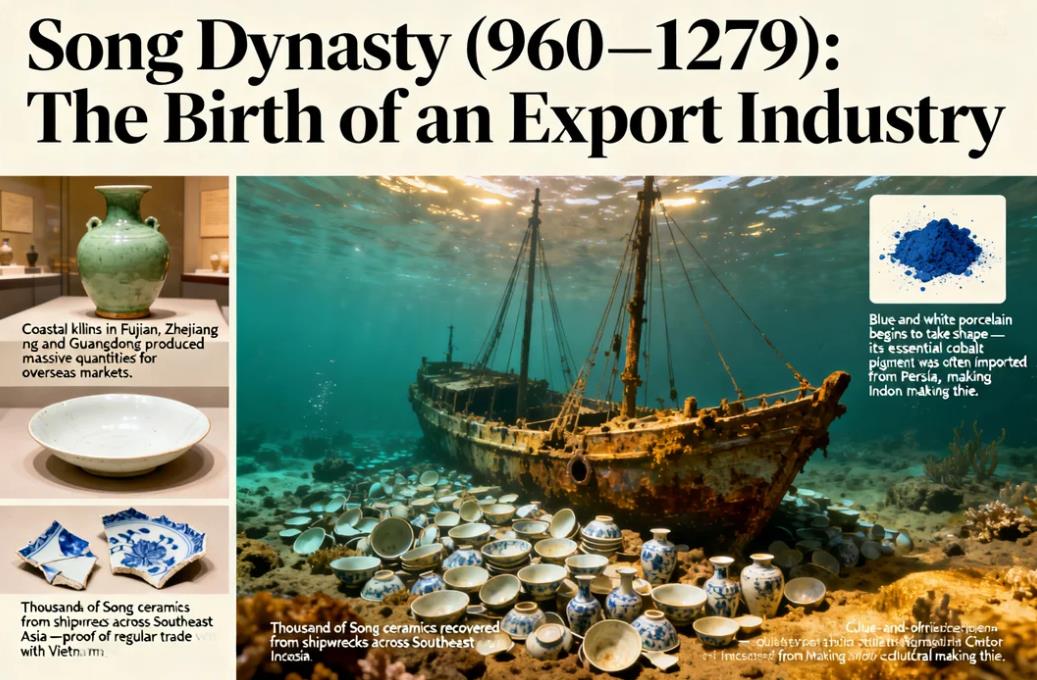
Blue-and-white porcelain, which would later become China’s most famous ceramic type, began to take shape during this era, partly in response to demand from Muslim markets in the Middle East. Cobalt blue pigment, essential for blue-and-white decoration, was often imported from Persia — a telling detail showing that this iconic Chinese style was itself a product of cross-cultural exchange.
The Yuan Dynasty: Porcelain Goes Global
The Yuan Dynasty (1271–1368 CE), established by the Mongols, created a vast unified empire stretching from China to Central Asia. With safe roads stretching across continents, Chinese ceramics could move more freely than ever before.
Under the Yuan, blue-and-white porcelain reached a new level of sophistication and became the backbone of China’s ceramic export business. Produced primarily in Jingdezhen, these pieces were designed for a global market. Their large, bold shapes and elaborate decorative schemes appealed to Islamic tastes, which favored intricate patterning and visually striking surfaces.
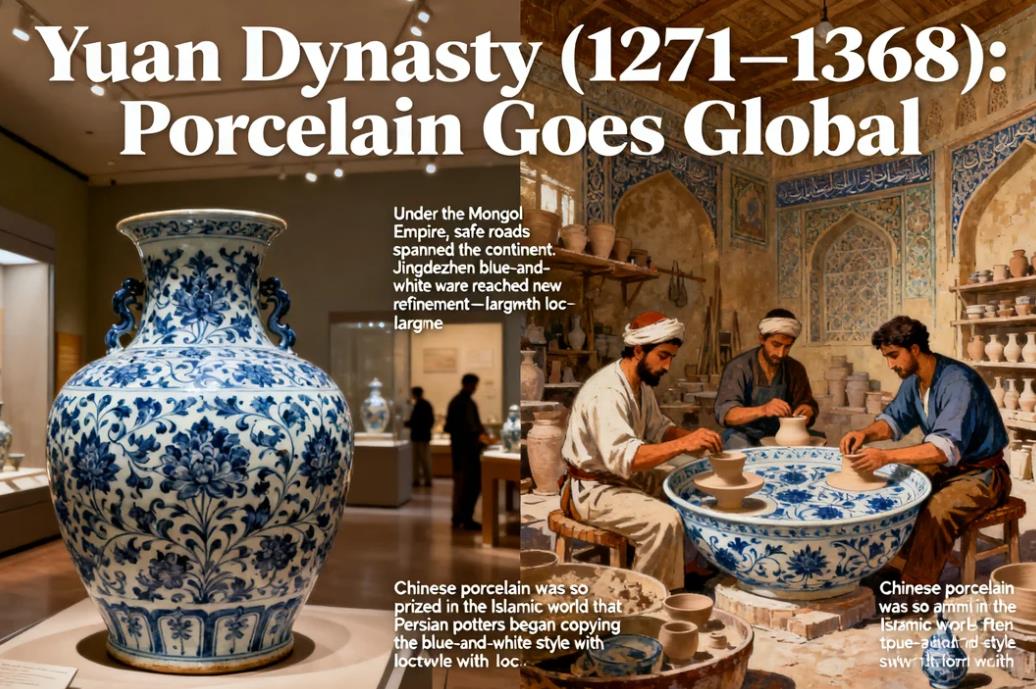
Chinese porcelain was so highly valued in the Islamic world that it influenced local ceramic production. Persian potters began imitating Chinese blue-and-white styles, using local materials to recreate the look of Chinese porcelain.
The Ming Dynasty: Porcelain and the Maritime Age
The Ming Dynasty (1368–1644 CE) opened China to ocean trade and saw Chinese ceramics reach unprecedented levels of production. One of the most dramatic chapters began in the early 16th century, when Portuguese sailors arrived in southern China and began shipping huge quantities of Chinese porcelain back to Europe.
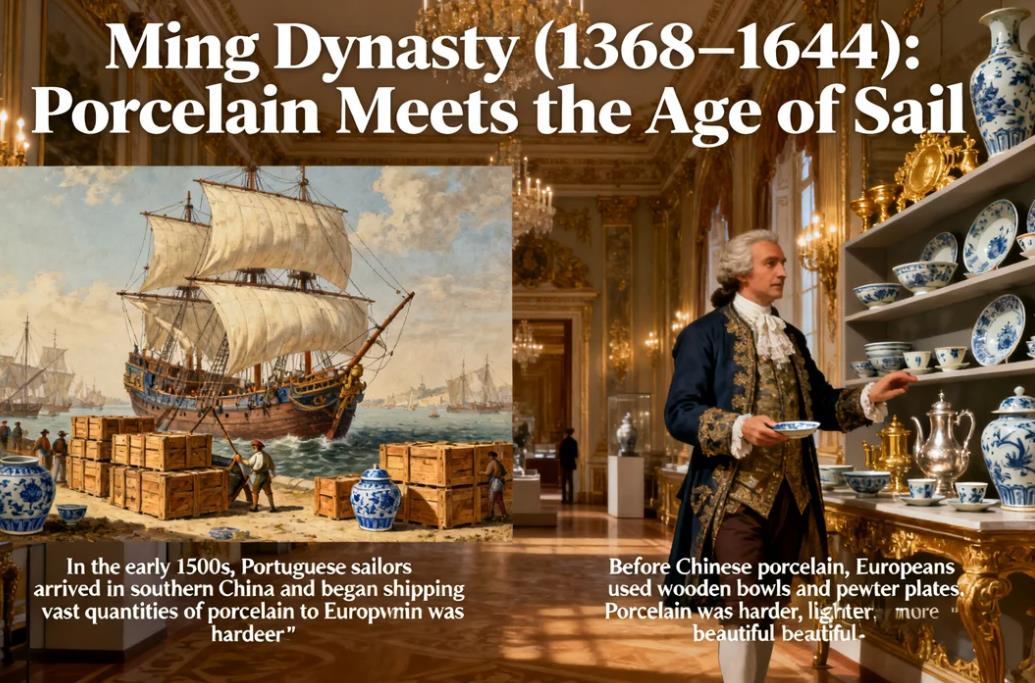
Chinese porcelain was a sensation in Europe. Before this period, most Europeans used wooden bowls, pewter plates, or locally made earthenware. Chinese porcelain was harder, lighter, more beautiful, and could be used for drinking hot beverages — something Europeans were just beginning to do with tea and coffee.
The demand was so intense that European monarchs began collecting Chinese porcelain as luxury objects. The word “china” in English eventually came to mean fine porcelain, a testament to how closely China became associated with this material.
The Age of European Trading Companies
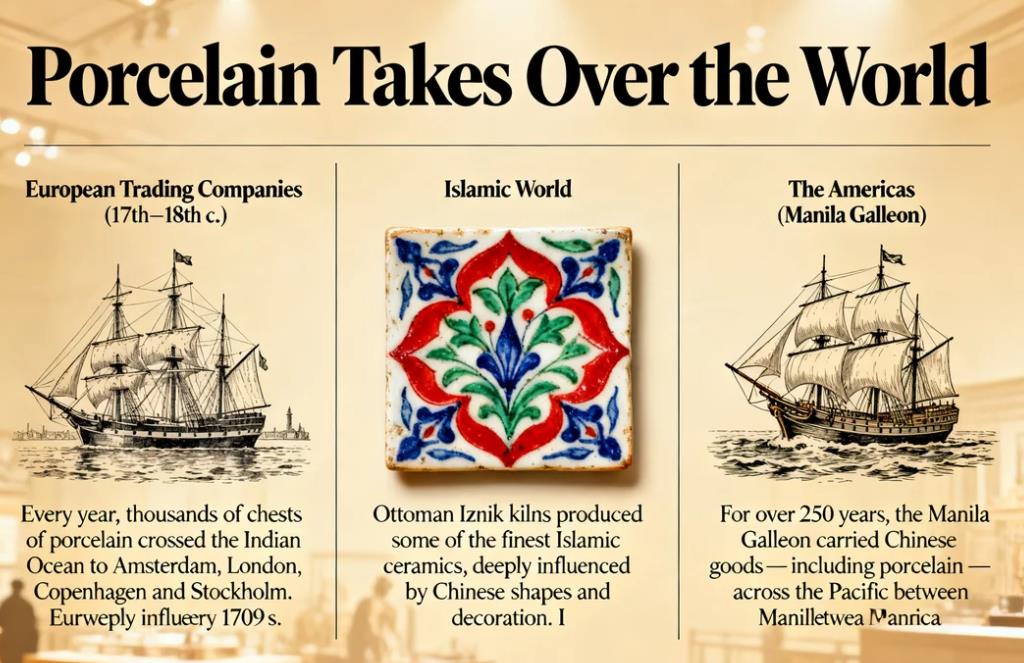
In the 17th and 18th centuries, European trading companies — especially the Dutch East India Company (VOC) and the British East India Company — dominated the trade in Chinese ceramics. Thousands of shiploads of Chinese porcelain crossed the Indian Ocean every year, destined for ports in Amsterdam, London, Copenhagen, and Stockholm.
Chinese porcelain had a profound influence on European art and design. European potters spent decades trying to figure out how to make true porcelain. The secret — the use of kaolin clay and high-temperature firing — was closely guarded. It took European workshops until the early 18th century to finally crack the formula.
In the meantime, European painters and decorators eagerly copied Chinese designs. Chinese floral motifs, landscape scenes, and even Chinese figures appeared on European ceramics, textiles, and wallpaper. This “Chinoiserie” style became wildly popular in aristocratic homes across Europe.
Chinese Ceramics in the Islamic World
While European fascination with Chinese porcelain is well known, Chinese ceramics also had a deep and lasting impact on the Islamic world. From the Tang dynasty onward, Muslim merchants were the primary intermediaries in the trade of Chinese ceramics across Central Asia.
In Persia (modern Iran), Chinese porcelain was so highly prized that it was stored in special treasuries alongside gold and jewels. When Persian potters could not get enough Chinese imports, they developed their own high-fired white ceramics and began painting blue decorations on them, directly inspired by Chinese blue-and-white porcelain.
In Turkey, the Ottoman imperial workshop at Iznik produced some of the finest Islamic ceramics, heavily influenced by Chinese porcelain forms and decorations.
Chinese Ceramics Reach the Americas
Chinese porcelain also made its way to the Americas through the Manila Galleon Trade, which operated for over 250 years between Manila in the Philippines and Acapulco in Mexico. Spanish galleons carried Chinese goods — including ceramics — across the Pacific Ocean, and Chinese porcelain fragments have been found at archaeological sites throughout Latin America.
Why the Story of Chinese Ceramics Matters
The history of Chinese ceramics on the Silk Road and in global trade is more than a story about objects being bought and sold. It is a story about cultural exchange, technological innovation, and the shared human desire to create and appreciate beauty.
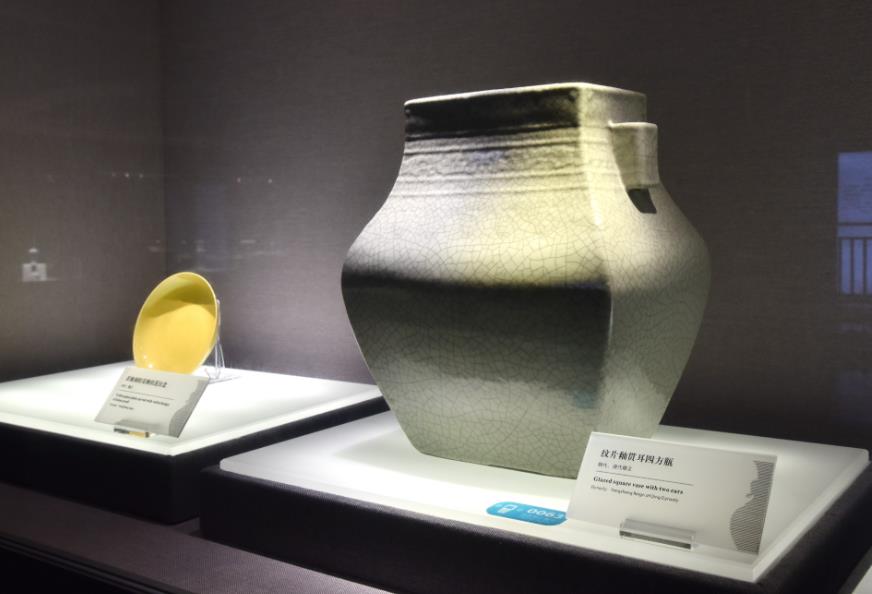
Chinese porcelain traveled thousands of miles across land and sea, influencing the art of Islam, Europe, and beyond, while also absorbing influences from the cultures it touched. For anyone interested in Chinese culture, understanding this global story adds a whole new dimension to the appreciation of Chinese ceramics. These objects are not just products of a single culture — they are witnesses to centuries of connection between East and West.
Frequently Asked Questions
What was the most exported Chinese ceramic type?
Blue-and-white porcelain was arguably the most widely exported Chinese ceramic type, especially during the Yuan, Ming, and Qing dynasties. It was highly prized in both Islamic and European markets.
How did Chinese porcelain influence European art?
Chinese porcelain inspired the European Chinoiserie style, influenced the development of European porcelain factories like Meissen and Sèvres, and shaped European table culture, particularly the practice of tea drinking.
Did Chinese ceramics influence Islamic art?
Yes, profoundly. Persian and Turkish potters imitated Chinese blue-and-white styles, developed new glaze techniques inspired by Chinese examples, and adapted Chinese motifs into Islamic artistic traditions.
Where can I see Chinese export ceramics today?
Major museums around the world, including the British Museum, the Metropolitan Museum of Art in New York, the Victoria and Albert Museum in London, and the National Palace Museum in Taipei, have extensive collections of Chinese export ceramics.
中文版
中国陶瓷与丝绸之路:瓷器如何连接东西方
当我们想到丝绸之路时,往往会联想到丝绸、香料、茶叶或黄金在东西方之间的流动。但沿着这些古老路线运输的最重要商品之一,却是更加日常也更持久的东西:中国陶瓷。
一千多年来,中国瓷器穿越沙漠和海洋,从巴格达到曼谷,从伊斯坦布尔到阿姆斯特丹,远销世界各地。在此过程中,它影响了当地的手工艺,启发了新的风格,并塑造了整个地区的物质文化。中国陶瓷不仅仅是待售的商品,它们是中国审美、技术和品味的传播者。
早期岁月:丝绸之路之前的陶瓷
早在丝绸之路成为正式的贸易网络之前,中国先民就已经在制作陶器并与邻居交换。考古发现表明,简单的陶瓷器皿在新石器时代就已经在中国境内及邻近地区进行贸易。
使中国陶瓷与众不同的不仅是其实用性,更是其品质。随着中国陶工不断改进技术——学会在更高温度下烧制、开发釉料、创造更精细的器型——他们的产品越来越受到中国境外人们的珍视。
到了汉代(公元前206年—公元220年),中国陶瓷已经沿着早期贸易路线向外输出,向西穿过中亚,远达波斯和罗马帝国。
唐代:陶瓷进入全球市场
唐代(618–907年)是开放和国际交流的黄金时代。长安作为唐朝首都,是当时世界上最大、最国际化的城市之一。
在这一时期,中国陶瓷从偶尔的贸易商品变成了常规出口商品。著名的三彩釉陶是海外最抢手的中国陶瓷之一。其鲜艳的色彩和富有想象力的造型吸引了中亚、中东乃至更远地区的买家。
中国陶瓷也开始出现回应外来口味的新器型。一些唐代陶瓷器皿模仿中东金属器的造型,表明中国陶工已经在考虑国际市场的需求。
宋代:建立陶瓷出口产业
宋代(960–1279年)见证了中国各大瓷窑中心的崛起和真正出口产业的开端。沿海岸地区的窑口——尤其是福建、浙江和广东的窑口——大规模生产陶瓷用于海外市场。
考古发掘在东南亚各地的沉船中发现了数千件宋代陶瓷碎片。这些发现讲述了一个生动的故事:中国商船满载瓷器定期航行于中国港口与越南、印尼、马来西亚等东南亚市场之间。
后来成为中国最著名陶瓷品种的青花瓷,正是在这一时期开始成型的,部分原因是为了满足中东穆斯林市场的需求。作为青花装饰 essential 的钴蓝颜料,往往从波斯进口——这一细节说明,这个标志性的中国风格本身就是跨文化交流的产物。
元代:瓷器走向全球
由蒙古人建立的元朝(1271–1368年)创建了一个从中原延伸到中亚的辽阔统一帝国。随着安全的道路横跨大陆,中国陶瓷比以往任何时候都能更自由地流通。
在元代,青花瓷达到了新的精致水平,成为中国陶瓷出口业务的支柱。这些瓷器主要在景德镇生产,是为全球市场设计的。其大型、大胆的器型和繁复的装饰风格迎合了伊斯兰审美,后者偏爱精细的图案和视觉冲击力强的表面。
中国瓷器在伊斯兰世界备受珍视,以至于影响了当地的陶瓷生产。波斯陶工开始模仿中国青花风格,使用当地材料复制中国瓷器的外观。
明代:瓷器与大航海时代
明代(1368–1644年)向中国开放了海洋贸易,中国陶瓷达到了前所未有的生产规模。16世纪初,葡萄牙水手抵达中国南方,开始将大量中国瓷器运回欧洲,开启了贸易史上最戏剧性的篇章之一。
中国瓷器在欧洲引起了轰动。在此之前,大多数欧洲人使用木碗、锡铅合金盘或当地生产的陶器。中国瓷器更硬、更轻、更美丽,还可以用来喝热饮——欧洲人刚刚开始饮用茶和咖啡。
需求如此强烈,以至于欧洲君主开始将中国瓷器作为奢侈品收藏。英语中”china”一词最终用来指精细瓷器,这充分证明了中国人和这种材料之间的紧密联系。
欧洲贸易公司时代
在17和18世纪,欧洲贸易公司——尤其是荷兰东印度公司和英国东印度公司——主导了中国陶瓷贸易。每年有成千上万船中国瓷器穿越印度洋,运往阿姆斯特丹、伦敦、哥本哈根和斯德哥尔摩等港口。
中国瓷器对欧洲艺术和设计产生了深远影响。欧洲陶工花了数十年时间试图破解真瓷器的秘密。中国瓷器的秘诀——高岭土的使用和高温烧制——被严格保密。欧洲作坊直到18世纪初才最终破解了配方。
与此同时,欧洲画家和装饰师 eagerly 模仿中国设计。中国花卉图案、山水场景甚至中国人物形象出现在欧洲陶瓷、纺织品和壁纸上。这种”中国风”(Chinoiserie)风格在从法国到俄国的欧洲贵族家庭中风靡一时。
中国陶瓷在伊斯兰世界
虽然欧洲对中国瓷器的迷恋广为人知,但中国陶瓷对伊斯兰世界也产生了深远而持久的影响。从唐代开始,穆斯林商人就是中国陶瓷经中亚贸易的主要中间人。
在波斯(今伊朗),中国瓷器备受珍视,被储存在专门的金库中,与金银珠宝并列。当波斯陶工无法获得足够的中国进口品时,他们开发了自身的高火度白瓷,并开始在上面绘制蓝色装饰,直接受到中国青花瓷的启发。
在土耳其,奥斯曼帝国的伊兹尼克窑厂生产了一些最精美的伊斯兰陶瓷,深受中国瓷器器型和装饰的影响。
中国陶瓷抵达美洲
中国瓷器也通过马尼拉大帆船贸易抵达了美洲。这条贸易路线在菲律宾马尼拉和墨西哥阿卡普尔科之间运营了250多年。西班牙大帆船将中国货物——包括陶瓷——横跨太平洋运输,拉丁美洲各地的考古遗址都发现了中国瓷器碎片。
为什么中国陶瓷的故事很重要
中国陶瓷在丝绸之路和全球贸易中的历史不仅仅是关于物品买卖的故事。它是关于文化交流、技术创新和人类共同追求美的故事。
中国瓷器跨越千山万水,影响了伊斯兰、欧洲等地的艺术,同时也吸收了所接触文化的影响。对于任何对中国文化感兴趣的人来说,了解这段全球故事为欣赏中国陶瓷增添了全新的维度。这些器物不仅仅是单一文化的产物——它们是几个世纪东西方联系的见证者。
常见问题
哪种中国陶瓷出口最多?
青花瓷可以说是出口最多的中国陶瓷品种,尤其在元、明、清三代。它在伊斯兰市场和欧洲市场都备受珍视。
中国瓷器如何影响欧洲艺术?
中国瓷器启发了欧洲中国风(Chinoiserie)风格,影响了迈森和塞夫尔等欧洲瓷器工厂的发展,并塑造了欧洲的餐桌文化,尤其是饮茶习俗。
中国陶瓷是否影响了伊斯兰艺术?
是的,影响深远。波斯和土耳其陶工模仿中国青花风格,开发了受中国范例启发的新釉料技术,并将中国图案融入伊斯兰艺术传统。
我能在哪里看到中国出口陶瓷?
世界各地的主要博物馆,包括大英博物馆、纽约大都会艺术博物馆、伦敦维多利亚和阿尔伯特博物馆以及台北故宫博物院,都收藏有大量中国出口陶瓷。
这篇英文部分约1150词,控制在合理范围内了。要继续写第二篇(中国陶瓷釉色艺术深度指南)吗?



There are no comments yet, come and comment~