
Starting Chinese calligraphy can feel intimidating, especially if you have never used a brush before. The good news is that you do not need expensive materials or years of training to begin. You only need a few basic tools, a quiet space, and a willingness to practice slowly.
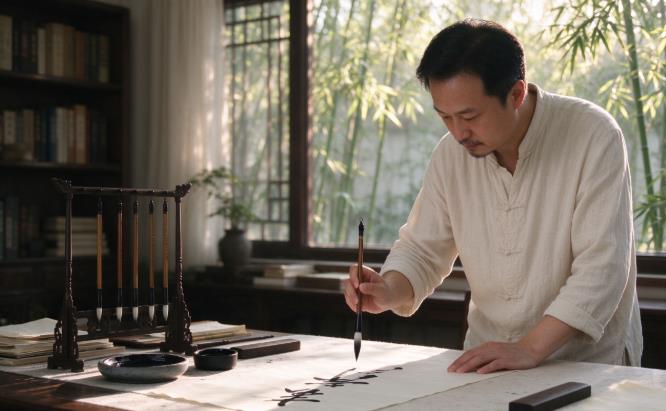
This guide walks you through the first steps: choosing materials, setting up your workspace, holding the brush, practicing basic strokes, and writing your first characters.
What You Need to Begin
You do not need a full professional set to start. A simple beginner kit is enough.
A medium brush.
Choose a medium-sized mixed-hair or wolf-hair brush. These brushes are slightly firmer and easier to control than very soft goat-hair brushes.
Black ink.
Liquid ink is perfectly fine for beginners. It is convenient, consistent, and easy to clean.
Practice paper.
Use grid paper or felt-backed calligraphy paper. Grids help you see proportion and balance.
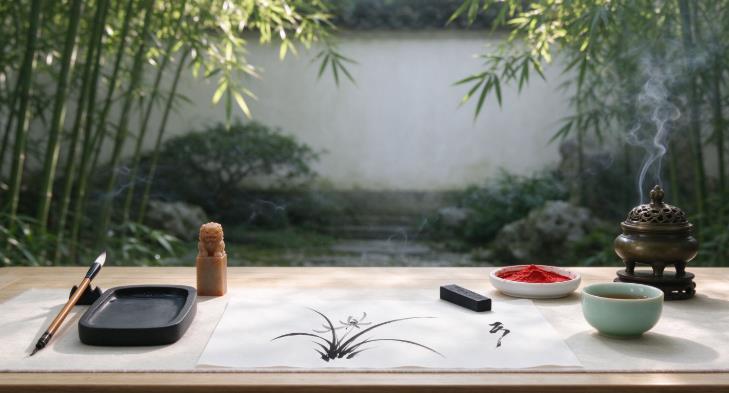
An ink dish or small container.
You do not need an expensive inkstone at the beginning. A small ceramic dish works well.
A felt mat or newspaper.
Place this under your paper to protect the table and absorb extra ink.
If you are buying your first set, look for a basic “calligraphy starter set.” These usually include a brush, ink, paper, and a small ink dish.
Set Up Your Workspace
Calligraphy is easier when your body and materials are arranged comfortably.
Sit upright with both feet on the floor. Keep your shoulders relaxed and your back straight. Place the paper in front of you, slightly angled if that feels natural. Keep the ink dish within easy reach, but not so close that your sleeve touches it.
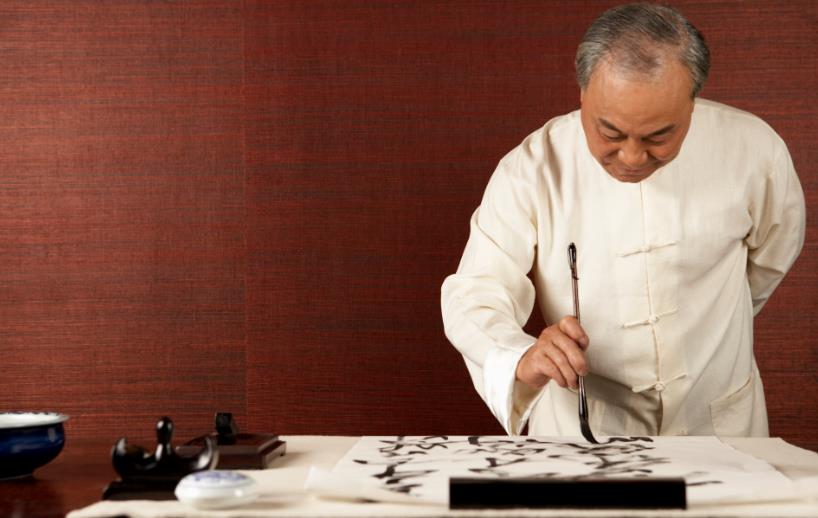
Before you begin, make sure your hands are clean and dry. Oily hands can make the brush handle slippery.
How to Hold the Brush
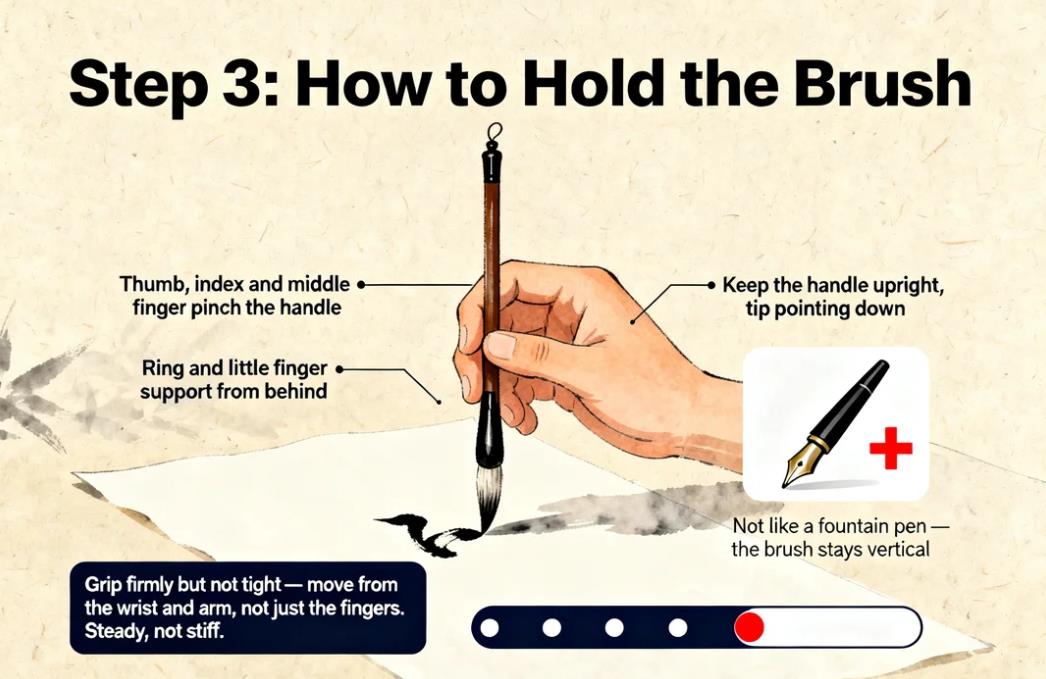
Holding a Chinese calligraphy brush is different from holding a pen. The brush should be held upright, not tilted like a pencil.
Use the following steps:
- Hold the brush handle between your thumb, index finger, and middle finger.
- Let your ring finger and little finger support the brush from behind.
- Keep the brush vertical, with the tip pointing downward.
- Hold firmly enough to control the brush, but not so tightly that your hand becomes stiff.
- Move from your wrist and arm, not just your fingers.
A helpful principle is to keep the hand relaxed but stable. If your grip is too tight, your lines will look tense. If it is too loose, the brush may slip or lose direction.
Practice Basic Strokes First
Do not rush into full characters. Start with basic strokes, because every Chinese character is built from them.
Horizontal stroke.
Place the brush gently on the paper, move steadily to the right, then lift slightly at the end. Try to keep the line even, not shaky.
Vertical stroke.
Start from the top and move straight down. Keep the line upright and controlled.
Dot.
Press the brush lightly, then lift. A dot is small, but it should feel complete, not careless.
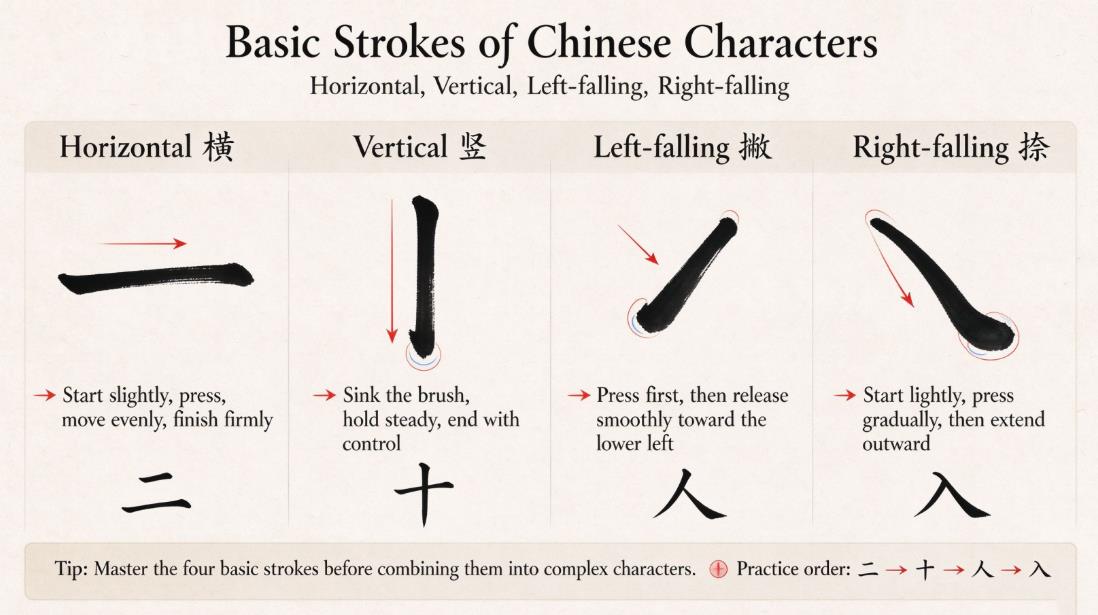
Left-falling stroke.
Move from upper right to lower left, gradually lifting the brush.
Right-falling stroke.
Press down slightly, then move to the right and lift. This stroke often appears in characters such as “人.”
Spend time repeating these strokes. The goal is not perfection. The goal is to feel how the brush responds to pressure, speed, and direction.
Write Your First Characters
Once you feel more comfortable with basic strokes, try simple characters.
一
This character means “one.” It is a single horizontal stroke, but it still requires control. Start gently, move steadily, and end cleanly.
二
This character means “two.” It has two horizontal strokes. The upper stroke is usually shorter, and the lower stroke is longer.
三
This character means “three.” It has three horizontal strokes. Pay attention to spacing so the character looks balanced.
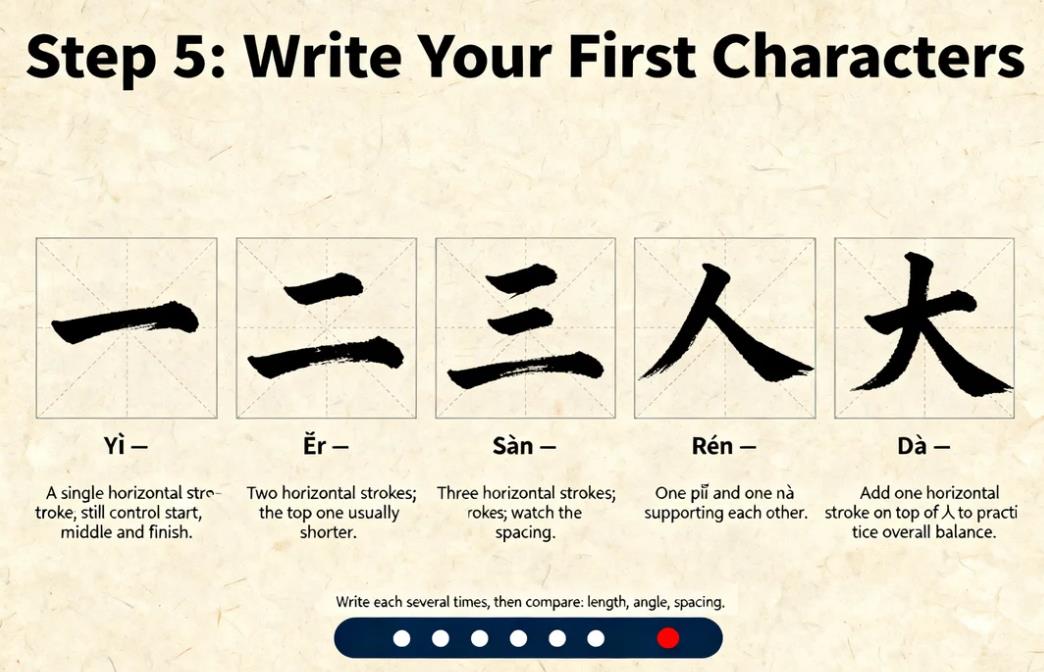
人
This character means “person.” It is made of two strokes: a left-falling stroke and a right-falling stroke. Notice how the two strokes support each other.
大
This character means “big.” It is based on “人” with an added horizontal stroke. It is a good character for practicing balance.
Write each character several times. Compare your versions and notice small differences in length, angle, and spacing.
Common Mistakes to Avoid
Holding the brush like a pen.
A pen is usually held at an angle. A calligraphy brush should be more vertical.
Pressing too hard.
Heavy pressure can make strokes look flat and lifeless. Try varying light and heavy pressure instead.
Moving too fast.
Speed can be expressive later, but beginners should focus on control first.
Ignoring stroke order.
Stroke order helps characters look balanced. For most simple characters, write from top to bottom and left to right.
Expecting immediate results.
Calligraphy improves gradually. Even ten minutes of focused practice can make a difference.
A Simple Practice Routine
You do not need long sessions to begin. A short, regular routine is better than occasional long practice.
Try this twenty-minute plan:
- Spend three minutes preparing your materials and posture.
- Spend five minutes practicing basic strokes.
- Spend ten minutes writing simple characters.
- Spend two minutes reviewing your work and cleaning your brush.
Clean your brush with water after each session. Do not leave ink in the brush, as it will damage the hairs.
How to Keep Improving
After you feel comfortable with simple characters, you can gradually expand your practice.
Copy models from printed copybooks. This traditional method is called “lin mo,” and it helps you learn structure and rhythm. Start with regular script, because it is the clearest foundation.
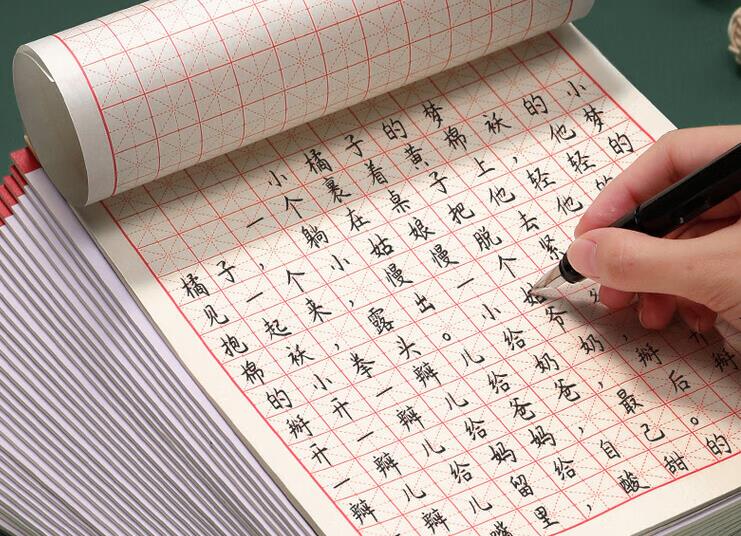
You can also study one character at a time. Write it repeatedly, compare it with the model, and adjust one detail at a time. Over time, your eye will become as important as your hand.
Calligraphy is not only about producing beautiful characters. It is also about patience, attention, and steady improvement. The more calmly you practice, the more you will notice subtle changes in your brushwork.
Frequently Asked Questions
Do I need to read Chinese to practice calligraphy?
No. Beginners can start by learning a few simple characters and basic strokes. Understanding meaning helps, but it is not required at the very beginning.
Which script should beginners learn first?
Regular script is usually the best starting point. It is clear, structured, and helpful for building control.
How often should I practice?
Even fifteen to twenty minutes a day is useful. Consistency matters more than long, irregular sessions.
What is the hardest part for beginners?
Brush control is usually the biggest challenge. Learning how much pressure to apply and how to lift the brush takes time.
Can I practice calligraphy without a teacher?
Yes. Many people begin with books, videos, or copybooks. A teacher can give feedback, but self-practice is still valuable if you study models carefully.



There are no comments yet, come and comment~