
The Four Great Classical Novels are widely regarded as the highest achievements of traditional Chinese fiction. They are:
- Romance of the Three Kingdoms
- Water Margin
- Journey to the West
- Dream of the Red Chamber
These novels were not written as a single group. They come from different periods, tell very different stories, and represent different literary traditions. The label “Four Great Classical Novels” became common in modern times as a way of summarizing China’s most influential pre-modern novels.
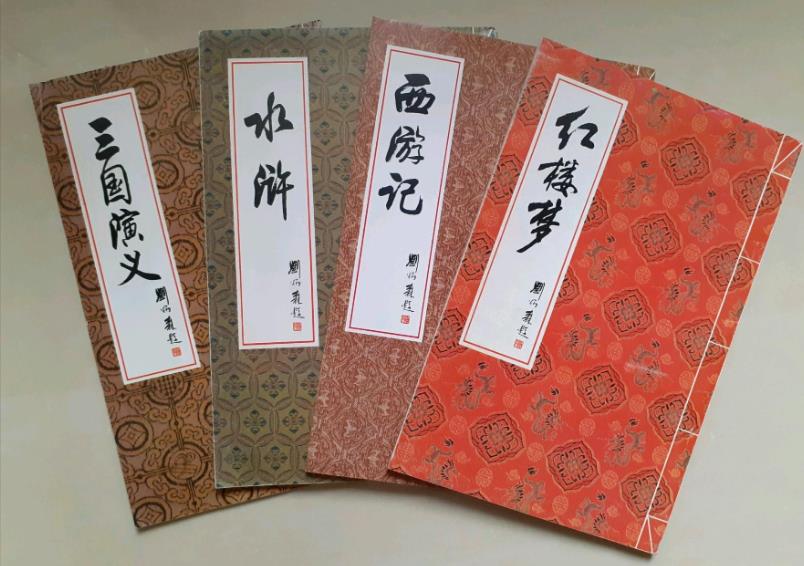
Together, they cover war, politics, rebellion, friendship, spirituality, family life, love, social hierarchy, and human ambition. They have shaped Chinese storytelling, theater, film, television, video games, and popular imagination for centuries.
Romance of the Three Kingdoms
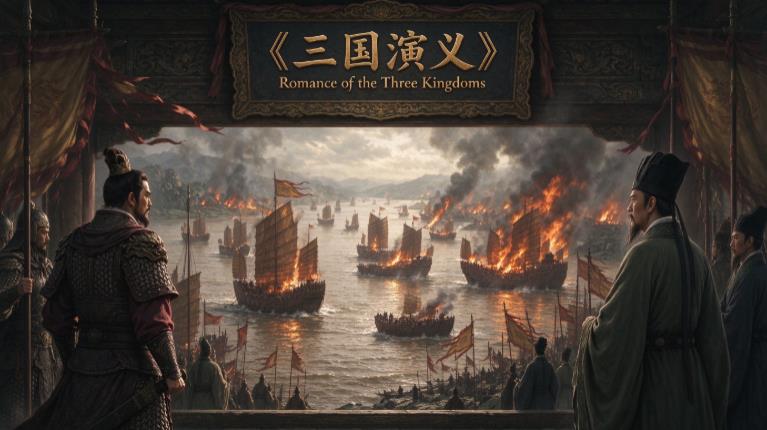
Romance of the Three Kingdoms, attributed to Luo Guanzhong, is set during the late Eastern Han dynasty and the Three Kingdoms period. It blends historical events with legend, military strategy, political drama, and memorable characters.
The novel follows the struggle among three rival states:
- Wei
- Shu
- Wu
It begins with the decline of the Han dynasty and ends with the eventual reunification under the Jin dynasty.
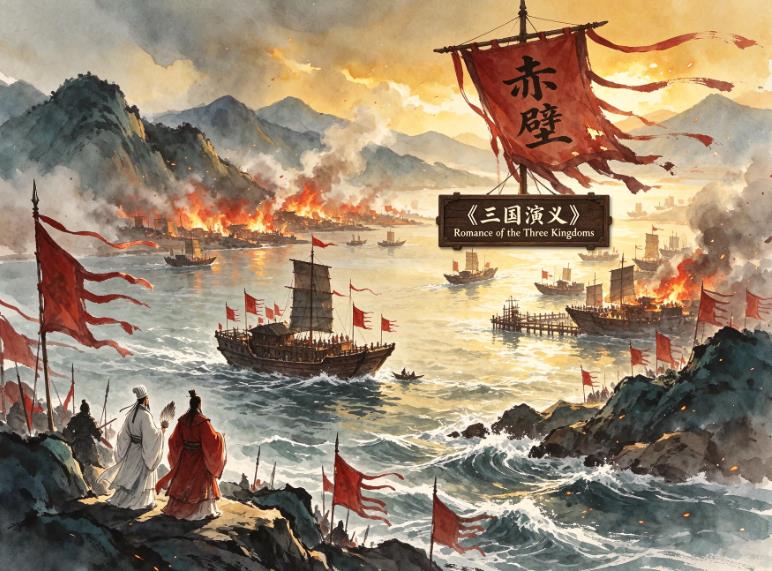
Some of its most famous characters include:
- Liu Bei, a leader associated with benevolence and legitimacy;
- Guan Yu, celebrated for loyalty and righteousness;
- Zhang Fei, known for his boldness and fierce temperament;
- Zhuge Liang, the brilliant strategist;
- Cao Cao, a powerful and complex ruler often portrayed as ambitious and cunning.
The novel is famous for its military schemes, moral dilemmas, and political alliances. Phrases such as “the empire, long divided, must unite; long united, must divide” capture its sense of historical cycle.
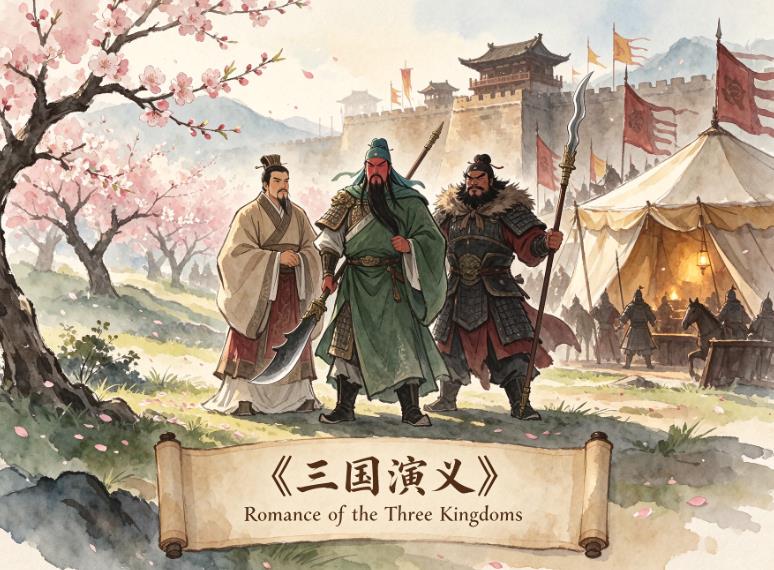
Romance of the Three Kingdoms has had enormous cultural influence. Its characters appear in opera, festivals, temples, business idioms, and modern games. Guan Yu, for example, is still widely respected as a symbol of loyalty.
Water Margin
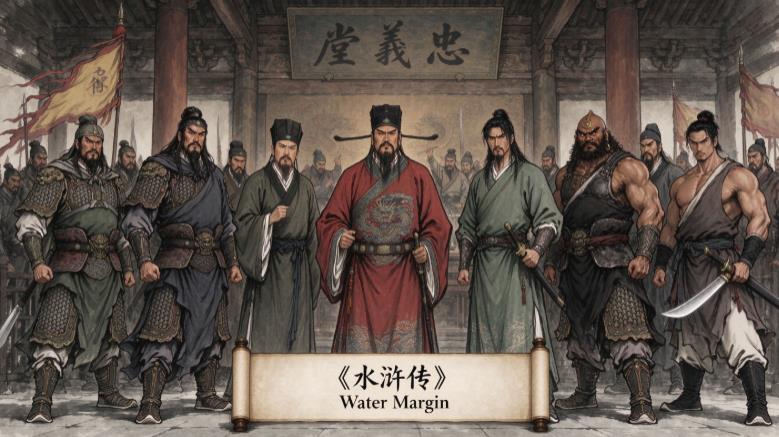
Water Margin, also known as Outlaws of the Marsh, is commonly attributed to Shi Nai’an, sometimes together with Luo Guanzhong. It tells the story of 108 outlaws who gather at Mount Liang during the Song dynasty.
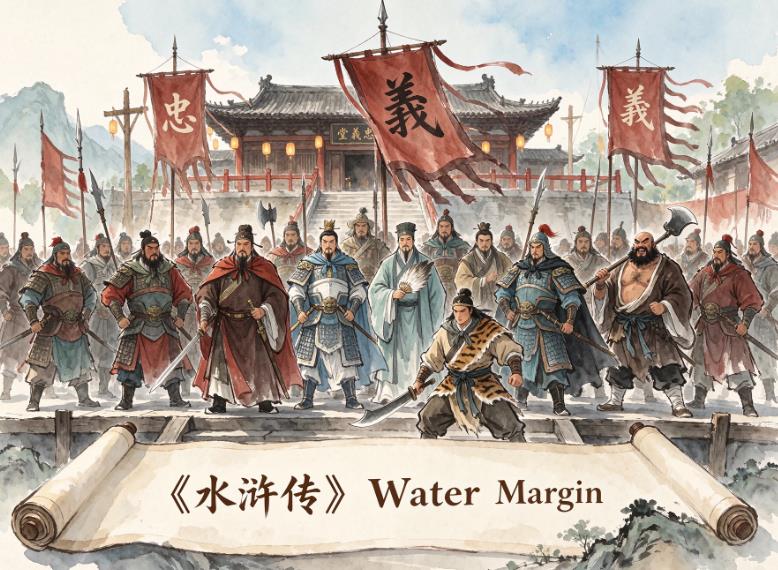
These characters come from different backgrounds: soldiers, officials, fishermen, priests, scholars, and martial artists. Many are forced into outlaw life because of corruption, injustice, or abuse of power.
The novel explores several themes:
- Loyalty among brothers;
- Resistance against corrupt officials;
- The tension between rebellion and loyalty to the throne;
- The moral ambiguity of violence;
- The desire for justice in an unequal society.
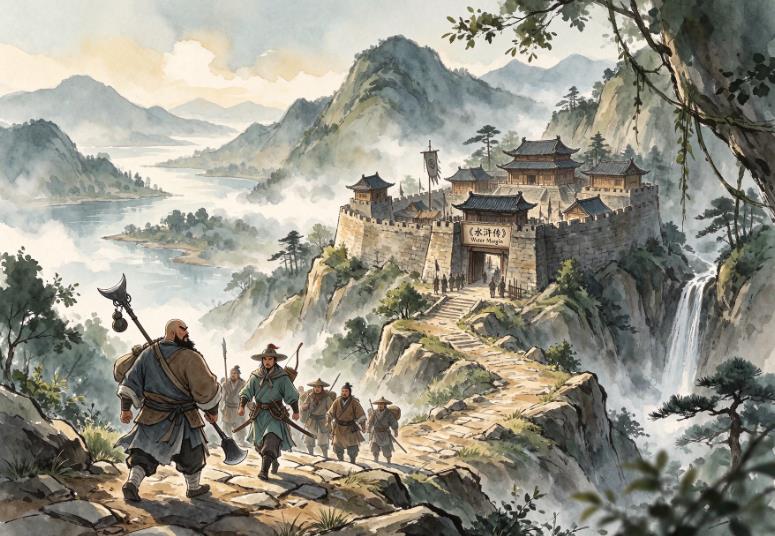
The 108 heroes are often described as possessing distinctive personalities and skills. Some are celebrated for physical strength, others for intelligence, martial arts, or strategic thinking.
Water Margin is more earthy and violent than Romance of the Three Kingdoms. It focuses less on high politics and more on local society, personal honor, and the limits of official authority.
Journey to the West
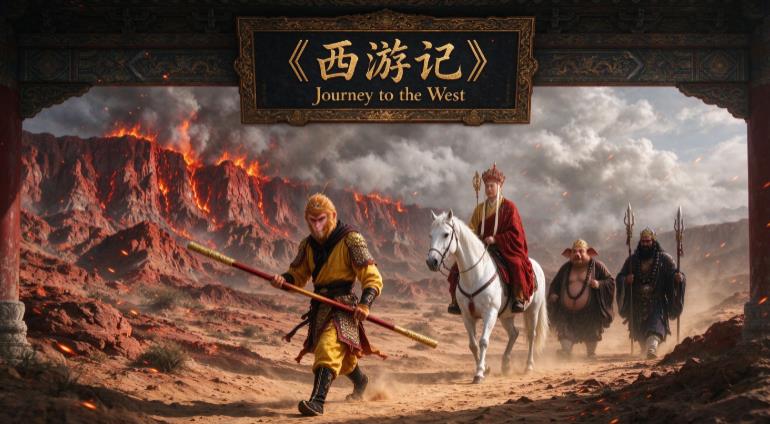
Journey to the West, attributed to Wu Cheng’en, is one of the most imaginative novels in Chinese literature. On the surface, it tells the story of a Buddhist monk’s pilgrimage from China to India to obtain sacred scriptures.
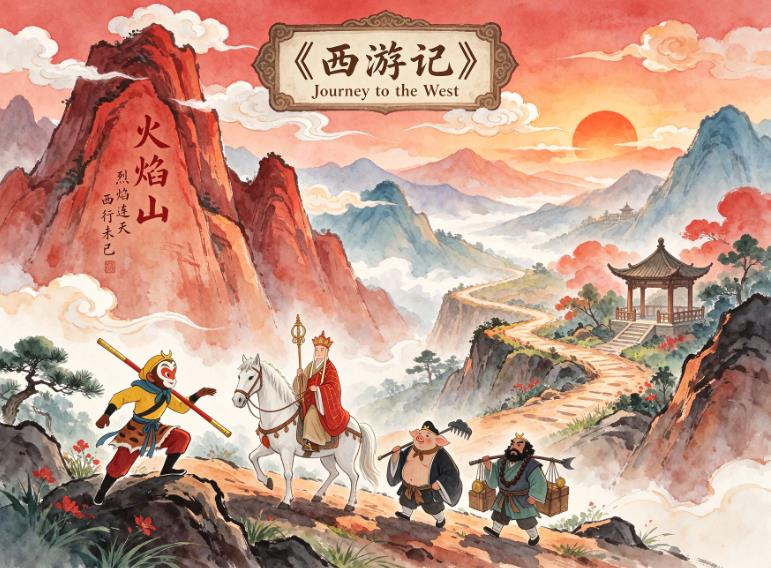
The main characters include:
- Tang Sanzang, the monk who leads the pilgrimage;
- Sun Wukong, the Monkey King, born from a stone and gifted with supernatural powers;
- Zhu Bajie, the pig-like disciple, often comic and desire-driven;
- Sha Wujing, the quiet and steady disciple;
- The White Dragon Horse, who carries Sanzang on the journey.
The journey is filled with demons, monsters, magical transformations, Buddhist and Daoist deities, and moral tests. Each episode often symbolizes inner struggle, temptation, discipline, or spiritual growth.
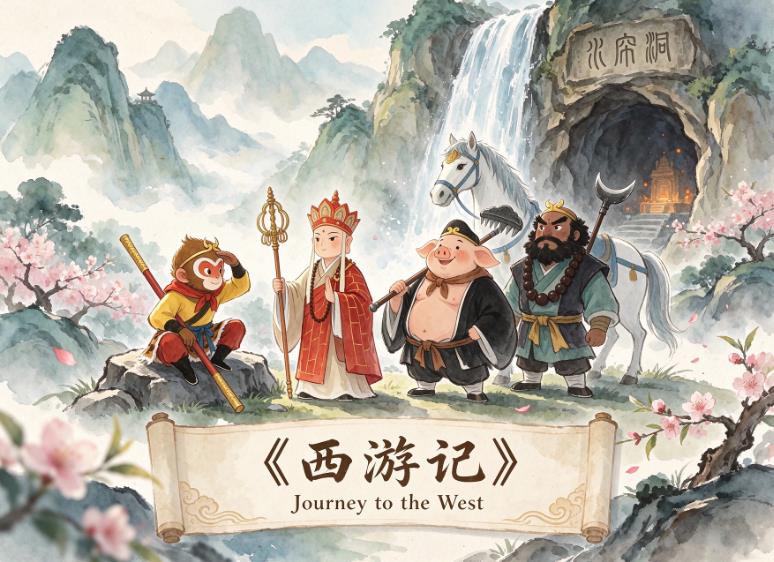
Sun Wukong is one of the most popular characters in all of Chinese fiction. He represents rebellion, cleverness, energy, and eventual spiritual maturity. His image appears in children’s stories, animation, opera, films, and video games.
Unlike the other three novels, Journey to the West is strongly shaped by religious imagination. It blends Buddhist pilgrimage, Daoist mythology, folk religion, humor, and adventure.
Dream of the Red Chamber
Dream of the Red Chamber, also known as The Story of the Stone, is attributed to Cao Xueqin, with later chapters often associated with Gao E. It is generally considered the most refined and psychologically complex of the four novels.
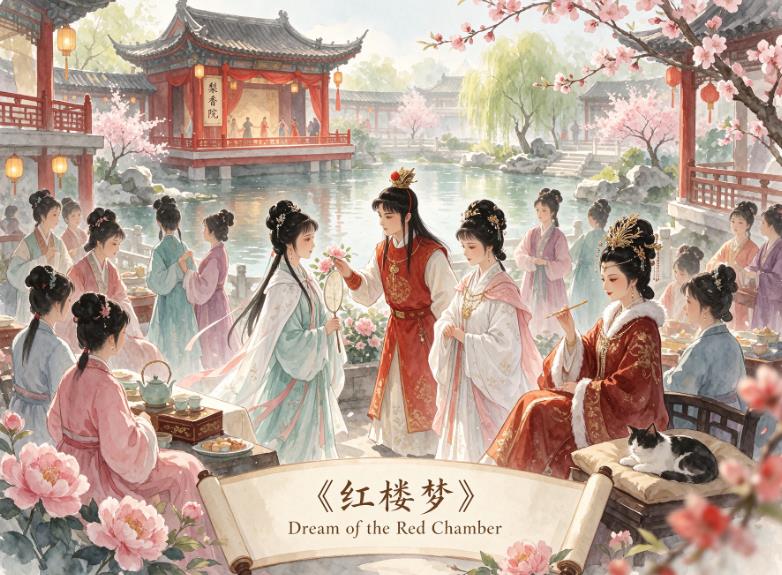
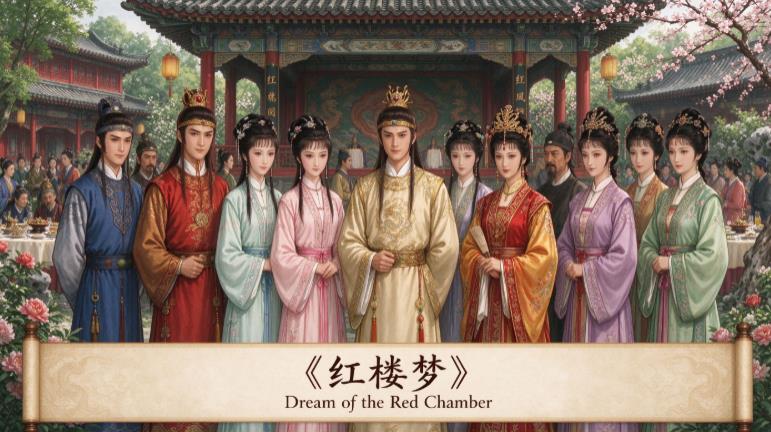
The story centers on the decline of an aristocratic family, the Jia household, and the emotional relationships among its members. The central figures include:
- Jia Baoyu, a sensitive young man born with a mysterious piece of jade;
- Lin Daiyu, his delicate, poetic, and emotionally intense cousin;
- Xue Baochai, another cousin, often portrayed as graceful, practical, and socially composed.
The novel portrays family rituals, marriage arrangements, servant life, garden culture, poetry clubs, food, clothing, medicine, theater, and Buddhist-Daoist ideas about fate and illusion.
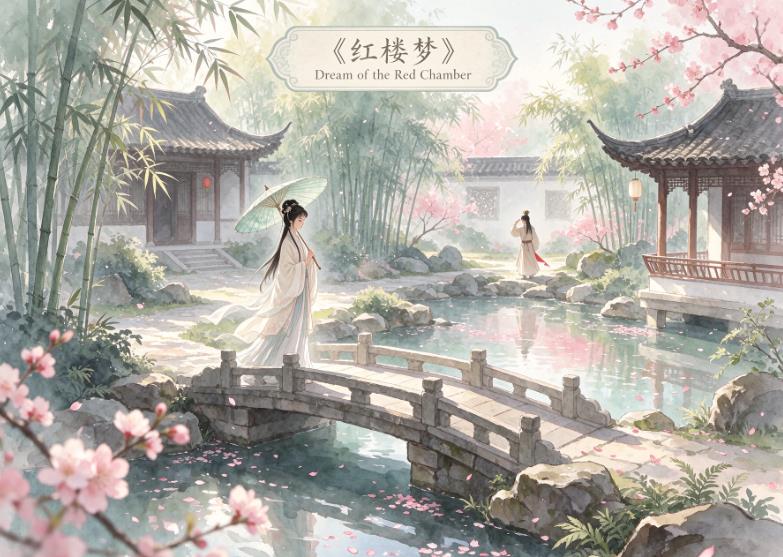
Its tone is often melancholy. It suggests that wealth, beauty, love, and power are temporary, and that human attachment brings both joy and suffering.
Dream of the Red Chamber is famous for its large cast of characters, subtle psychology, and rich depiction of elite Qing-dynasty life. It has given rise to an entire field of study known as Redology.
How the Four Novels Differ
The four novels differ clearly in focus and tone. Romance of the Three Kingdoms emphasizes war, politics, and strategy, with a grand and historical atmosphere. Water Margin focuses on rebellion, brotherhood, and social justice, giving it a rougher and more earthy tone. Journey to the West centers on pilgrimage, magic, and spiritual growth, making it the most imaginative and humorous of the four. Dream of the Red Chamber turns inward to family life, love, decline, and illusion, and is the most lyrical and psychologically complex.
These differences make the four novels complementary. One emphasizes history, another social injustice, another spiritual adventure, and the last intimate family life.
Why They Became “Classical”
These novels became classics for several reasons.
First, they reached wide audiences. Although rooted in literary tradition, they absorbed storytelling, theater, and folk culture.
Second, they created unforgettable characters. Figures such as Zhuge Liang, Guan Yu, Sun Wukong, Lin Daiyu, and Li Kui remain culturally active long after the novels were written.
Third, they shaped later Chinese fiction. Many later novels borrowed their narrative methods, character types, and moral concerns.
Fourth, they are highly adaptable. Their stories have been retold in opera, television dramas, films, comics, animation, and video games.
Historical Origins and Authorship
The authorship of these novels is not always simple. Early Chinese fiction often developed from oral storytelling, earlier scripts, and popular legends. Writers and editors refined these materials into longer novels.
- Romance of the Three Kingdoms grew from historical records and centuries of popular storytelling about the Three Kingdoms period.
- Water Margin developed from folk tales about outlaws and local heroes.
- Journey to the West drew on Buddhist pilgrimage stories, folk religion, and earlier monkey legends.
- Dream of the Red Chamber is more clearly the work of an individual author, though its textual history remains complex.
This layered origin explains why the novels feel both literary and popular. They belong to elite culture and mass entertainment at the same time.
Common Themes
Despite their differences, the four novels share some recurring concerns:
- Fate and human choice;
- Loyalty and betrayal;
- Justice and corruption;
- The limits of power;
- Family obligation;
- Spiritual cultivation;
- The tension between personal desire and social order.
They do not offer simple moral lessons. Instead, they present complicated worlds where good and bad intentions often overlap.
Reading Order for Beginners
For readers new to Chinese classical fiction, the best starting point depends on personal interest.
- Start with Journey to the West if you enjoy adventure, humor, and fantasy.
- Start with Romance of the Three Kingdoms if you are interested in history, war, and strategy.
- Start with Water Margin if you like heroic outlaws, martial culture, and social conflict.
- Start with Dream of the Red Chamber if you prefer family drama, romance, psychology, and detailed social description.
Dream of the Red Chamber is often considered the most rewarding but also the most demanding. Its large number of characters and subtle emotional shifts can be challenging for first-time readers.
Frequently Asked Questions
Who wrote the Four Great Classical Novels?
They are commonly attributed to Luo Guanzhong, Shi Nai’an, Wu Cheng’en, and Cao Xueqin, but early Chinese novels often had complex authorship and editorial histories.
Which one should I read first?
Journey to the West is usually the most accessible for general readers. Romance of the Three Kingdoms suits readers interested in history, while Dream of the Red Chamber suits readers who enjoy psychological and family drama.
Are these novels based on real history?
Romance of the Three Kingdoms and Water Margin draw on historical periods, but they are fictionalized. Journey to the West is largely imaginative. Dream of the Red Chamber is fictional but reflects real social life in the Qing dynasty.
Why is Dream of the Red Chamber so highly regarded?
It is praised for its psychological depth, poetic language, large cast of characters, and detailed portrayal of family life, gender relations, and social decline.



There are no comments yet, come and comment~