Traditional Chinese Materia Medica does not classify substances in the same way as modern pharmacology. Instead of focusing only on chemical components, traditional texts often describe substances through a set of inherited concepts. The most familiar of these are the Four Natures, the Five Flavors, and Meridian Associations.
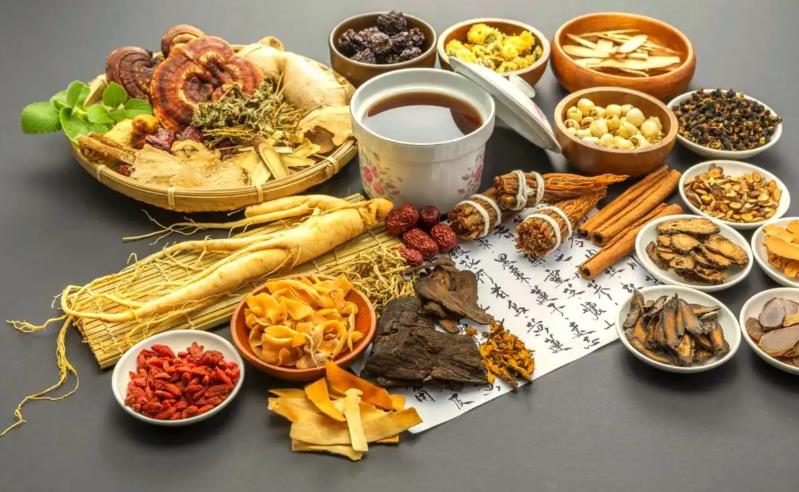
These ideas belong to a historical framework. They help explain how traditional scholars, practitioners, and households understood natural substances. This article introduces them for cultural and educational reference only. It does not provide medical advice, dosing guidance, or treatment recommendations.
Why Classification Matters in Bencao
In Chinese herbal tradition, classification is not just a cataloging method. It reflects how people tried to make sense of the natural world.
Early herbals grouped substances by perceived qualities, observed effects, taste, source, and traditional associations with the body. Over time, these groupings became more systematic. They allowed practitioners and readers to compare substances, discuss their properties, and record inherited knowledge.
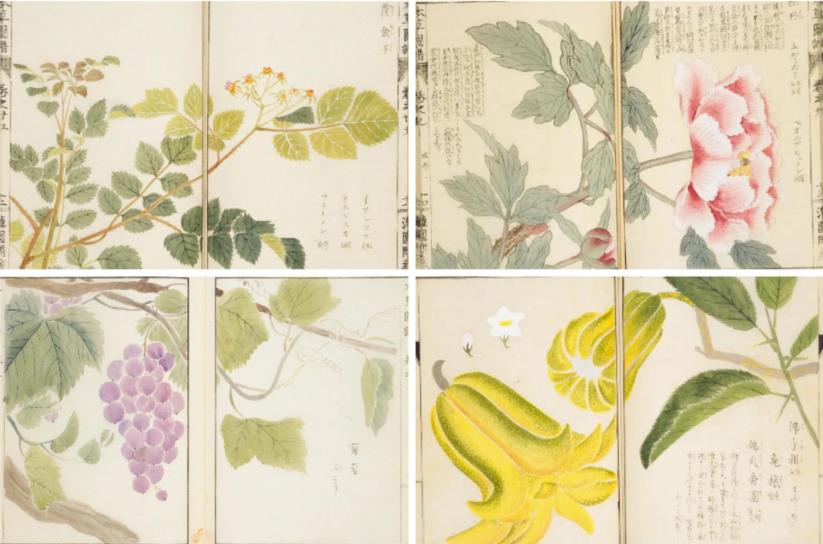
For modern readers, these categories should be understood as part of cultural history. They are not direct equivalents of modern biomedical classifications.
The Four Natures: Thermal Qualities in Traditional Thought
The “Four Natures” refers to traditional thermal qualities associated with a substance. In many texts, these are described as:
- Cold
- Cool
- Warm
- Hot
Some substances are also described as neutral, meaning they were not considered strongly warming or cooling.
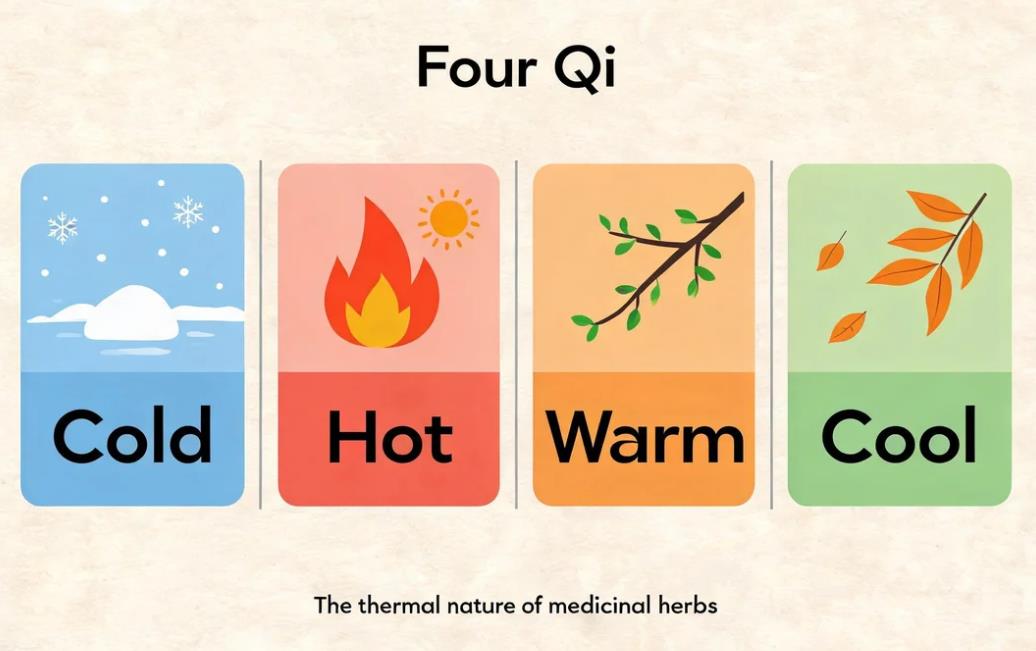
These terms do not refer to physical temperature. A “cold” substance is not necessarily cold to the touch. Instead, the classification expresses how the substance was traditionally understood within a broader system of balance.
For example, a substance described as “cooling” might historically have been associated with calming heat-like conditions in traditional theory. A “warming” substance might have been linked with supporting movement, circulation, or warmth in the same framework. These are traditional descriptions, not modern medical claims.
The Five Flavors: Taste as a Traditional Guide
The “Five Flavors” are:
- Pungent
- Sweet
- Sour
- Bitter
- Salty
In traditional theory, flavor was not only about taste. It was also seen as a clue to a substance’s directional tendency and functional character.
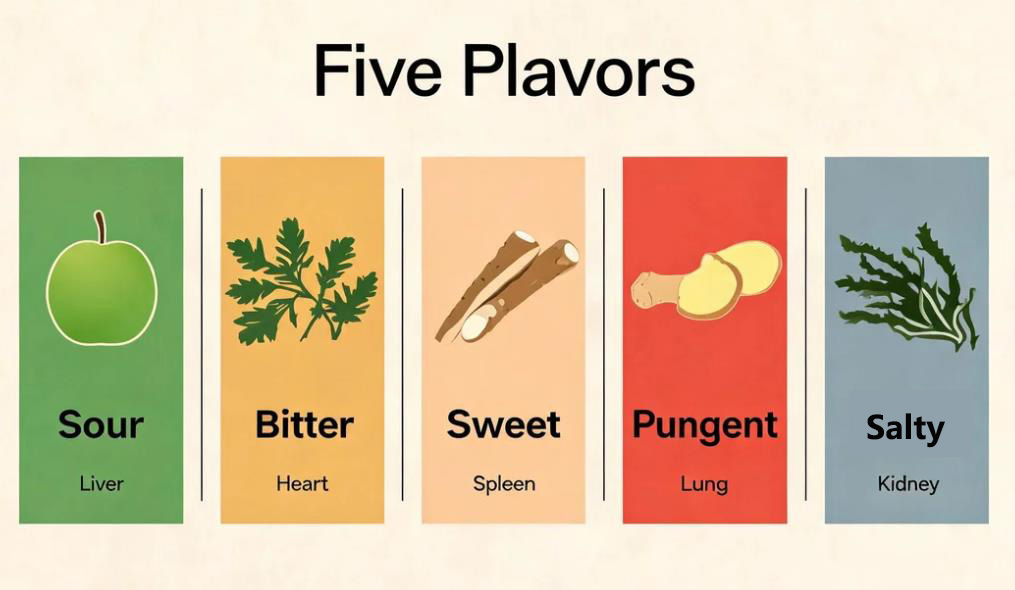
For example:
- Pungent substances were often associated with dispersing or moving qualities;
- Sweet substances were often linked with nourishing, moderating, or harmonizing;
- Sour substances were commonly associated with gathering or restraining;
- Bitter substances were often connected with drying or descending;
- Salty substances were sometimes associated with softening or guiding downward.
These associations should not be taken as universal rules. Many substances have complex or mixed properties, and different historical texts may describe them differently.
Meridian Associations: Traditional Pathways in the Body
“Meridian Associations,” often called guijing in Chinese, describe how a substance was traditionally thought to relate to certain organ systems or channels. For example, a substance might be described as entering the Lung meridian, the Spleen meridian, or the Liver meridian.
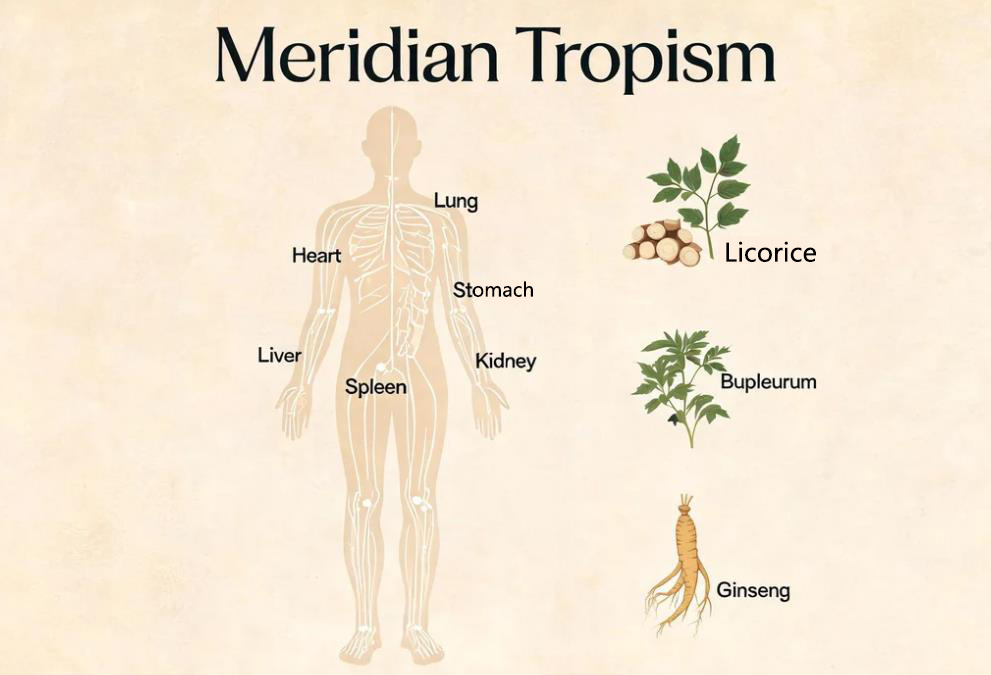
This idea comes from traditional Chinese medical theory, which views the body as an interconnected system rather than a collection of isolated parts. Meridians are not the same as anatomical structures such as blood vessels or nerves. They are conceptual pathways used within traditional practice.
For cultural readers, it is helpful to remember that meridian associations are part of a traditional model. They do not directly correspond to modern physiological measurements.
Directional Tendencies: Rising, Falling, Floating, and Sinking
Some traditional texts also describe substances by directional tendencies:
- Ascending
- Descending
- Floating
- Sinking
These terms describe how a substance was believed to influence the direction of movement within the traditional framework. For example, an “ascending” substance might be associated with lifting or raising, while a “descending” substance might be linked with directing influence downward.
Like the Four Natures and Five Flavors, these categories are interpretive. They reflect a traditional way of organizing experience rather than a modern laboratory classification.
How These Categories Work Together
In traditional practice, a substance is rarely described by only one property. A single entry may include its nature, flavor, meridian associations, and directional tendency.
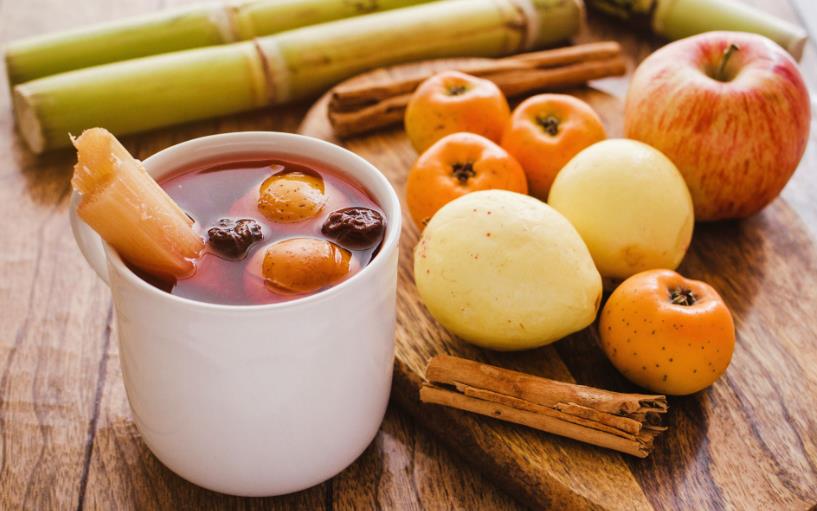
For example, a traditional description might say that a substance is warm in nature, sweet in flavor, and associated with certain meridians. These properties would then be considered together when discussing its traditional role.
This system is more holistic than a single-ingredient checklist. It assumes that substances interact with each other and with the individual’s condition. That is why traditional formulas often combine multiple substances rather than relying on one alone.
Traditional Pairing and Compatibility
Chinese Materia Medica also includes ideas about compatibility. Some substances were traditionally paired because they were believed to support each other. Others were avoided together because they were thought to conflict.
These pairing rules developed over long periods of observation and textual transmission. They are part of professional training in traditional practice and should not be used for self-experimentation.
From Classical Texts to Everyday Culture
Many of these classification ideas still appear in everyday Chinese culture. People may speak of certain foods as “warming” or “cooling.” Families may choose ginger, chrysanthemum, red dates, or goji berries based on seasonal habits.
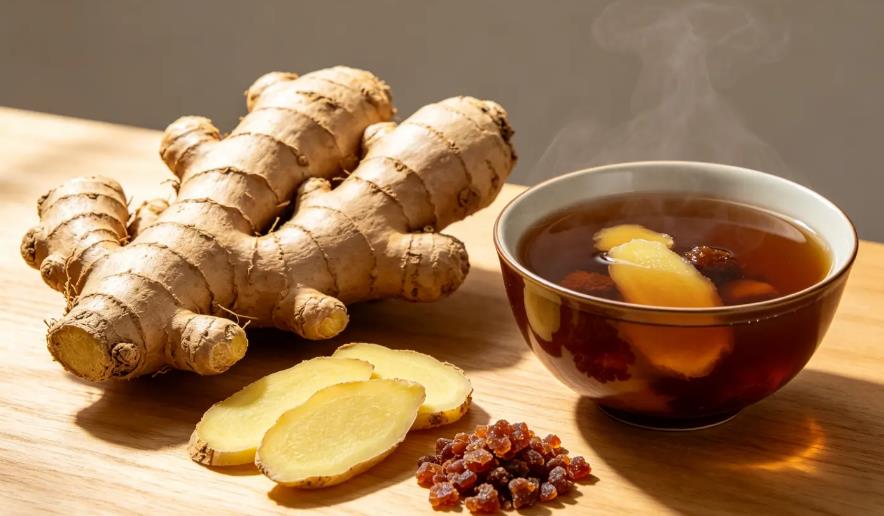
However, everyday food customs are not the same as professional herbal practice. A tea ingredient used in daily life should not automatically be treated as a therapeutic prescription.
Common Misunderstandings
One common misunderstanding is that the Four Natures describe physical temperature. They do not. They describe traditional thermal qualities within a conceptual system.
Another misunderstanding is that the Five Flavors mean a substance must literally taste strongly sweet, bitter, or salty. In traditional texts, flavor can be symbolic, functional, or based on inherited classification rather than simple taste.
A third misunderstanding is that meridian associations describe modern anatomy. They do not. Meridians belong to a traditional theoretical model.
Safety and Responsible Understanding
Traditional classification systems are valuable for understanding Chinese cultural history. They are not substitutes for professional medical evaluation.
Readers should not attempt to diagnose themselves, create formulas, or adjust dosages based on these concepts. Natural substances can have strong effects, interact with medications, or be unsuitable for certain individuals.
This article is for cultural and educational reference only. It does not replace diagnosis or treatment by a licensed health professional.
Frequently Asked Questions
What are the Four Natures?
They are traditional thermal qualities—cold, cool, warm, and hot—used to describe how a substance was understood in classical Chinese thought. Some substances are also described as neutral.
What do the Five Flavors represent?
The Five Flavors—pungent, sweet, sour, bitter, and salty—are traditional categories that help describe a substance’s perceived character and directional tendency.
Are meridian associations the same as nerves or blood vessels?
No. Meridians are conceptual pathways in traditional Chinese theory. They are not identical to modern anatomical structures.
Can I use these categories to choose herbs by myself?
No. These categories belong to a complex traditional system. Personal use of herbal substances should be discussed with qualified professionals, especially if you have health conditions or take medications.