
If acupuncture is the most visible part of Traditional Chinese Medicine, then meridians and acupuncture points are its map. They explain why a point on the hand may be chosen for a headache, why a point on the leg may be used for digestion, and why practitioners do not simply needle wherever there is pain.
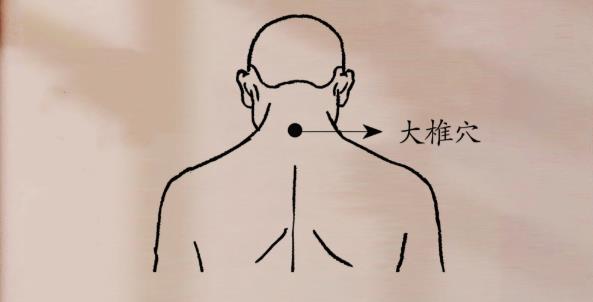
This guide introduces the meridian system, the main groups of acupuncture points, and how they are used in treatment. It is written as a cultural and educational overview, not as medical advice.
What Are Meridians?
In Traditional Chinese Medicine, meridians, or jingluo, are pathways through which qi and blood are believed to circulate. They connect the surface of the body with the internal organs, forming a network that links distant areas together.
Meridians are best understood as a functional model. They are not blood vessels, nerves, or visible channels that can be seen in anatomy. Instead, they describe how Chinese medicine understands relationships between different parts of the body. This is why the system often treats the body as a whole rather than as isolated regions.
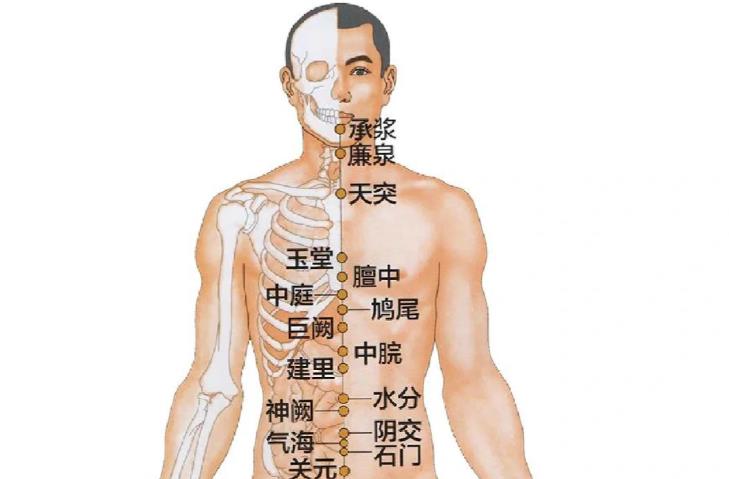
The meridian system includes several types of channels. The most commonly referenced are the twelve main meridians, each associated with an organ system. There are also eight extraordinary vessels, which are seen as deeper reservoirs that regulate the main meridians.
The Twelve Main Meridians
The twelve main meridians are usually paired by yin and yang, and by internal and external relationships. Each meridian is named after an organ, but in Chinese medicine these organ names describe functional systems rather than only the physical organs studied in Western anatomy.
| Meridian | Type | Common associations |
|---|---|---|
| Lung | Yin | Breathing, skin, descending qi |
| Large Intestine | Yang | Elimination, clearing heat |
| Stomach | Yang | Digestion, receiving food |
| Spleen | Yin | Transformation, nourishment |
| Heart | Yin | Spirit, blood, circulation |
| Small Intestine | Yang | Separating clear from turbid |
| Bladder | Yang | Water metabolism, back region |
| Kidney | Yin | Essence, growth, foundation |
| Pericardium | Yin | Heart protection, emotional balance |
| San Jiao | Yang | Triple burner, fluid pathways |
| Gallbladder | Yang | Decision-making, sinews |
| Liver | Yin | Smooth flow of qi, blood storage |
This table is a simplified introduction. In practice, each meridian has a detailed pathway, a set of associated points, and a range of traditional functions.
What Are Acupuncture Points?
Acupuncture points, or xuewei, are specific locations on the body where qi is believed to be accessible from the surface. They are sometimes called acupoints. Each point has a name, a location, and traditional functions.
Points are not chosen at random. A practitioner selects them based on the patient’s pattern, the affected meridian, and the intended therapeutic direction. Some points are used to move stagnant qi, some to strengthen deficiency, some to clear heat, and some to calm the spirit.
Many points have descriptive names. For example, some names refer to gates, seas, springs, or streams. These names reflect the traditional image of qi flowing like water through channels.
How Points Are Located
In clinical practice, points are located using body measurements rather than fixed distances. This method is called cun. One cun is roughly the width of the patient’s own thumb at the knuckle, though other reference measurements are also used.
This personalized approach matters because bodies differ in size and proportion. A point is not simply “three centimeters from a landmark.” It is located relative to the individual’s own anatomy.
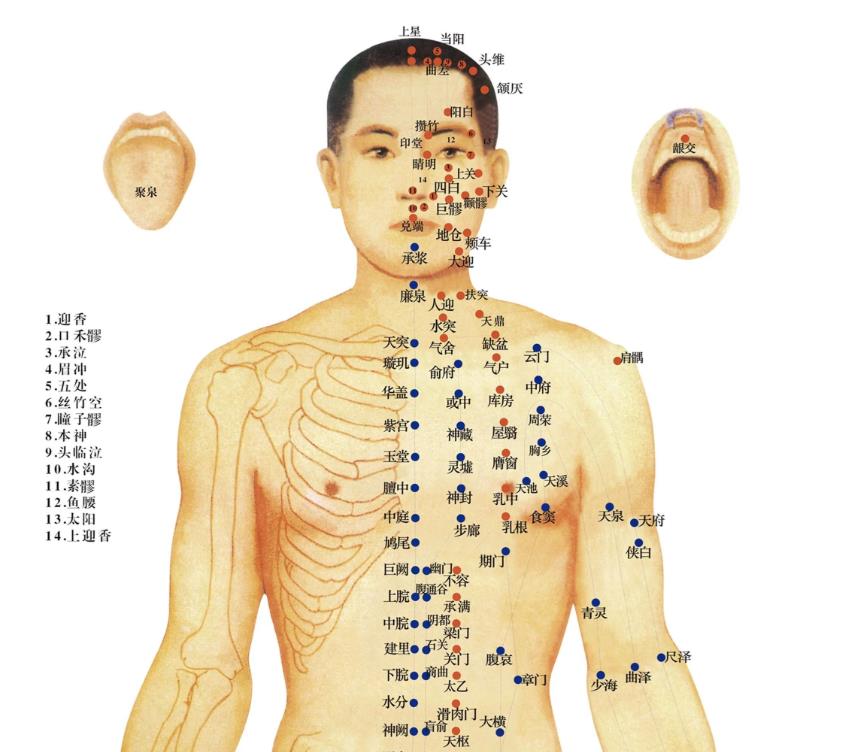
Common location methods include:
- measuring by cun;
- following the path of a meridian;
- using anatomical landmarks such as bones, tendons, and skin creases;
- feeling for tender or reactive areas.
Why Points Are Combined
A typical acupuncture treatment uses several points together. This is similar to how herbal formulas combine multiple herbs. One point may open a pathway, another may support the organ system, and another may guide the effect to a particular region.
Point combinations are chosen according to pattern diagnosis. Two people with the same symptom may receive different point selections if their underlying patterns are judged to be different. This is one reason acupuncture visits usually begin with a detailed assessment rather than immediate needling.
Common Point Categories
Acupuncture points are grouped in several ways. Some of the most frequently mentioned categories include:
- Shu points: points on the limbs associated with the zang-fu organs.
- Mu points: front alarm points often used for organ-related patterns.
- Yuan source points: points believed to access the original qi of a meridian.
- Luo connecting points: points that link paired meridians.
- Xi cleft points: points often used for acute conditions.
- Back shu points: points on the back associated with internal organs.
- Ashi points: tender or reactive points selected based on local sensation rather than fixed names.
These categories help practitioners organize treatment, but they are not a substitute for professional training.
Are Meridians Real?
This question depends on what “real” means. Meridians are real as a clinical and cultural model within Traditional Chinese Medicine. They have guided diagnosis and treatment for centuries. However, they are not anatomical structures that can be identified in the same way as bones, arteries, or nerves.
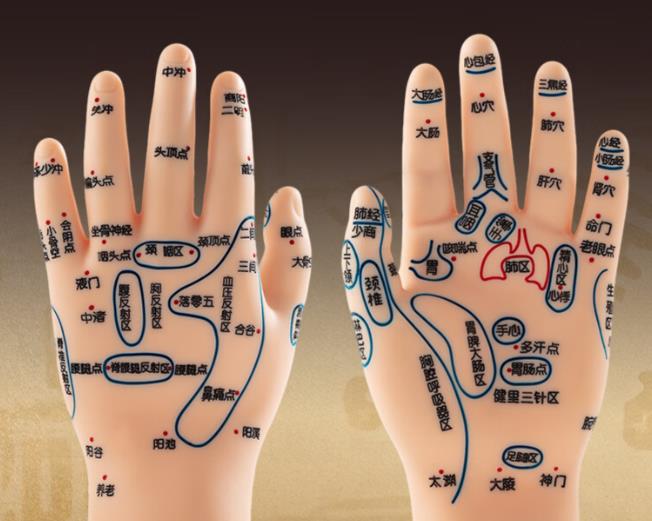
Modern research has explored whether meridians correspond to fascial planes, nerve pathways, vascular networks, or connective tissue patterns. Some findings suggest that acupuncture points may have distinct physiological features, such as differences in electrical resistance or nerve density. But there is no single agreed-upon anatomical explanation.
A balanced view is that meridians are a map of relationships. They may not describe physical tubes, but they do describe a way of understanding how symptoms, body regions, and organ functions can be connected.
Safety and Scope
Meridians and acupuncture points are part of a professional treatment system. They should not be used as a guide for self-needling. Locating points correctly, choosing safe combinations, and avoiding contraindications all require training.
This article is intended for cultural and educational reference only. It does not replace diagnosis or treatment by a qualified practitioner.
Frequently Asked Questions
How many meridians are there?
The most commonly taught system includes twelve main meridians and eight extraordinary vessels. There are also smaller channels and collateral pathways in the full classical system.
How many acupuncture points are there?
The number varies by source. The standard set of named points on the fourteen main channels is often cited as 361, with additional extra points used in practice.
Do meridians exist in the body?
They exist as a functional model in Chinese medicine, not as visible anatomical structures. Modern research continues to explore possible physiological correlates.
Can I press acupuncture points myself?
Some people use gentle acupressure for relaxation, but point selection and pressure should be approached carefully. Self-treatment is not a substitute for professional care.



There are no comments yet, come and comment~