
The Analects of Confucius, also known simply as The Analects, is a collection of sayings, dialogues, and short reflections attributed to Confucius and his disciples. It was compiled after Confucius’s death by his followers and is traditionally dated to the early Warring States period.
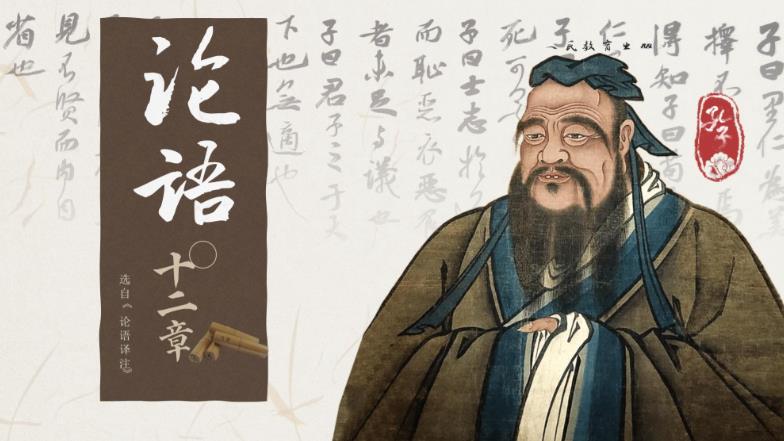
The book is not a systematic philosophical treatise. Instead, it reads like a series of conversations between a teacher and his students. These exchanges cover ethics, education, family life, government, friendship, self-cultivation, and the moral responsibilities of rulers.
For more than two thousand years, The Analects has been one of the most widely read texts in China and East Asia. It became one of the Four Books during the Song dynasty and played a central role in traditional Chinese education and civil examinations.
Who Was Confucius?
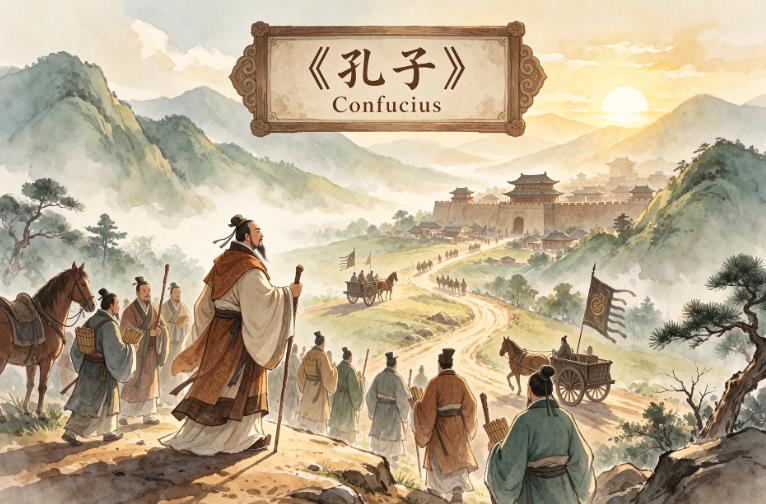
Confucius lived from 551 to 479 BC, during the late Spring and Autumn period. He was born in the state of Lu and worked as a teacher, political adviser, and moral thinker.
He did not leave behind a single authored book. His ideas were preserved mainly through The Analects, which records his conversations with disciples such as Yan Hui, Zilu, Zigong, and Zengzi.
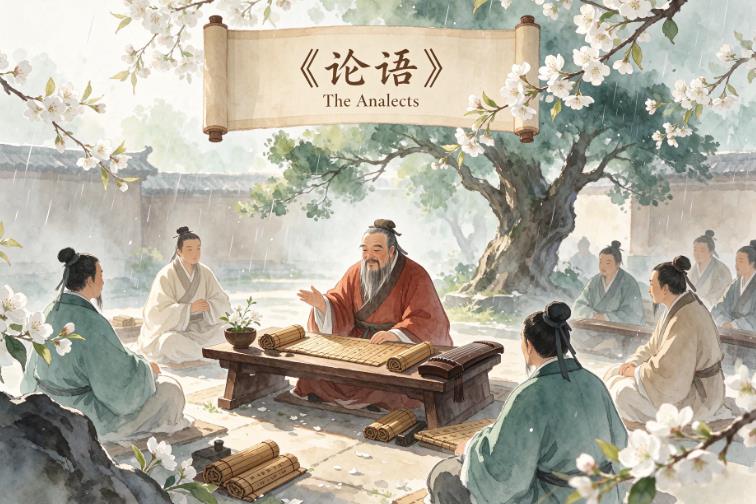
Confucius lived in a time of political fragmentation and social disorder. His central concern was how individuals and rulers could restore harmony through moral character, proper conduct, and responsible relationships.
What Is The Analects About?
The Analects focuses less on abstract metaphysics and more on practical moral life. Its main concern is how a person should behave in everyday relationships: as a child, a friend, a student, an official, or a ruler.
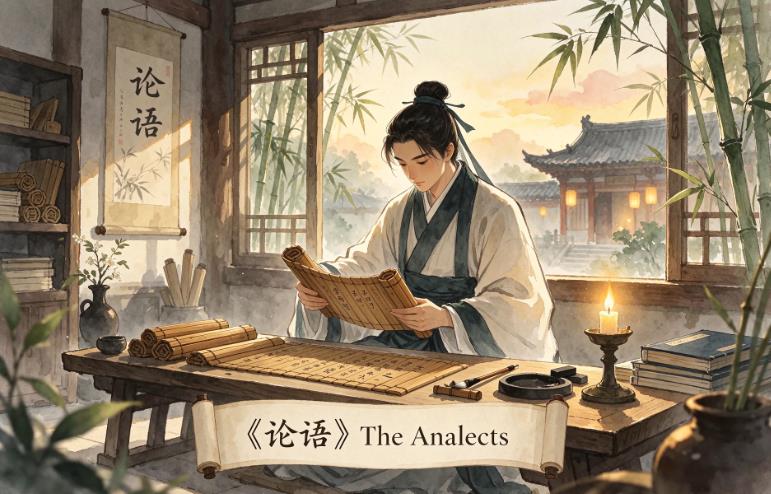
It emphasizes that moral order begins with the individual. A well-ordered society is not created only through laws or punishment, but through people who cultivate themselves, treat others with respect, and act with integrity.
Core Concepts
Several key ideas run through The Analects.
Ren is often translated as benevolence, humaneness, or goodness. It is considered the highest moral value in Confucian thought. Ren is not simply kindness; it is the capacity to care for others, to act with moral sensitivity, and to treat people with genuine respect.
Li is usually translated as ritual, propriety, or rites. It refers to appropriate behavior in social life: ceremonies, manners, family customs, and the norms that help people interact with dignity. For Confucius, li gives ren a concrete form.
Junzi is one of the most important concepts in the book. It is often translated as gentleman, superior person, or exemplary person. A junzi is not necessarily someone of high birth, but someone who strives to live with moral integrity, humility, and responsibility.
Filial piety, or xiao, means respect for one’s parents and ancestors. The Analects treats filial piety as the root of moral development. Care for family is seen as the first step toward caring for society.
The Way, or Dao, refers to the right path in life and governance. In The Analects, it often means the moral order that rulers and individuals should follow.
Ren: The Heart of Confucian Ethics
Ren is the moral center of The Analects. Confucius describes it in many ways, but its basic meaning is love for others. This love is not abstract; it begins with family and extends outward.
One famous formulation is: “Do not impose on others what you do not wish for yourself.” This expresses ren as a principle of empathy and restraint.

Another is: “If you wish to establish yourself, help others establish themselves; if you wish to succeed, help others succeed.” Here, ren becomes an active moral practice, not merely a feeling.
Confucius believed that ren cannot exist without sincerity. A person who only performs good actions for reputation has not truly cultivated ren.
Li: Ritual, Propriety, and Social Harmony
Li is sometimes misunderstood as empty ceremony. In The Analects, however, it is much broader. It includes rituals, but also everyday conduct: how one speaks, listens, dresses, greets others, mourns, governs, and treats family members.
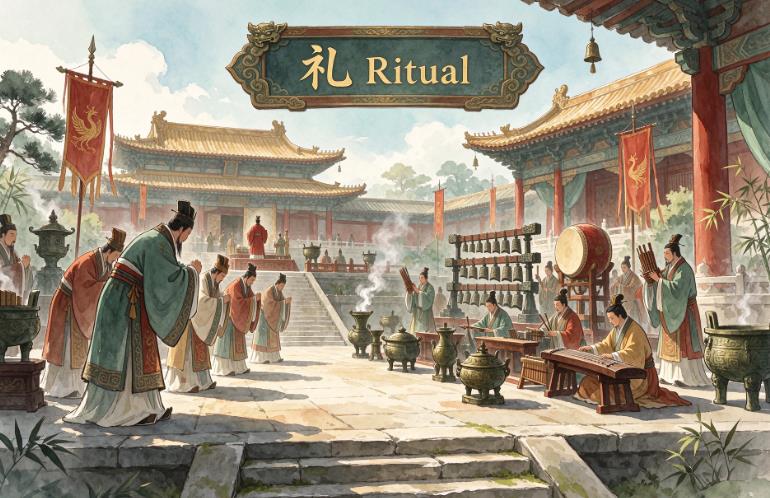
Confucius argued that ren without li lacks form, while li without ren becomes hollow. Proper ritual should express genuine respect. When people follow li with sincerity, social relationships become more stable and harmonious.
Li also shapes political life. A ruler who governs with propriety sets an example. People are guided not only by laws, but by the moral atmosphere created by those in authority.
The Junzi: The Moral Ideal
The junzi is the moral ideal in The Analects. This figure is often contrasted with the xiaoren, or “small person,” who is driven by narrow self-interest, short-term gain, or social advantage.
The junzi values righteousness over profit, self-reflection over blame, and learning over vanity. He is calm in difficulty, cautious in speech, and serious about moral improvement. He does not seek praise; he seeks to be worthy of trust.
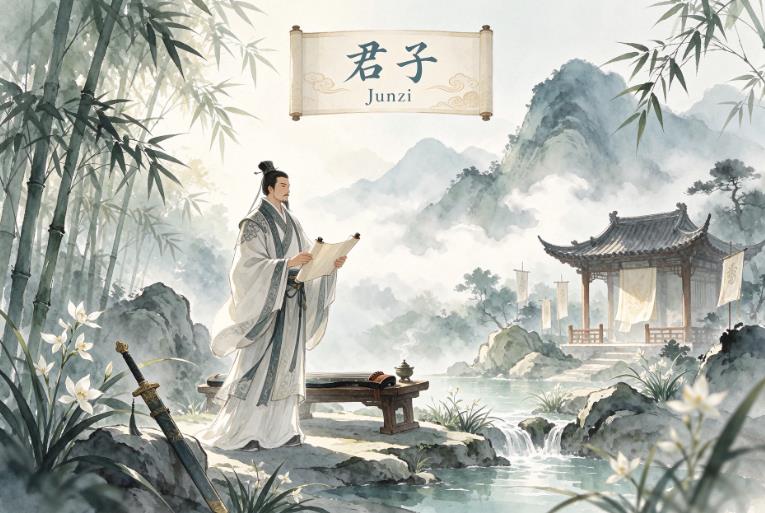
Importantly, becoming a junzi is not a matter of birth. It is a lifelong process of study, self-discipline, and ethical practice. Confucius believed that anyone willing to learn and reflect could move toward this ideal.
Filial Piety and Family Ethics
Family occupies a central place in The Analects. Confucius taught that respect for parents and elder brothers is the foundation of moral life.
Filial piety does not mean blind obedience. It involves care, respect, honesty, and emotional attentiveness. A filial child should serve parents with reverence while they are alive and remember them with sincerity after their death.

Confucius also linked family ethics to political order. If people learn respect, responsibility, and gratitude at home, they are more likely to act with integrity in public life.
Education and Self-Cultivation
Education is another major theme. Confucius is traditionally regarded as one of China’s earliest great teachers. He emphasized learning, reflection, and practice.
The opening line of The Analects is: “Is it not a pleasure to learn and to repeat or practice what has been learned?” This shows that learning is not passive. True knowledge must be tested through action.
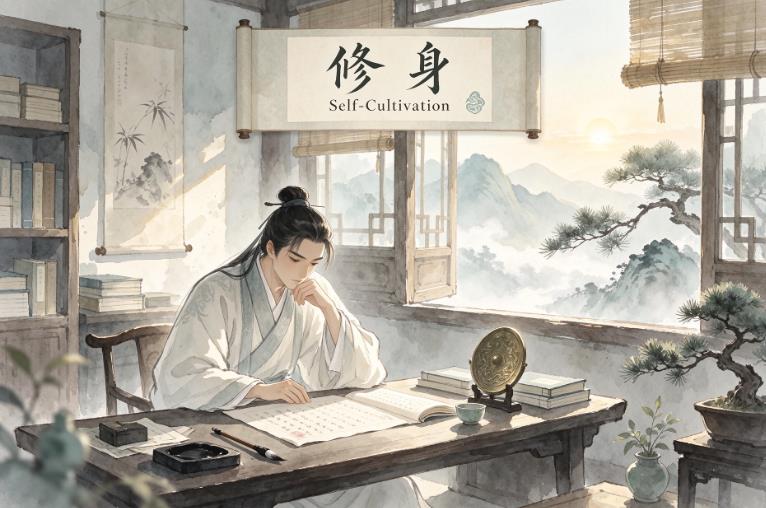
Confucius also valued honest inquiry. He praised students who asked questions, admitted ignorance, and corrected their mistakes. For him, moral growth requires humility as much as intelligence.
Governance Through Virtue
Confucius did not believe that good government depends mainly on punishment. He argued that rulers should lead by moral example. When a ruler is upright, people are more likely to follow the right path without coercion.

He compared a virtuous ruler to the North Star: it remains steady, and other stars revolve around it. This image expresses the Confucian belief that political authority should be grounded in character, not fear.
Good governance, in this view, requires benevolence, trustworthiness, fairness, and respect for the people’s livelihood. A ruler who cares only for power or wealth cannot create lasting order.
Why The Analects Remains Influential
The Analects has remained influential because it speaks to ordinary human relationships. It does not only address philosophers or rulers; it addresses anyone who wants to live with integrity.
Its teachings shaped Chinese family life, education, bureaucracy, law, literature, and political culture. They also influenced Korea, Japan, Vietnam, and other parts of East Asia.
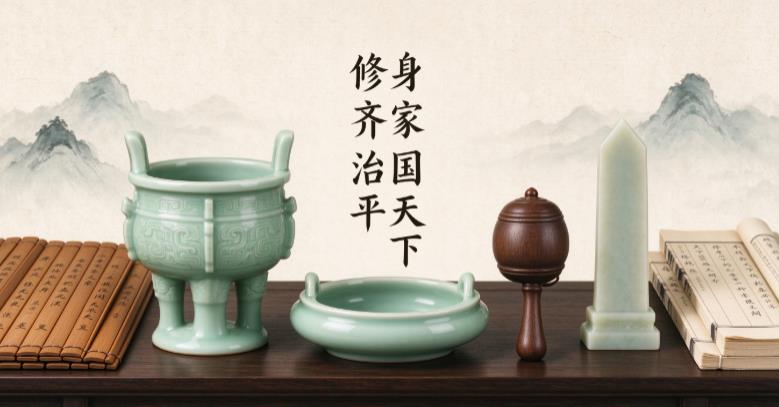
Even today, many Chinese expressions, moral expectations, and social values carry traces of Confucian thought. Ideas such as respect for teachers, the importance of education, family responsibility, and moral self-discipline are deeply connected to The Analects.
How to Read The Analects
The Analects can feel fragmented because it is composed of short passages rather than continuous chapters. New readers may find it helpful to focus on a few key themes first: ren, li, the junzi, filial piety, learning, and governance.
It is also useful to remember that The Analects is not a rulebook. It is a record of moral conversation. Many passages invite reflection rather than provide fixed answers. Different disciples ask similar questions, and Confucius sometimes gives different responses depending on the person. This suggests that moral judgment requires attention to context.

Frequently Asked Questions
Who wrote The Analects?
The Analects was not written by Confucius himself. It was compiled by his disciples and later followers after his death.
What is the main message of The Analects?
Its main message is that moral character, proper conduct, and sincere relationships are the foundation of a good life and a harmonious society.
What does ren mean?
Ren is usually translated as benevolence, humaneness, or goodness. It refers to the moral capacity to care for others and act with sincerity.
What is the difference between junzi and xiaoren?
The junzi pursues righteousness, self-discipline, and moral responsibility. The xiaoren is more concerned with personal advantage, reputation, or immediate gain.
Is The Analects a religious text?
It is primarily a philosophical and ethical text, but it also discusses ritual, ancestor reverence, Heaven, and moral destiny. It has been treated as a classic in both educational and spiritual contexts.



There are no comments yet, come and comment~