
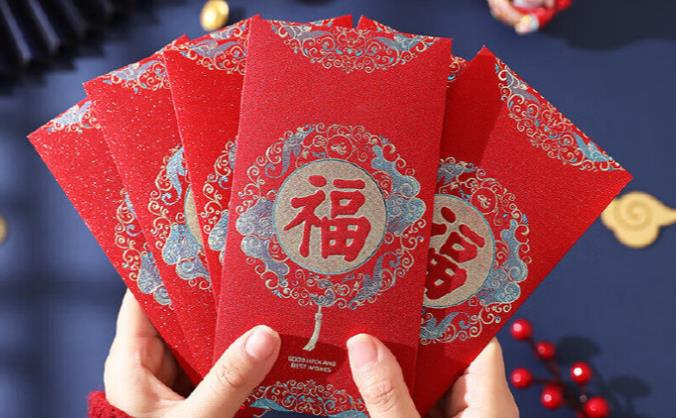
A Chinese New Year red envelope — called hongbao (红包) in Mandarin and lai see in Cantonese — is a small red packet containing cash, given by elders to children and by married adults to younger relatives during the Spring Festival. The money inside is known as yasuiqian (压岁钱), or “lucky money,” and its purpose is not financial but symbolic: to pass good fortune from one generation to the next.
If you’re attending a Chinese New Year gathering for the first time, the etiquette can feel confusing. Who gives? Who receives? How much is appropriate? Which numbers are lucky and which are taboo? This guide answers all of it.
What Is a Red Envelope and What Does It Mean?
The red envelope tradition dates back over a thousand years. According to folklore, a demon called Sui (祟) would slip into homes on New Year’s Eve to frighten sleeping children. One family wrapped eight coins in red paper and placed them under their child’s pillow. When Sui approached, the coins burst into light and drove the demon away.
The coins became known as yasuiqian — “money that suppresses Sui.” Because Sui (祟) sounds identical to sui (岁), meaning “year” or “age,” the phrase gradually shifted in meaning to “money that suppresses the passing of years” — a blessing for a child to grow up safely through another year.
Key fact: The red color itself is protective. In Chinese culture, red repels evil spirits and symbolizes vitality, joy, and good fortune — which is why red envelopes, red lanterns, and red clothing dominate Chinese New Year.
Who Gives Red Envelopes and Who Receives Them?
The rules are simpler than they appear. The core principle is that married people give, unmarried people receive.
A married couple typically gives two separate envelopes — one from the husband, one from the wife — each containing the same amount. This symbolizes the unity of the couple.
How Much Money Goes in a Red Envelope?
There is no fixed rule. The amount depends on your relationship to the recipient, your financial situation, and local custom. That said, here are typical ranges observed in mainland China and among overseas Chinese communities.
Important: These figures are guidelines, not obligations. The gesture matters far more than the amount. Giving a modest envelope with genuine warmth is always better than straining your budget to impress.
Lucky Numbers for Red Envelopes
Chinese New Year money amounts are chosen carefully. Certain numbers carry auspicious meanings through homophones — words that sound alike.
Numbers to Avoid
Just as some numbers are lucky, others are strictly taboo in celebratory contexts.
Never give an amount containing the digit 4. Even if you mean well — some people think 400 sounds like “everything goes smoothly” — most Chinese families will read it as a death reference and feel offended. Choose 300, 500, or 600 instead.
Red Envelope Etiquette: Do’s and Don’ts
When Giving
- Use brand-new bills. Crisp, clean notes symbolize a fresh start. Crumpled or dirty money suggests you couldn’t be bothered.
- Give cash only. No checks, no coins, no digital transfers in traditional settings (though WeChat red packets are now common among younger people).
- Don’t seal the envelope shut. The opening should remain unsealed — symbolizing that fortune can flow in and out freely.
- Offer with both hands, along with a New Year greeting such as Xīnnián kuàilè (Happy New Year) or Gōngxǐ fācái (Wishing you prosperity).
- Don’t sign your name on the back in traditional practice — the envelope is anonymous by custom, though this rule is relaxed in modern usage.
When Receiving
- Accept with both hands and a slight bow or nod of respect.
- Never open it in front of the giver. This is considered rude, as if you’re evaluating the amount.
- Politely decline once or twice before accepting — a traditional show of modesty. The giver will insist, and then you accept.
- Express gratitude with a New Year blessing in return.
Modern Variations: Digital Red Envelopes
In recent years, digital hongbao sent through WeChat and Alipay have become enormously popular, especially among younger Chinese. During Chinese New Year, billions of digital red packets are exchanged daily.
Digital versions follow the same numerical rules — avoid 4, favor 8 — but add a playful social layer. “Grab bag” packets let a group of friends compete to claim a randomly divided sum, turning the tradition into a game.
However, for traditional family gatherings, physical cash in a red envelope remains the expected format, particularly when giving to elders or young children.
Frequently Asked Questions
Do I need to give a red envelope if I’m not Chinese?
No. If you’re a foreign friend or guest, you are never expected to give hongbao. If you’d like to participate, a small amount in a red envelope given to children at the gathering will be warmly received — but it is entirely optional.
What if I’m unmarried but working?
Traditionally, unmarried adults do not give red envelopes, even if they have a full-time income. However, many working adults now choose to give to their parents or to young nephews and nieces as a personal gesture. Either choice is acceptable.
Can I reuse a red envelope?
No. Red envelopes are single-use. Reusing one is considered inauspicious and cheap. Buy new envelopes each year — they cost only a few cents and are available at any Chinese grocery store before the holiday.
Is there a difference between hongbao and lai see?
They are the same tradition under different names. Hongbao (红包) is Mandarin; lai see (利是) is Cantonese, commonly used in Hong Kong, Guangdong, and overseas Cantonese communities. The etiquette is essentially identical.


There are no comments yet, come and comment~