The Chinese calendar is not a single calendar but three interlocking systems that have run in parallel for nearly 3,000 years: a lunisolar civil calendar (months based on the moon, years kept honest with the sun), the 24 solar terms (a pure-solar grid that tells farmers and families exactly when to plant, eat and celebrate), and the sexagenary cycle of Heavenly Stems and Earthly Branches (the 60-year loop behind the zodiac animals and the Five Elements).
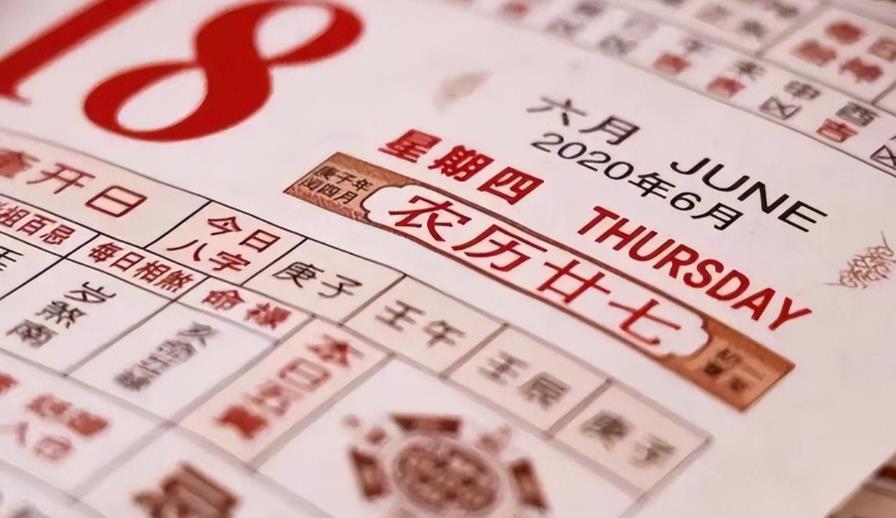
This guide explains how all three fit together, gives you the exact 2026–2028 dates you need, and lets you look up the zodiac animal and element for any birth year in a single table.
Key facts at a glance: a Chinese year is 353–355 days long in a common year and 383–385 in a leap year; the Chinese New Year date moves between 21 January and 20 February because it tracks both moon and sun; 2026 is the Fire Horse year (began 17 February 2026), and the next year, 2027, is the Fire Goat (begins 6 February 2027).
The Chinese Calendar in 30 Seconds
Most Western calendars follow only the sun. The Chinese calendar follows the moon for its months and the sun for its year — that is what lunisolar means. A new month begins on the new moon; a new year is pinned to the winter solstice and the first new moon that follows it. Because twelve lunar months fall about 11 days short of a solar year, an extra “leap month” is inserted roughly every two to three years to stop the seasons from drifting. That one mechanism explains almost everything foreigners find confusing about Chinese dates: why New Year moves every year, why a year can have 13 months, and why two systems can produce two different “correct” answers for the same birthday.
| System | What it tracks | Cycle length | What it is used for |
|---|---|---|---|
| Lunisolar civil calendar (nongli) | Moon phases + solar year | 12 or 13 months; 354 / 384 days | Defining festival dates, Chinese New Year, monthly life |
| 24 solar terms (jieqi) | Position of the sun on the ecliptic | 24 terms, ~15 days each | Farming, seasonal eating, health and traditional medicine |
| Sexagenary cycle (ganzhi) | 10 stems x 12 branches | 60 years; 60 days; 60 months | Naming years, the zodiac, the Five Elements, BaZi astrology |
Three Systems, One Calendar
It is worth separating the three layers, because each one answers a different question and each one is older or newer than the others in surprising ways.
1. The lunar-month layer (months and festivals)
Every Chinese month starts on the day of the new moon and is either 29 or 30 days long, matching the ~29.5-day synodic month. Festivals are written as lunar dates: the Spring Festival is the 1st day of the 1st month, the Mid-Autumn Festival is the 15th day of the 8th month (the full moon), the Dragon Boat Festival is the 5th day of the 5th month. Because these are lunar dates, they land on a different Gregorian day every year.
2. The solar-term layer (the seasons)
Cutting across the lunar months is a purely solar grid of 24 terms, each marking the sun reaching a 15° step of its yearly path. The solar year is 365.25 days, so each term falls on almost the same Gregorian date every year — Qingming is always 4–6 April, the winter solstice is always 21–22 December. This is why solar terms are excellent farming guides: they track the real climate, not the shifting moon.
3. The stem-branch layer (the 60-year loop)
The third layer names time in pairs. Ten “Heavenly Stems” cycle against twelve “Earthly Branches” (the same twelve that become the zodiac animals). Because 10 and 12 share a factor, the pairs only repeat every 60 combinations — the sexagenary cycle. Each year gets a stem-branch name plus a Five-Elements color, producing labels like Fire Horse or Wood Snake. This is the layer that generates the zodiac and everything astrologers build on top of it.
How a Lunar Month and the Leap Month Work
Twelve synodic months total about 354.37 days, roughly 11 days shorter than the 365.24-day solar year. Left alone, the calendar would slide backward through the seasons and the Spring Festival would eventually fall in summer. The fix is the leap month (runyue): a year that needs realignment simply contains 13 months instead of 12, adding about 30 days. The rule of thumb is the classic “19 years contain 7 leap years” cycle, so a leap month appears about seven times in every nineteen Gregorian years — on average once every 2.7 years.
Why Chinese New Year moves: the new year must be the first new moon after the winter solstice (allowing for one edge rule). Since new moons are 29–30 days apart and the solstice drifts, the resulting New Year date is mathematically locked inside the window 21 January – 20 February and never leaves it.
The 24 Solar Terms: A Solar Grid Inside a Lunar Calendar
The 24 solar terms (jieqi) are the part of the system that most surprises Western readers: they are essentially a 24-segment solar year, and because the tropical year is so regular, every term lands within a one- or two-day range on the Gregorian calendar every single year. They come in seasonal pairs — a “sectional” term opening each half-month, followed by a “middle” term.
| Season | Solar terms (Chinese order) | Approx. Gregorian window |
|---|---|---|
| Spring | Start of Spring, Rain Water, Awakening of Insects, Spring Equinox, Pure Brightness, Grain Rain | Feb 4 – Apr 20 |
| Summer | Start of Summer, Grain Buds, Grain in Ear, Summer Solstice, Slight Heat, Great Heat | May 5 – Jul 22 |
| Autumn | Start of Autumn, End of Heat, White Dew, Autumn Equinox, Cold Dew, Descent of Frost | Aug 7 – Oct 23 |
| Winter | Start of Winter, Slight Snow, Great Snow, Winter Solstice, Slight Cold, Great Cold | Nov 7 – Jan 20 |
The Sexagenary Cycle and Your Zodiac Animal
The zodiac animal you were born under is the Earthly Branch of your year, but the fuller label adds the Heavenly Stem, which carries one of the Five Elements (Wood, Fire, Earth, Metal, Water) and a yin/yang polarity. The twelve animals repeat every 12 years, but the element-color changes the label, so the full combination — “Fire Horse”, “Wood Snake” — only repeats every 60 years.
| Order | Animal | Branch | Repeats in | Element of 2026 (Horse) | Personality archetype |
|---|---|---|---|---|---|
| 1 | Rat | Zi | 1996, 2008, 2020 | — | quick-witted, resourceful |
| 2 | Ox | Chou | 1997, 2009, 2021 | — | diligent, dependable |
| 3 | Tiger | Yin | 1998, 2010, 2022 | — | brave, competitive |
| 4 | Rabbit | Mao | 1999, 2011, 2023 | — | gentle, elegant |
| 5 | Dragon | Chen | 2000, 2012, 2024 | — | confident, ambitious |
| 6 | Snake | Si | 2001, 2013, 2025 | — | wise, enigmatic |
| 7 | Horse | Wu | 2002, 2014, 2026 | Fire (Yang) | energetic, independent |
| 8 | Goat / Sheep | Wei | 2003, 2015, 2027 | — | calm, creative |
| 9 | Monkey | Shen | 2004, 2016, 2028 | — | clever, playful |
| 10 | Rooster | You | 2005, 2017, 2029 | — | observant, hardworking |
| 11 | Dog | Xu | 2006, 2018, 2030 | — | loyal, honest |
| 12 | Pig | Hai | 2007, 2019, 2031 | — | generous, compassionate |
Your Chinese Zodiac Year: Quick Lookup Table
To find your sign, match your birth year to the animal, then read the stem-branch and Five-Element label. Remember that the zodiac year starts at Chinese New Year, not 1 January: if you were born in January or early February, you likely belong to the previous animal. The table below covers recent and near-future years with their full element names.
| Gregorian year | Animal | Stem-Branch (Ganzhi) | Element label |
|---|---|---|---|
| 1984 | Rat | Jia-Zi | Wood Rat |
| 1985 | Ox | Yi-Chou | Wood Ox |
| 1986 | Tiger | Bing-Yin | Fire Tiger |
| 1987 | Rabbit | Ding-Mao | Fire Rabbit |
| 1988 | Dragon | Wu-Chen | Earth Dragon |
| 1989 | Snake | Ji-Si | Earth Snake |
| 1990 | Horse | Geng-Wu | Metal Horse |
| 1991 | Goat | Xin-Wei | Metal Goat |
| 1992 | Monkey | Ren-Shen | Water Monkey |
| 1993 | Rooster | Gui-You | Water Rooster |
| 1994 | Dog | Jia-Xu | Wood Dog |
| 1995 | Pig | Yi-Hai | Wood Pig |
| 1996 | Rat | Bing-Zi | Fire Rat |
| 1997 | Ox | Ding-Chou | Fire Ox |
| 1998 | Tiger | Wu-Yin | Earth Tiger |
| 1999 | Rabbit | Ji-Mao | Earth Rabbit |
| 2000 | Dragon | Geng-Chen | Metal Dragon |
| 2001 | Snake | Xin-Si | Metal Snake |
| 2002 | Horse | Ren-Wu | Water Horse |
| 2003 | Goat | Gui-Wei | Water Goat |
| 2004 | Monkey | Jia-Shen | Wood Monkey |
| 2005 | Rooster | Yi-You | Wood Rooster |
| 2006 | Dog | Bing-Xu | Fire Dog |
| 2007 | Pig | Ding-Hai | Fire Pig |
| 2008 | Rat | Wu-Zi | Earth Rat |
| 2009 | Ox | Ji-Chou | Earth Ox |
| 2010 | Tiger | Geng-Yin | Metal Tiger |
| 2011 | Rabbit | Xin-Mao | Metal Rabbit |
| 2012 | Dragon | Ren-Chen | Water Dragon |
| 2013 | Snake | Gui-Si | Water Snake |
| 2014 | Horse | Jia-Wu | Wood Horse |
| 2015 | Goat | Yi-Wei | Wood Goat |
| 2016 | Monkey | Bing-Shen | Fire Monkey |
| 2017 | Rooster | Ding-You | Fire Rooster |
| 2018 | Dog | Wu-Xu | Earth Dog |
| 2019 | Pig | Ji-Hai | Earth Pig |
| 2020 | Rat | Geng-Zi | Metal Rat |
| 2021 | Ox | Xin-Chou | Metal Ox |
| 2022 | Tiger | Ren-Yin | Water Tiger |
| 2023 | Rabbit | Gui-Mao | Water Rabbit |
| 2024 | Dragon | Jia-Chen | Wood Dragon |
| 2025 | Snake | Yi-Si | Wood Snake |
| 2026 | Horse | Bing-Wu | Fire Horse |
| 2027 | Goat | Ding-Wei | Fire Goat |
| 2028 | Monkey | Wu-Shen | Earth Monkey |
| 2029 | Rooster | Ji-You | Earth Rooster |
| 2030 | Dog | Geng-Xu | Metal Dog |
| 2031 | Pig | Xin-Hai | Metal Pig |
| 2032 | Rat | Ren-Zi | Water Rat |
| 2033 | Ox | Gui-Chou | Water Ox |
| 2034 | Tiger | Jia-Yin | Wood Tiger |
| 2035 | Rabbit | Yi-Mao | Wood Rabbit |
Key 2026–2028 Dates on the Chinese Calendar
If you only need to get your dates right for the coming years, this is the table to bookmark. Note that 2025 has no leap month, but the structure of each year shifts, which is why the New Year date moves so much.
| Gregorian year | Chinese New Year | Zodiac year | Leap month | Year length |
|---|---|---|---|---|
| 2026 | 17 February 2026 | Fire Horse (Bing-Wu) | None (common year) | 354 days |
| 2027 | 6 February 2027 | Fire Goat (Ding-Wei) | None (common year) | 354 days |
| 2028 | 26 January 2028 | Earth Monkey (Wu-Shen) | Leap 5th month | 384 days |
The Major Festivals and How Their Dates Are Set
China’s headline festivals split into two families: those fixed to a lunar date (so they wander through the Gregorian year) and those fixed to a solar term (so they barely move). Knowing which family a festival belongs to lets you predict its date years in advance.
| Festival | Fixed by | Calendar date | Typical Gregorian window |
|---|---|---|---|
| Lantern Festival | Lunar date | 15th day, 1st month | Feb – Mar |
| Qingming / Tomb-Sweeping | Solar term | Pure Brightness term | 4–6 April |
| Dragon Boat Festival | Lunar date | 5th day, 5th month | Jun – Jul |
| Qixi (Chinese Valentine’s) | Lunar date | 7th day, 7th month | Aug – Sep |
| Mid-Autumn Festival | Lunar date | 15th day, 8th month | Sep – Oct |
| Chongyang / Double Ninth | Lunar date | 9th day, 9th month | Oct – Nov |
| Winter Solstice | Solar term | Winter Solstice term | 21–22 Dec |
| Spring Festival (New Year) | Lunar date | 1st day, 1st month | 21 Jan – 20 Feb |
Why the Chinese Calendar Still Matters Today
China has used the Gregorian calendar for civil and business life since 1912, yet the traditional calendar is far from decorative. It fixes the date of every major family holiday, so national time off still follows the moon; it drives seasonal eating and the wellness logic of Traditional Chinese Medicine (eat cooling foods at the Great Heat, tonic foods at the winter solstice); it decides auspicious wedding, moving-in and business-opening days for millions of households; and it is the backbone of the zodiac economy — birth rates visibly spike in Dragon years and dip in Goat years. In short, the civil calendar runs the office, but the lunar calendar still runs the family.
Frequently Asked Questions
Is the Chinese calendar a lunar calendar?
Partly. It is lunisolar: the months follow the moon, but the year is kept aligned to the sun with a leap month. A pure lunar calendar would drift through the seasons; the Chinese calendar deliberately does not.
Why does Chinese New Year change date every year?
Because it is the first new moon after the winter solstice. New moons arrive on a 29.5-day cycle while the solar year is 365 days, so the match date moves — but always within the 21 January to 20 February window.
What is a leap month and why does it exist?
A leap month is an extra 13th month inserted about seven times every nineteen years. It exists because twelve lunar months (354 days) fall 11 days short of the solar year, and without the catch-up the calendar would drift out of season.
What is my zodiac if I was born in January or February?
Almost certainly the previous animal, because the zodiac year changes at Chinese New Year, not on 1 January. Check the New Year date for your birth year to be sure.
How long is the Chinese zodiac cycle?
The animal alone repeats every 12 years. With the Five-Elements stem added, the full label (e.g. Fire Horse) repeats every 60 years — the sexagenary cycle.
Are the 24 solar terms the same every year?
Yes, almost. Each term tracks the sun, so it falls on the same one-to-two-day Gregorian window every year. That is why solar-term festivals like Qingming feel stable while moon-based ones like Mid-Autumn wander.



There are no comments yet, come and comment~