
Chinese mahjong may look intimidating at first, but the basic idea is simple. Four players draw and discard tiles, trying to build a complete hand. The first player to form four valid sets and one pair wins the round.
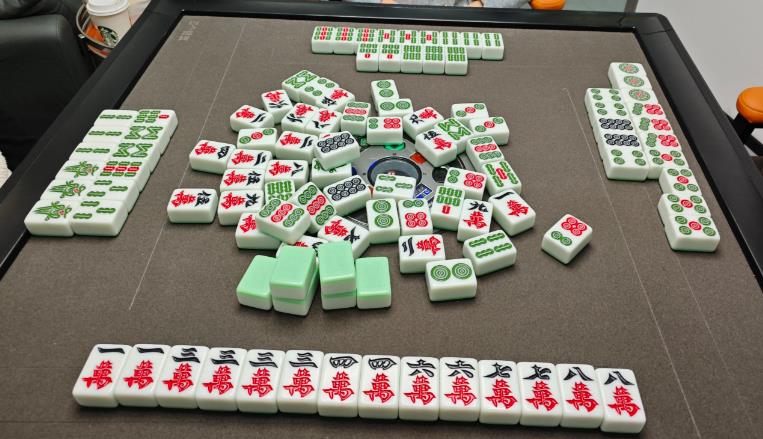
This guide explains the tiles, the basic flow of play, how to win, and what beginners should focus on during their first game.
What you need before you start
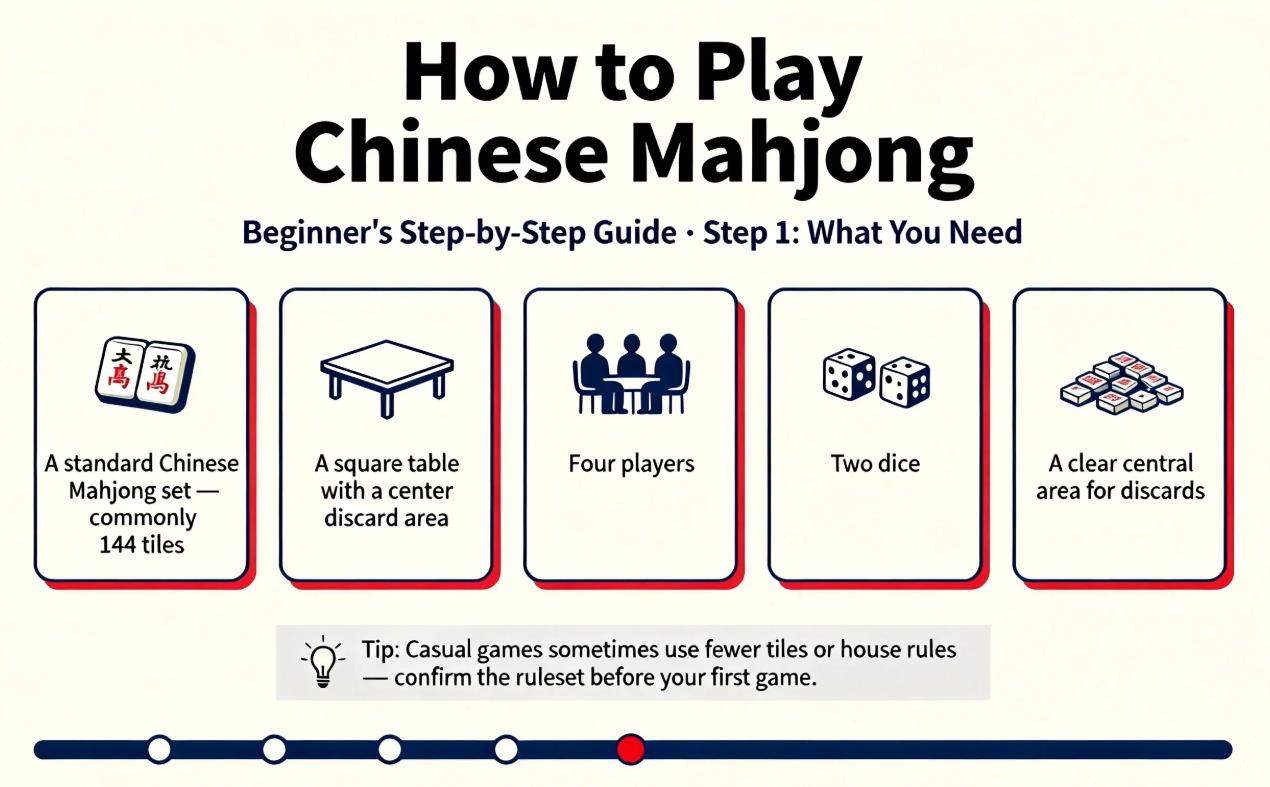
To play Chinese mahjong, you will need:
- A standard Chinese mahjong set, usually 144 tiles
- A square table
- Four players
- Two dice
- A flat space in the center for discarded tiles
Some casual games use fewer tiles or add house rules. For beginners, it is best to agree on one simple rule set before playing.
Chinese mahjong tiles explained
A standard Chinese mahjong set usually has 144 tiles. They are divided into three main groups.
Suit tiles
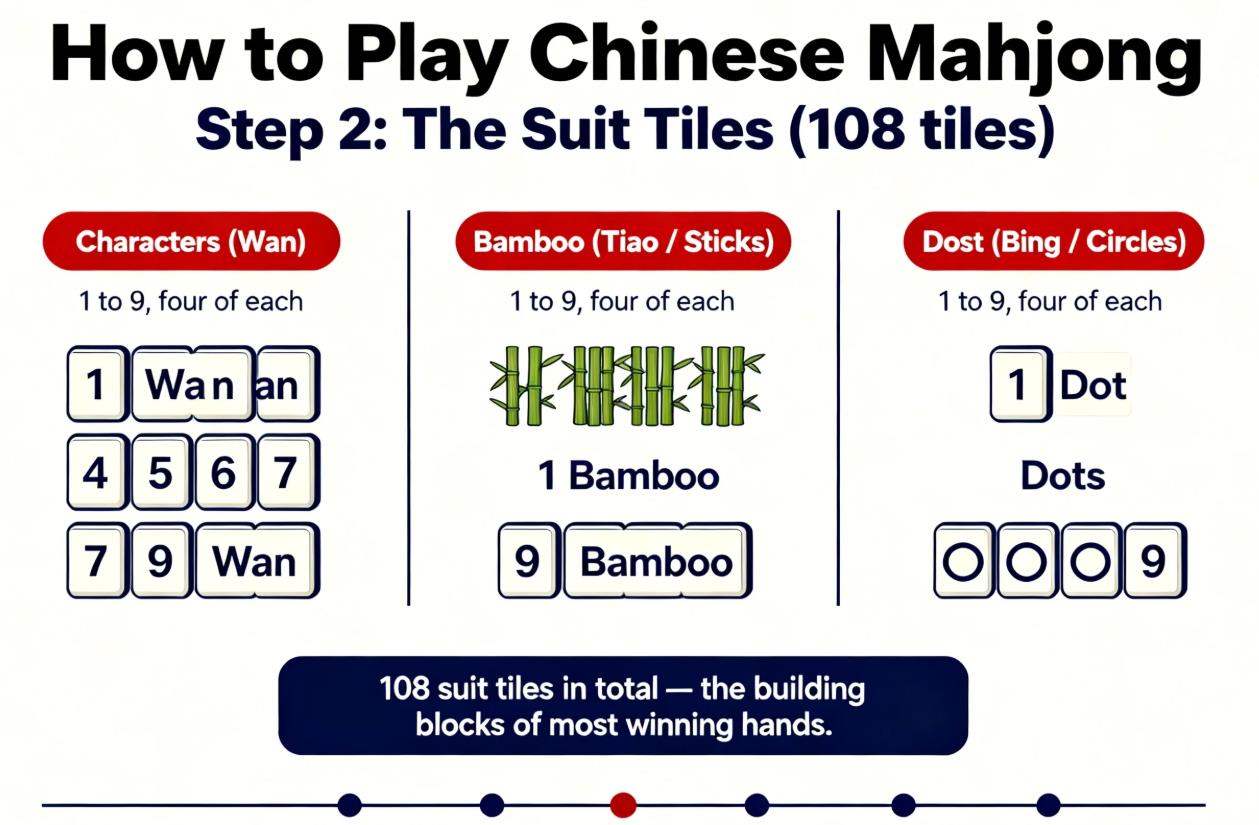
Suit tiles are the numbered tiles. There are three suits, each numbered from 1 to 9, with four copies of every tile:
- Bamboo tiles: also called bamboo or sticks
- Character tiles: also called wan or characters
- Circle tiles: also called dots, circles, or bing
These 108 tiles form the core of most hands.
Honor tiles
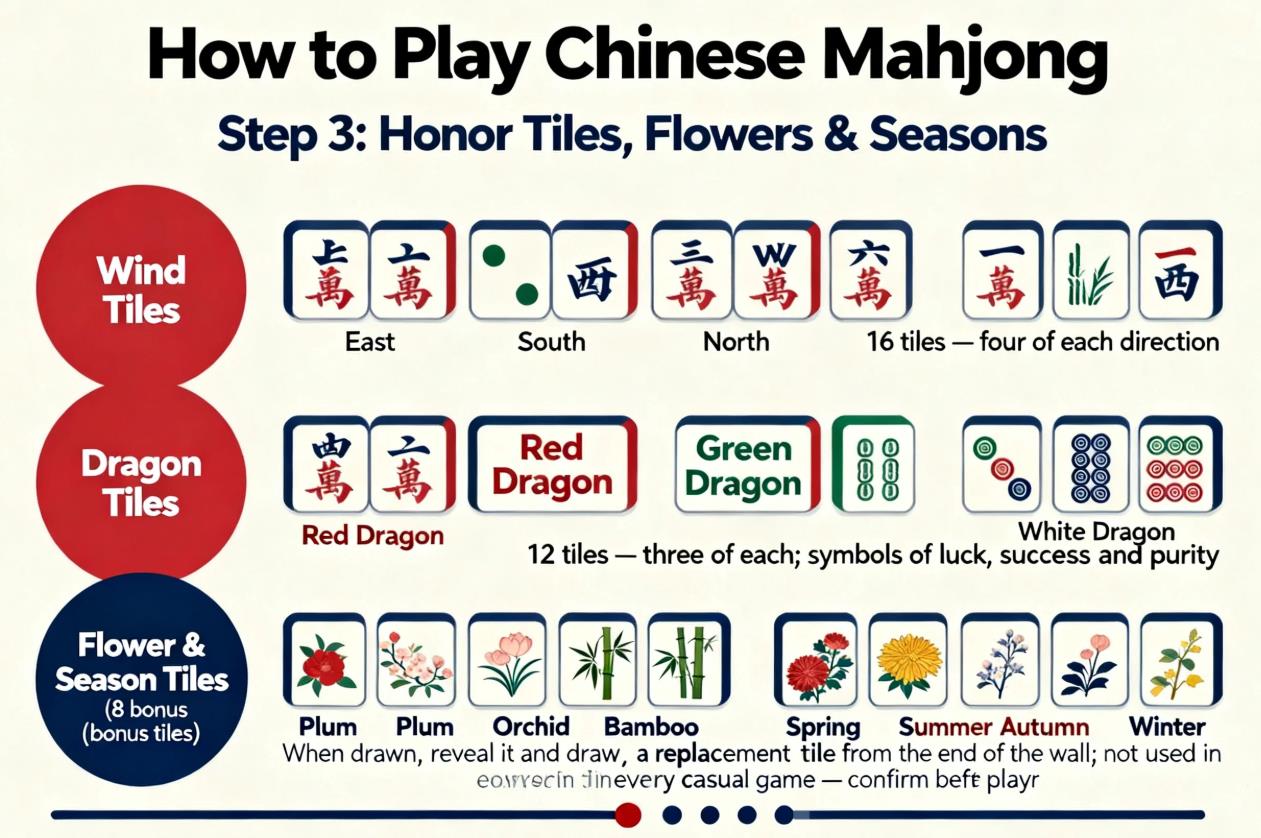
Honor tiles do not have numbers. They include:
- Wind tiles: East, South, West, North
- Dragon tiles: Red Dragon, Green Dragon, White Dragon
Wind tiles represent directions. Dragon tiles are special honor tiles often associated with prosperity, success, and purity in traditional symbolism.
Flower and season tiles
Many Chinese sets also include eight bonus tiles:
- Four flower tiles
- Four season tiles
These tiles are usually set aside when drawn, and the player draws a replacement tile. Not every casual game uses them, so check the rules before starting.
How a basic game works
Setting up the wall
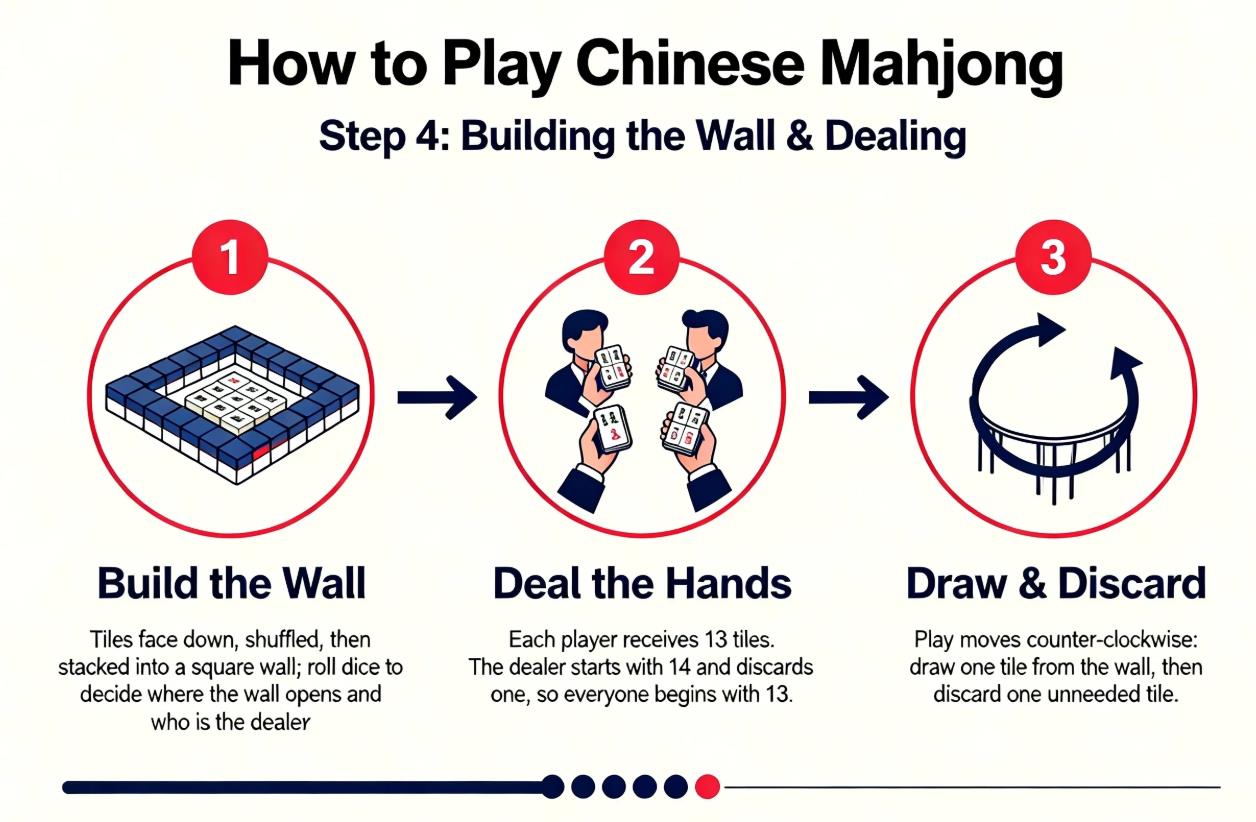
Players shuffle all tiles face down and build them into a square wall, usually two tiles high. Dice are rolled to decide where to break the wall and who deals first.
Dealing the tiles
Each player starts with 13 tiles. The dealer begins with 14 tiles, then discards one so that everyone has 13 tiles at the start of play.
Drawing and discarding
Play usually moves counterclockwise. On your turn, you draw one tile from the wall, then discard one tile into the center.
Your goal is to improve your hand by keeping useful tiles and discarding tiles that do not help you form sets.
Calling tiles
You can sometimes use another player’s discard to complete a set. The most common calls are:
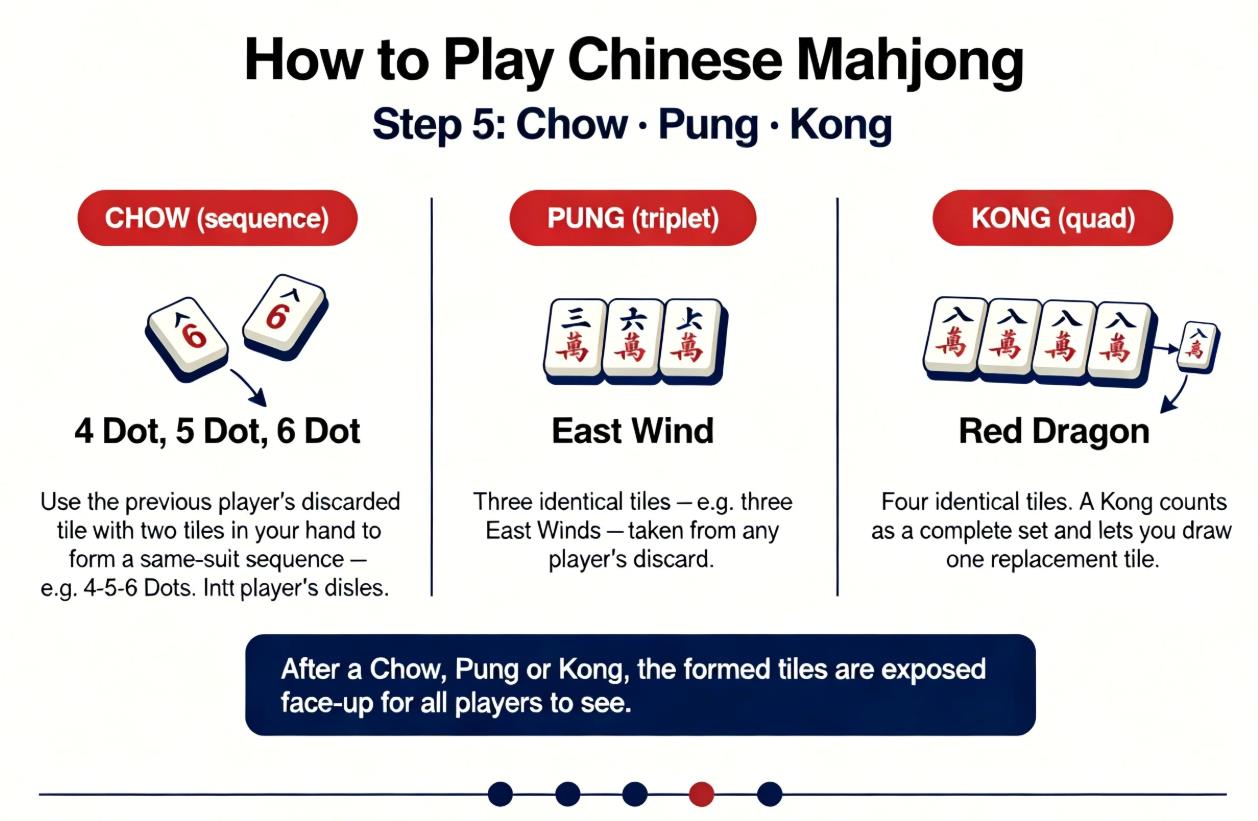
- Chow: a sequence of three consecutive tiles in the same suit, such as 4-5-6 of circles. In many Chinese rules, you can only chow from the player on your left.
- Pung: three identical tiles, such as three East Winds.
- Kong: four identical tiles. A kong counts as a completed set and usually allows you to draw an extra tile.
When you call a discard, you must show the completed set. This makes part of your hand visible to other players.
Winning the hand
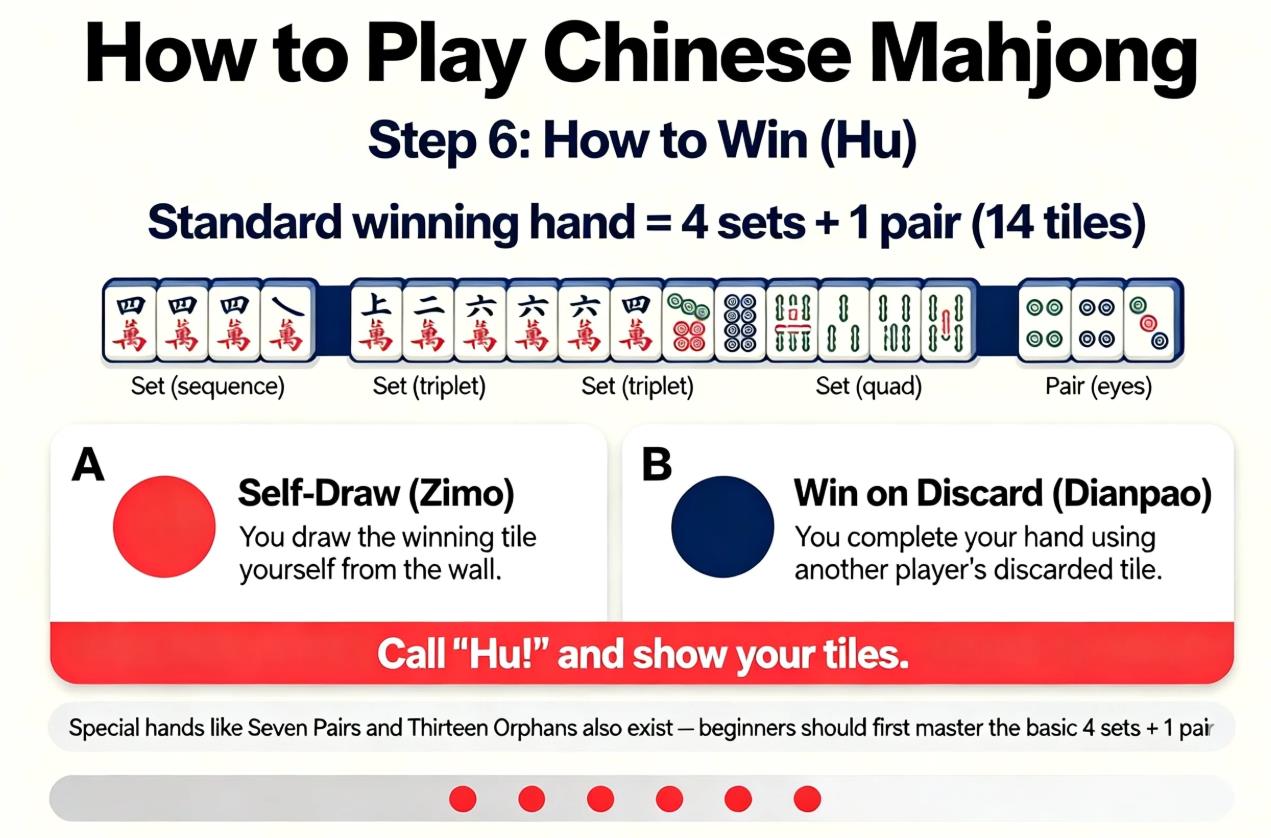
A standard winning hand in Chinese mahjong has 14 tiles:
- Four sets
- One pair
Each set can be a chow, pung, or kong. The pair is two identical tiles.
You can win in two main ways:
- Self-draw win: you draw the final tile yourself
- Discard win: you claim another player’s discard to complete your hand
When you complete a valid hand, you declare “Mahjong!” and reveal your tiles.
Some rule sets also allow special hands, such as Seven Pairs or Thirteen Orphans, but beginners should focus on the standard four-sets-and-one-pair structure first.
A simple scoring idea
Chinese mahjong scoring can vary widely by region and house rules. Some games use points, others use fan, and some simply play for fun without strict scoring.
For beginners, it is enough to know that:
- More difficult hands are usually worth more
- Concealed sets are often worth more than exposed sets
- Dragon and wind sets can add value
- Self-drawn wins are often rewarded more than discard wins
Do not worry about mastering every scoring pattern in your first game. Focus on recognizing chows, pungs, pairs, and the basic winning structure.
Common beginner mistakes
Trying to learn too many rules at once
Chinese mahjong has many regional variations. If you try to learn every version at the same time, you will feel overwhelmed. Pick one simple rule set and stick with it.
Forgetting to watch discards
Mahjong is not only about your own tiles. Watching what other players discard helps you understand which tiles are still available and which hands they may be building.
Calling too early
Calling chow, pung, or kong can speed up your hand, but it also reveals your strategy. If you expose too many sets, other players can defend against you more easily.
Holding every tile “just in case”
Beginners often keep tiles that look interesting but do not connect to anything. Good discarding is as important as good drawing. Let go of isolated tiles early so your hand can develop.
Simple tips for your first game
- Learn the three suits first: bamboo, characters, and circles.
- Memorize the wind and dragon tiles.
- Aim for four sets and one pair.
- Keep your early discards flexible.
- Watch the center pile for tiles that have already been discarded.
- Play a few rounds without worrying about advanced scoring.
Once the basic flow feels natural, you can explore special hands, fan scoring, and regional rules.
Frequently asked questions
How many tiles are in a Chinese mahjong set?
A traditional Chinese mahjong set usually has 144 tiles, including suit tiles, honor tiles, and sometimes flower and season tiles.
What is the easiest winning hand for beginners?
The easiest structure to aim for is four sets and one pair, using simple sequences and triplets.
Can you win with only pairs?
Some rule sets allow Seven Pairs as a special winning hand, but it is not the standard beginner pattern.
What is the difference between chow, pung, and kong?
A chow is three consecutive tiles in the same suit. A pung is three identical tiles. A kong is four identical tiles.
Is Chinese mahjong hard to learn?
The tiles look complex at first, but the core gameplay is straightforward: draw, discard, and complete four sets plus one pair.



There are no comments yet, come and comment~