Chinese food culture is rich and diverse, and behind its many delicious dishes are simple but practical cooking tools.
For Chinese people, kitchen tools are not just objects for preparing food. They are often simple, durable, and able to turn ordinary ingredients into warm, comforting meals. Many traditional Chinese cooking tools may look uncomplicated, but their design and use reflect a deep sense of everyday wisdom.
The Stir-Fry Spoon and Strainer Ladle: Useful for Flipping, Serving, and Draining
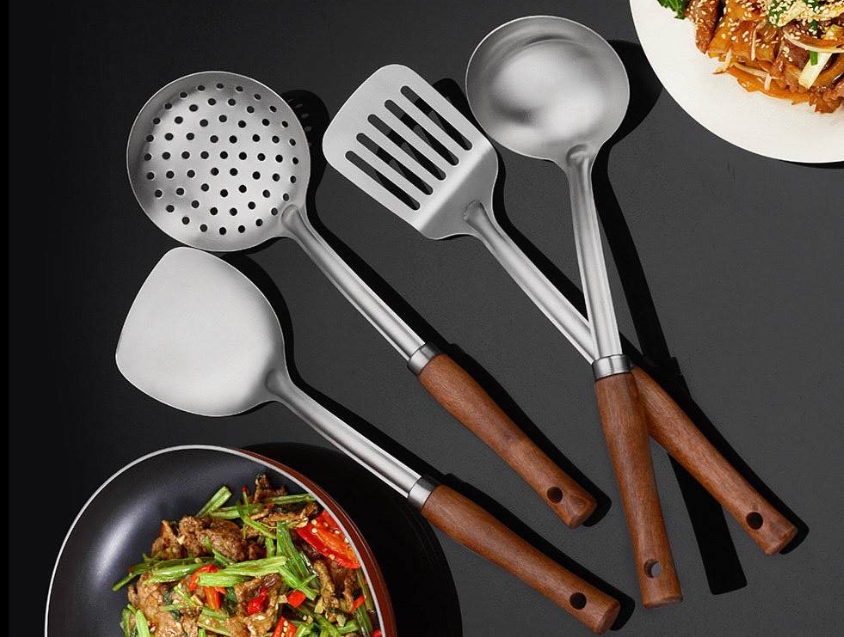
In a Chinese kitchen, the spoon is also an important tool.
Chinese cooks often use a large spoon when stir-frying. Some spoons have holes, and some do not. They are simple, but very useful for flipping food, adding sauce, serving dishes, and draining liquid.
A stir-fry spoon usually has a wide, deep shape. It is good for:
- Turning vegetables and meat in the wok
- Adding water, soy sauce, or other seasonings
- Mixing sauces evenly
- Serving food from the wok to a plate
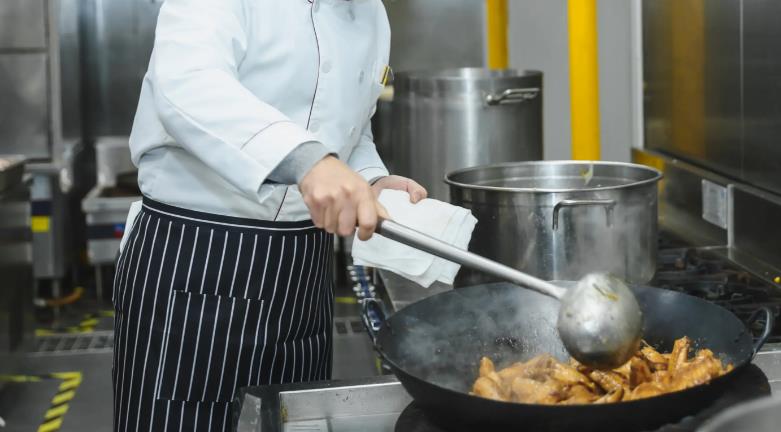
A strainer ladle, or slotted spoon, has small holes on the spoon surface. It is often used to:
- Lift noodles from boiling water
- Remove dumplings or wontons from soup
- Take fried food out of hot oil
- Drain extra water or oil from vegetables
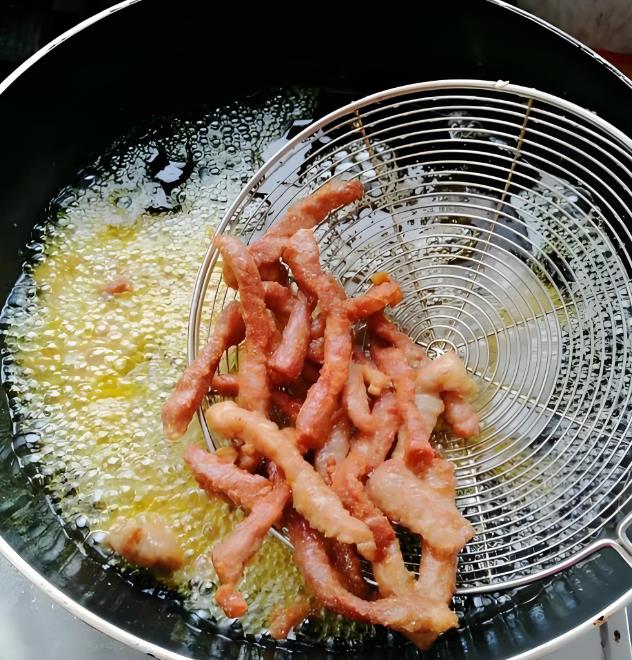
A solid soup spoon is also common in Chinese kitchens. It is mainly used for serving soup, porridge, or stew.
These spoons may look simple, but they make Chinese cooking faster, cleaner, and more convenient.
The Wok: The Heart of the Chinese Kitchen
One Pan, Many Possibilities
If only one tool could represent a Chinese kitchen, many people would choose the wok.
A wok usually has a rounded or semi-rounded shape. This design makes it easy to toss, stir, and move food around while cooking. It also helps heat spread more evenly.
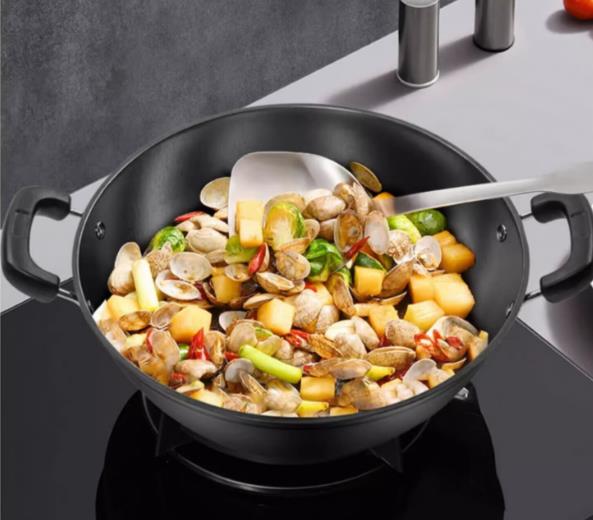
The wok is extremely versatile. It can be used to:
- Stir-fry vegetables, meat, and seafood
- Pan-fry eggs, fish, or tofu
- Boil soup or noodles
- Deep-fry food with more oil
- Steam food when used with a steaming rack
In many Chinese homes, one wok can handle many cooking tasks. This reflects a practical idea in Chinese cooking: one tool can serve many purposes.
The Chinese Cleaver: More Than Just a Knife
A Wide Blade with Many Uses
The Chinese cleaver often has a wide, rectangular blade. To some foreigners, it may look large or heavy, but it is actually a very practical kitchen tool.
A Chinese cleaver can be used to:
- Cut vegetables
- Slice meat into thin pieces or strips
- Chop scallions and ginger
- Crush garlic or cucumbers
- Scoop food from the cutting board into the pan
Its wide blade is especially useful. After chopping, the cook can use the flat side of the blade to transfer ingredients into the wok, making cooking cleaner and more efficient.
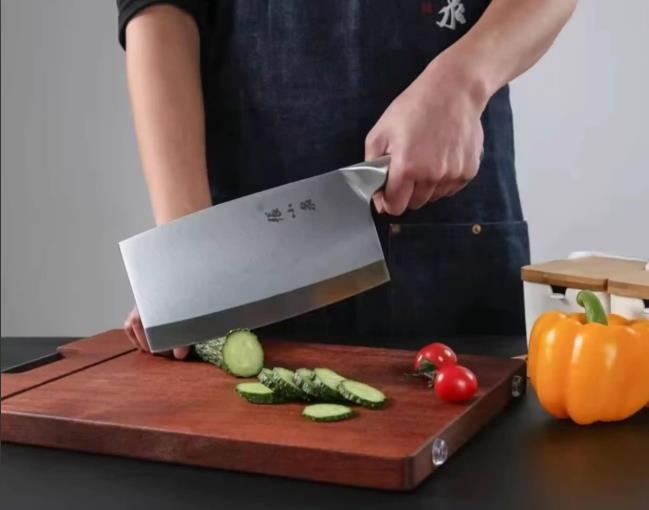
Chinese cooking also values knife skills. The same ingredient can become very different depending on whether it is sliced, shredded, diced, or cut into chunks. For this reason, the cleaver is not only a tool but also part of a cook’s basic training.
The Bamboo Steamer: Cooking with Gentle Steam
Light, Healthy, and Full of Daily Life
The bamboo steamer is a very traditional Chinese cooking tool. It is commonly used for steaming buns, dumplings, fish, cakes, and other foods.
Traditional steamers are made of bamboo and stacked in layers. Steam rises from below and cooks the food gently. The bamboo material allows air to circulate well and may give food a subtle natural aroma.
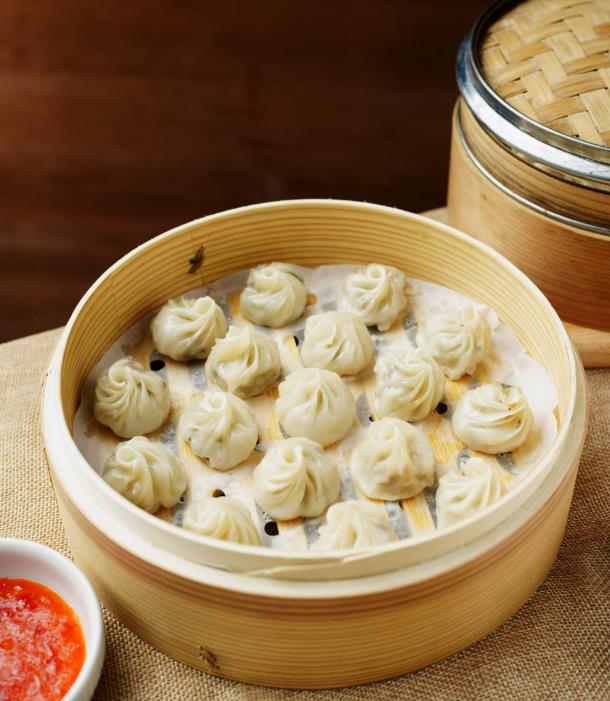
Steaming is a popular cooking method in China. It uses little oil and helps preserve the original flavor and moisture of the ingredients. For this reason, steamed dishes are often seen as light and healthy.
For many Chinese people, seeing steam rise from a bamboo steamer brings to mind familiar breakfast foods such as steamed buns, dumplings, and sticky rice dishes. It is a warm and everyday scene.
The Clay Pot: Slow Cooking for Warm Flavors
Perfect for Soups and Stews
A clay pot is a type of pot made from clay or earthenware. It heats slowly but holds heat well, making it ideal for long, slow cooking.
Clay pots are often used for:
- Stewing soups
- Cooking porridge
- Preparing herbal or nourishing dishes
- Making hot clay-pot meals
Because the clay pot allows flavors to develop slowly, the soups and stews made in it often taste rich, mellow, and comforting.
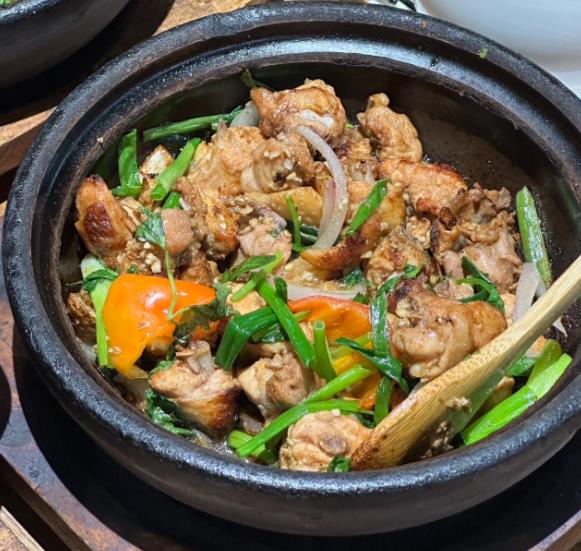
In Chinese family life, the clay pot is often connected with slow cooking and careful meals. On a cold day, a bowl of soup from a clay pot can feel especially warming.
Chopsticks and the Rolling Pin: Simple but Essential
Chopsticks: Used at the Table and in the Kitchen
Chopsticks are one of the most familiar eating tools in Chinese culture.
Traditional chopsticks are often made of bamboo or wood, though modern versions may also be made of metal or plastic. Chinese people use chopsticks not only for eating, but also for picking up food, mixing noodles, and sharing dishes.
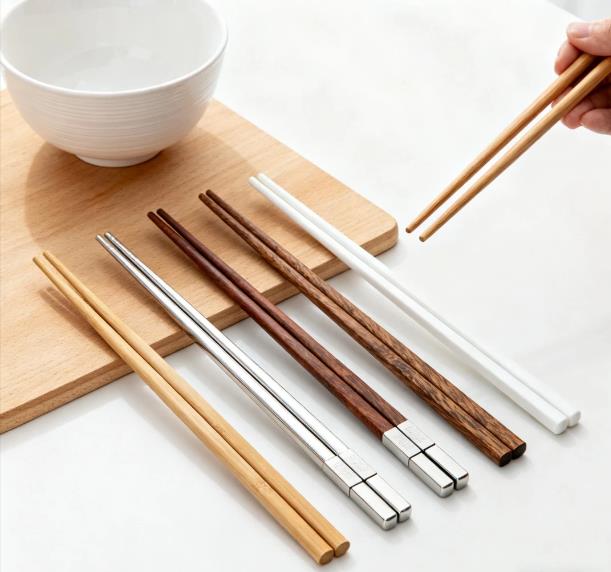
Although chopsticks look simple, using them well takes practice. They also reflect the Chinese preference for tools that are light, flexible, and easy to control.
Rolling Pin: Turning Dough into Noodles and Dumpling Wrappers
A rolling pin is a small cylindrical wooden tool used to roll out dough.
In Chinese cooking, it is commonly used when making noodles, dumplings, wontons, flatbreads, and other wheat-based foods. The rolling pin helps turn a piece of dough into thin sheets or long strips.
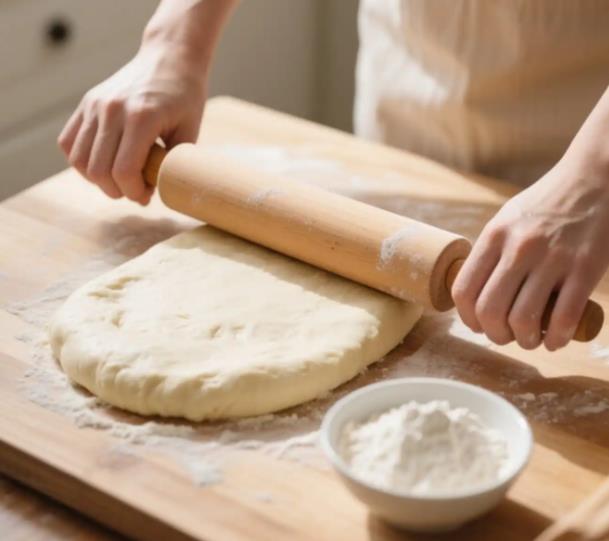
Its design is simple, but it plays an important role in making many everyday staple foods. For families who enjoy wheat-based dishes, the rolling pin is a common and useful kitchen tool.
Final Thoughts
Chinese cooking tools are not designed to be complicated. Instead, they value practicality, flexibility, and durability.
The wok makes stir-frying, boiling, and frying easy. The cleaver helps handle many kinds of ingredients. The bamboo steamer preserves natural flavors. The clay pot creates warm, slow-cooked dishes. Chopsticks and the rolling pin connect daily cooking with everyday life.
To understand these tools is not only to learn about kitchen utensils. It is also to understand the quiet wisdom of the Chinese kitchen: using simple tools to create meals full of flavor, care, and human warmth.


There are no comments yet, come and comment~