
Choosing a wok is often the first challenge for people starting Chinese cooking. There are carbon steel woks, non-stick woks, cast iron woks, flat-bottom woks, and round-bottom woks. The options can feel overwhelming. Many beginners ask: Which wok is best for me? Do I need a gas stove for a round-bottom wok? Can a non-stick pan replace a traditional wok?
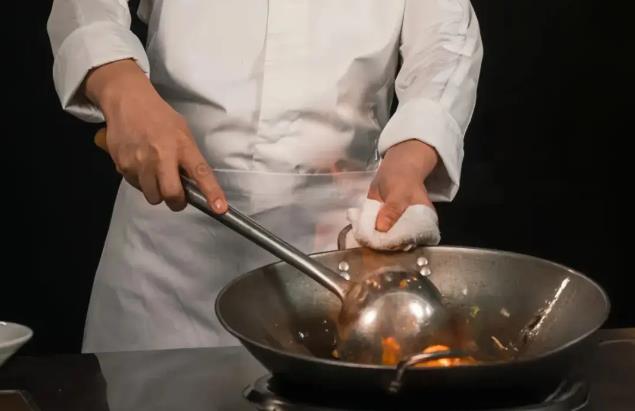
This guide compares materials, bottom shape, size, handle type, stove compatibility, maintenance, and budget. It is designed to help beginners choose a wok that fits their kitchen and cooking habits.
Choose the right material
The material affects heating speed, weight, maintenance, and durability.
Carbon steel wok
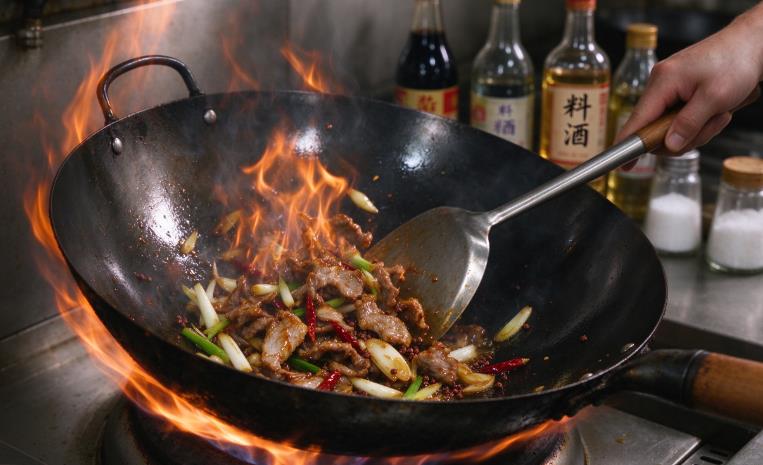
Carbon steel is the most traditional wok material. It heats quickly, is relatively lightweight, and works well for high-heat stir-frying. The downside is that it needs seasoning and regular care to prevent rust.
Best for: beginners who are willing to learn basic wok care and want a long-lasting pan.
Non-stick wok
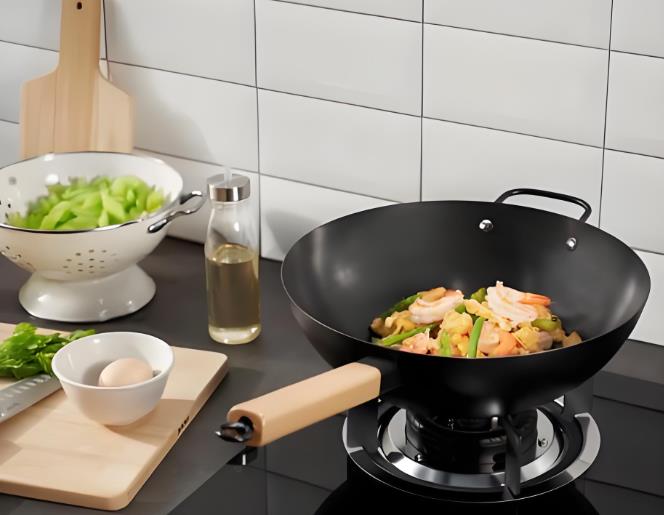
Non-stick woks are the most beginner-friendly. They resist sticking, are easy to clean, and work well for fried rice, eggs, and low-oil cooking. However, they should not be heated empty at high temperatures, and the coating will wear out after a few years.
Best for: complete beginners who want an easy, low-maintenance option.
Cast iron wok
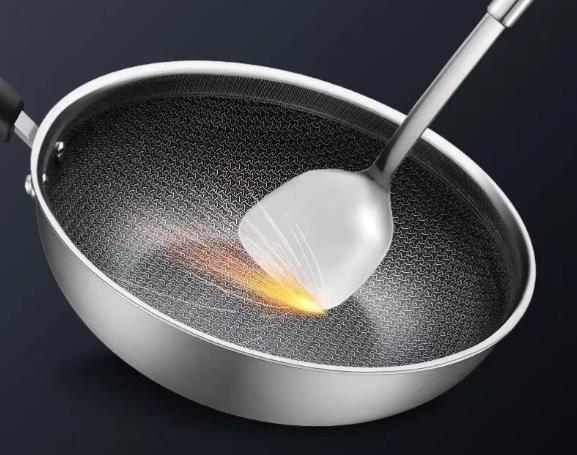
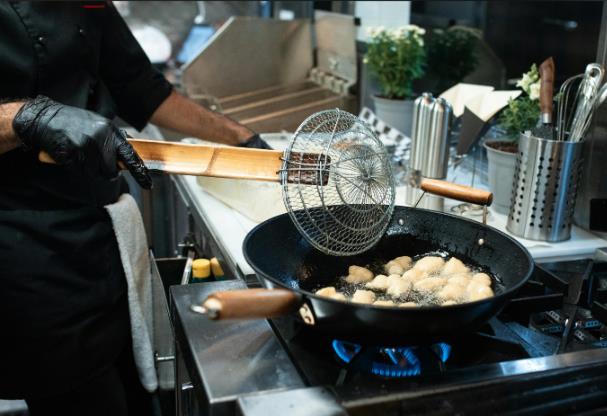
Cast iron retains heat well and is good for braising, pan-frying, and deep-frying. The main drawback is weight. It heats more slowly than carbon steel and can be difficult to toss with one hand.
Best for: cooks who enjoy stews, searing, or already have some Chinese cooking experience.
Stainless steel wok
Stainless steel is durable, rust-resistant, and versatile for soups and braises. But it requires more control over heat and oil, and beginners may find food sticks more easily during stir-frying.
Best for: cooks who already understand heat control or want one pan for multiple uses.
Flat-bottom vs round-bottom woks
The bottom shape should match your stove.
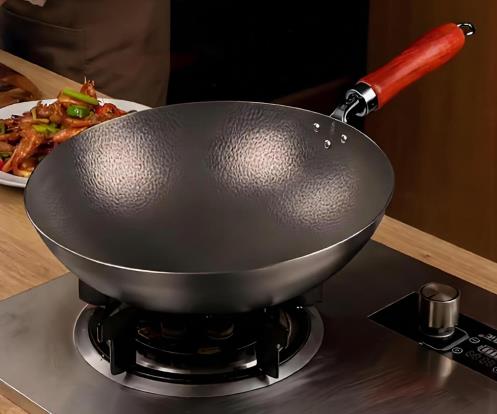
Flat-bottom wok
A flat-bottom wok is more practical for induction cooktops, electric cookers, and standard gas stoves. It sits steadily on most home kitchens. If you do not have a high-power gas burner, a flat-bottom wok is usually the safer choice.
Round-bottom wok
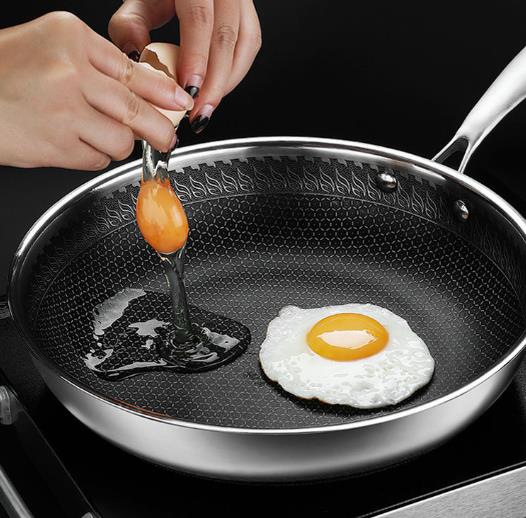
A round-bottom wok is the classic Chinese shape. It concentrates oil and ingredients near the center, making it easier to stir-fry quickly. But it can be unstable on induction or electric stoves unless you use a wok ring or a compatible burner.
Quick guide:
- Induction/electric cooktop: choose flat-bottom
- Standard gas stove: flat-bottom or round-bottom
- High-output gas burner: round-bottom works well
Choose the right size
Wok sizes are usually measured by diameter. Common sizes are 28cm, 30cm, 32cm, and 34cm.
- 1–2 people: 28–30cm
- 2–3 people: 30–32cm
- 3+ people: 32–34cm
If you are buying only one wok, 30–32cm is a versatile starting point. A wok that is too small may overflow during stir-frying, while a very large wok may feel heavy for beginners.
Handle styles
Woks usually come with a long handle, two side handles, or a combination.
A long handle makes stir-frying and tossing easier. Two side handles offer more stability and are useful for braising, deep-frying, or serving. Many practical woks combine a long handle with a small helper handle.
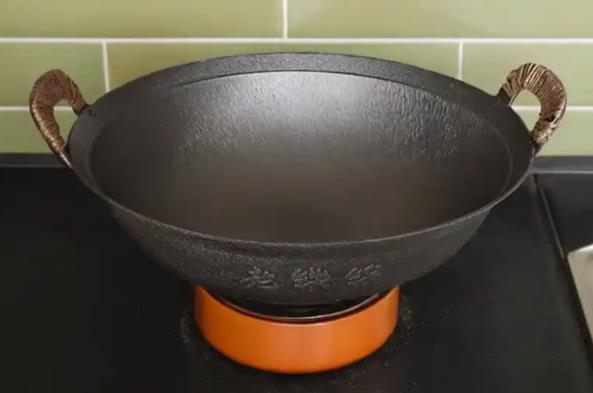
For most beginners, a long handle or a long handle with a helper handle is the most convenient.
Match the wok to your stove
Different stoves have different requirements.
| Stove type | Recommended bottom | Notes |
|---|---|---|
| Gas stove | Flat or round | Check flame coverage for round woks |
| Induction cooktop | Flat | Must be induction-compatible |
| Electric cooktop | Flat | Heats more slowly |
| Portable/outdoor stove | Flat, lightweight carbon steel | Check stability and weight |
If you use an induction cooktop, always check that the product is labeled as induction-compatible. A round-bottom carbon steel wok usually will not sit properly without a wok ring.
Maintenance comparison
Maintenance is one of the most overlooked factors.
- Carbon steel: needs seasoning, drying, and light oiling; lasts many years with care
- Non-stick: low maintenance, but avoid metal utensils and high empty heat
- Cast iron: needs seasoning; heavy but durable
- Stainless steel: easy to clean, but stir-frying requires more heat control
If you do not want to learn seasoning, choose a non-stick wok. If you want a traditional Chinese wok, carbon steel offers excellent value.
Budget tips
Wok prices vary widely. Beginners do not need to buy the most expensive option first.
- On a budget: start with an affordable carbon steel or non-stick wok
- Long-term use: carbon steel is worth learning to maintain
- Low maintenance: non-stick is easier
- Braising and frying: consider cast iron
One wok does not need to do everything. Many households use one wok for stir-frying and one pot for soups or stews.
Frequently asked questions
What is the best first wok for beginners?
If you want low maintenance, choose a non-stick flat-bottom wok. If you want a traditional Chinese wok, choose a flat-bottom carbon steel wok.
Do round-bottom woks require a gas stove?
Not always, but they are unstable on induction and most electric stoves. Use one only if your stove supports it or you have a wok ring.
Is carbon steel better than non-stick?
Neither is perfect. Carbon steel is more durable and better for high-heat stir-frying. Non-stick is easier to use and clean.
Do I need to season a wok?
Carbon steel and cast iron woks usually need seasoning. Non-stick and stainless steel woks do not.
Can I use a stainless steel wok for Chinese cooking?
Yes, but it requires more attention to heat and oil. Beginners may find food sticks more easily.



There are no comments yet, come and comment~