
If Peking Opera is the majestic giant of Chinese theatre, then Yue Opera is its gentle counterpart from the water towns of the south.
Yue Opera, or Yueju in Chinese, originated in Shengzhou, Zhejiang Province. It is the second-largest traditional opera genre in China, popular across Zhejiang, Shanghai and Jiangsu, and performed by audiences overseas. It focuses on singing rather than acrobatics. Its melodies are clear and tender, its stories dwell on love and the human heart, and its stage style is fresh and understated. Because early troupes were made up almost entirely of women, it is often called “women’s Yue Opera.”
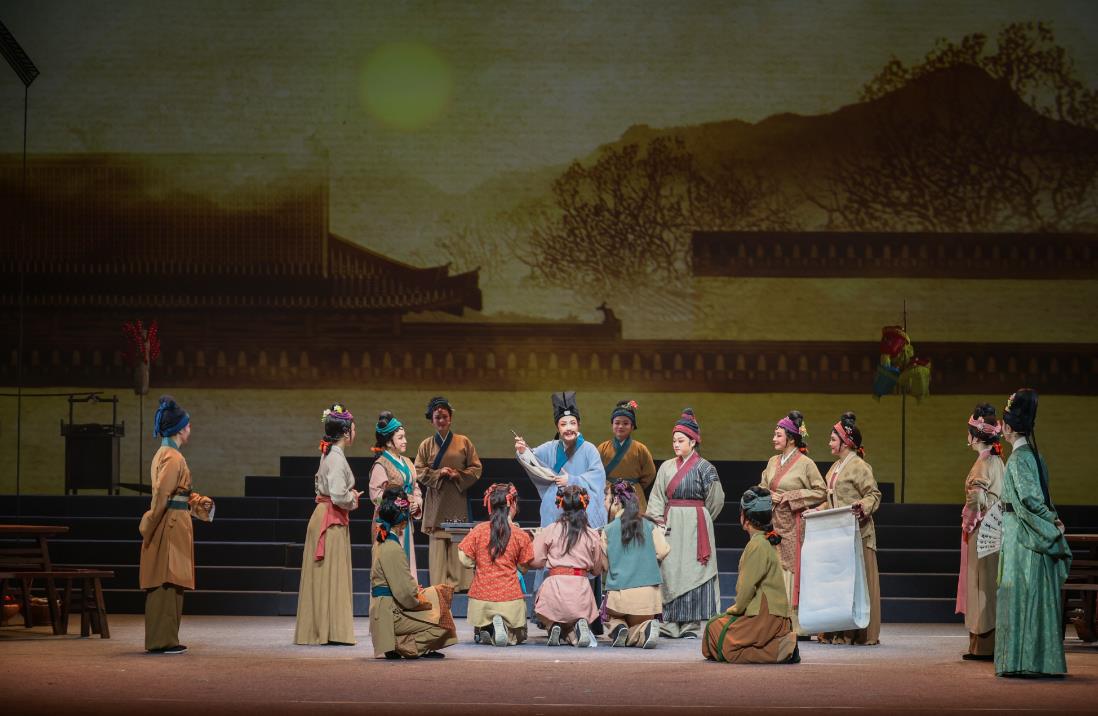
For foreign audiences, Yue Opera is usually easier to enjoy than Peking Opera. The tunes are beautiful, the plots are straightforward, and the emotions feel immediate. Many people fall in love with Chinese theatre for the first time through a single Yue Opera aria.
How Yue Opera Began
From Field Songs to Shanghai Stages
At just over one hundred years old, Yue Opera is very young by the standards of Chinese theatre. Its birth can be traced through four stages.
Step One: Storytelling in the Villages
In the late Qing Dynasty, farmers in Shengzhou would travel from village to village during the slack farming season, telling and singing stories. Tapping bamboo clappers and singing in their local dialect, they performed folk tales and romances between scholars and beauties. This form was called luodi changshu, or “storytelling on the ground,” and it is the earliest ancestor of Yue Opera.
Step Two: The Small Song Troupes
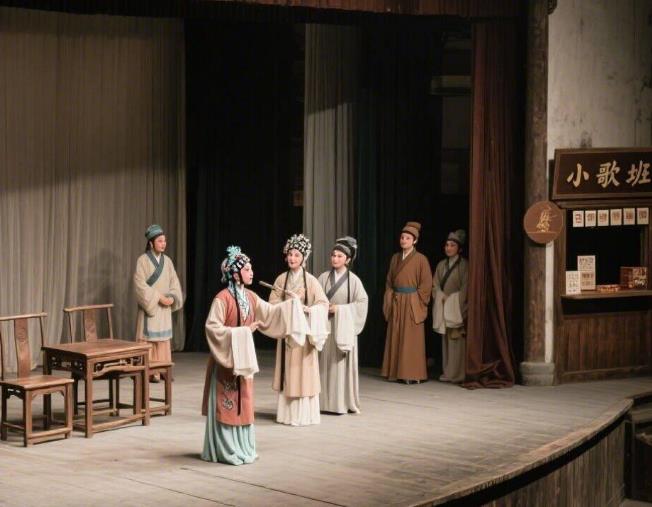
Around 1906, some performers turned this storytelling into staged acting, with roles, costumes and movement. These groups were called xiaogeban (“small song troupes”) or duduban — named after the du-du sound of their percussion. The productions were still simple, often performed in ancestral halls or on grain-drying grounds.
Step Three: Entering Shanghai
In the 1920s and 1930s, these small troupes moved into Shanghai. The city’s theatres, newspapers and sophisticated audiences helped Yue Opera grow fast. It borrowed scene divisions from spoken drama, refined body movements from Kunqu, percussion patterns from Shao Opera, and began using painted scenery and electric lighting. Slowly, a distinct style took shape.
Step Four: The Rise of Women’s Yue Opera
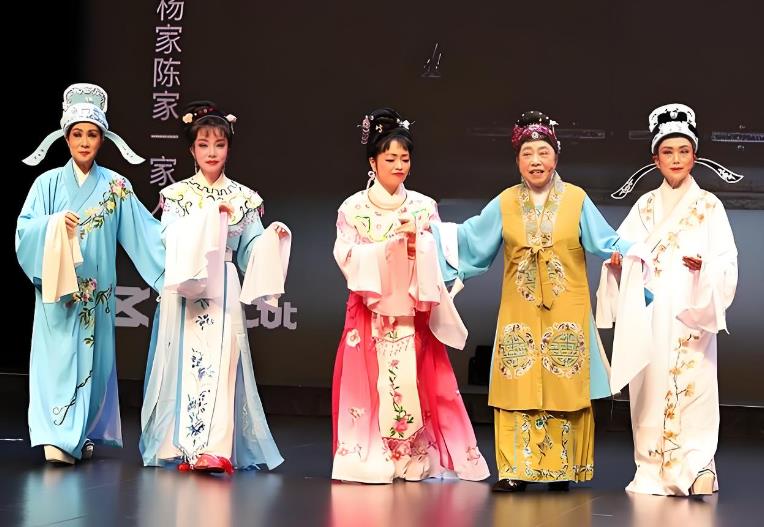
In 1923, the first all-female training class was founded. The actresses’ bright voices and elegant appearance won over audiences quickly. By the 1940s, women’s Yue Opera had become the mainstream — and it remains so today. This is the art form’s most distinctive mark.
The Performance Style of Yue Opera
Singing Above All: Every Emotion Lives in the Voice
Unlike Peking Opera, which gives equal weight to acting and combat, Yue Opera moves people primarily through song. Its vocal lines are lyrical and expressive, especially skilled at conveying joy, longing and sorrow hidden inside a character’s heart.
The Main Melodic Modes
- Sigong mode (sigongdiao): an early basic tune, bright and lively, carrying a strong rural flavour.
- Chi mode (chidiao): the principal mode after Yue Opera matured. It flows gently and suits melancholy, lingering emotion best. It is still the most commonly used mode today.
- Xiandiao mode (xiandiao): lower in range and deeper in mood, used mostly for scenes of grief or despair.
A Garden of Schools: One Role, Many Colours
As Yue Opera developed, individual artists created their own interpretive traditions, known as schools or liupai. This is one of the genre’s greatest treasures. Well-known schools include:
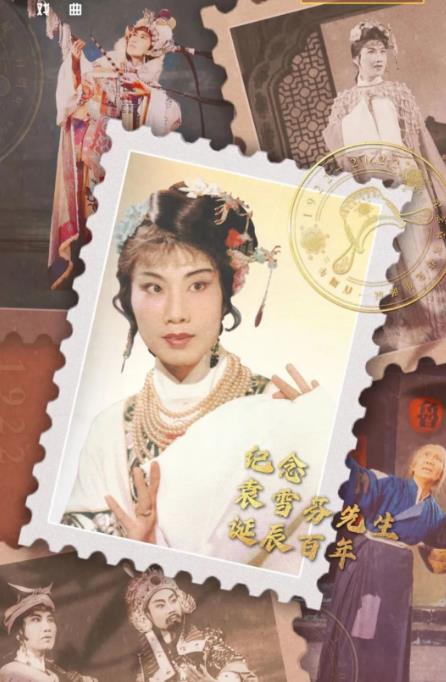
- Yuan school (Yuan Xuefen): plain and profound, with sincere feeling. She is regarded as a pioneer of Yue Opera reform.
- Yin school (Yin Guifang): rich and lasting, graceful and deeply affectionate. It is the most influential school for young-male roles.
- Fan school (Fan Ruijuan): broad and steady, with a rare masculine strength.
- Fu school (Fu Quanxiang): colourful and changeable, expert at portraying women’s complex inner lives.
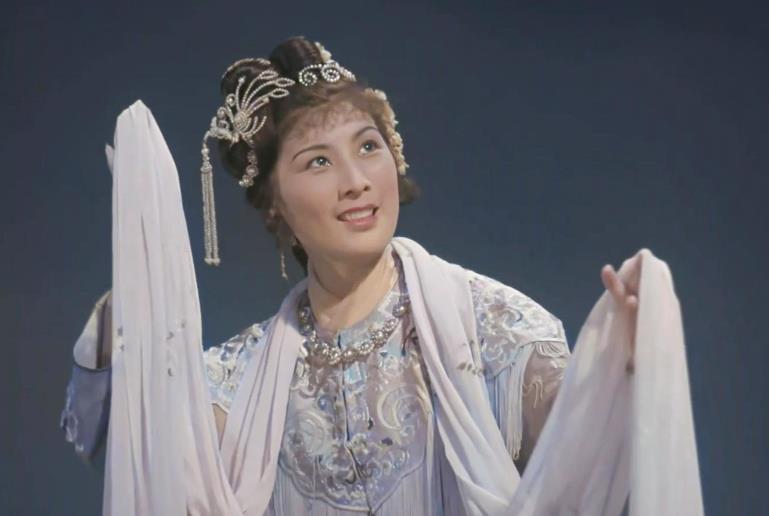
- Xu school (Xu Yulan), Wang school (Wang Wenjuan), Qi school (Qi Yaxian) and Zhang school (Zhang Guifeng) each bring their own character.
The same scene from Dream of the Red Chamber sounds entirely different depending on the school. That is why devoted fans never tire of listening.
Stage Aesthetics: Light, Suggestive, Poetic
Yue Opera does not aim for spectacle. It aims for beauty and feeling.
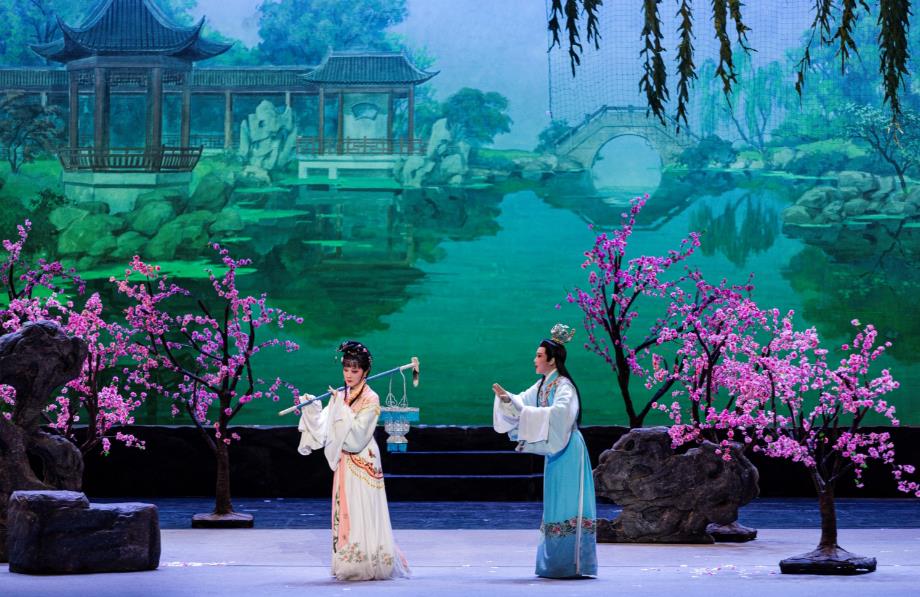
- Scenery: A table and two chairs, a window lattice, a willow branch — set against ink-wash backdrops that evoke the poetry of Jiangnan.
- Movement: Soft, flowing body work. The flutter of long silk sleeves carries a含蓄 Eastern grace.
- Music: Built around the erhu, pipa, dizi and other Chinese instruments, the melodies wind gently and feel warmly familiar.
Roles and Character Types
The Young Scholar and the Young Lady: Yue Opera’s Twin Hearts
Yue Opera uses fewer role categories than Peking Opera. Two types sit at the centre.
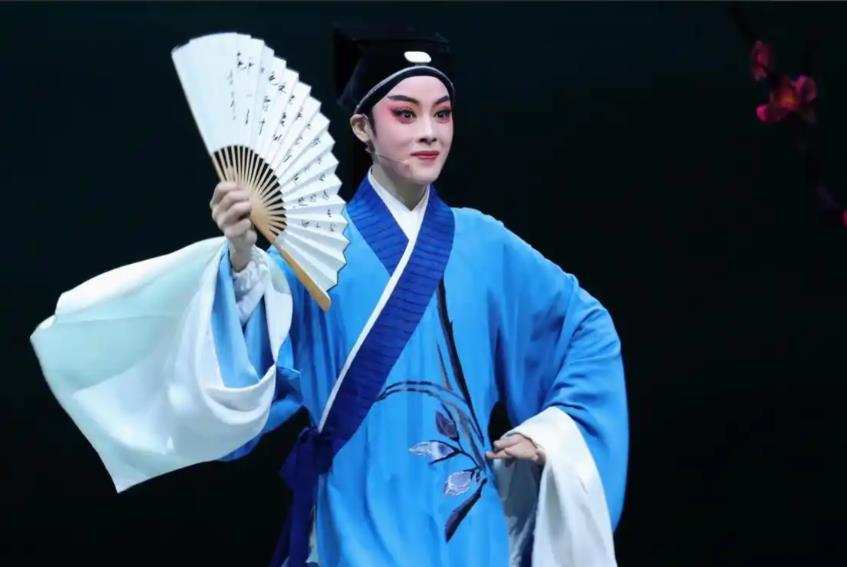
Xiaosheng — The Young Male Lead
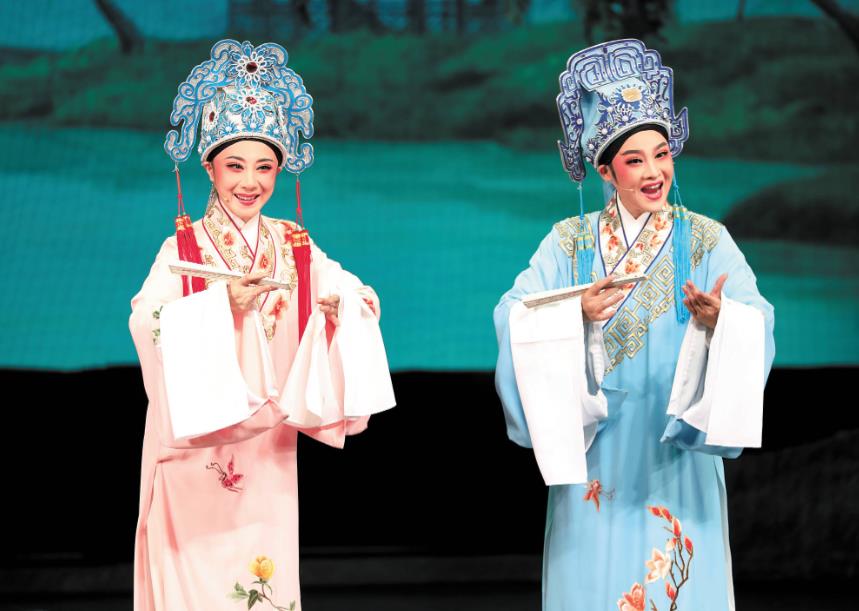
The young scholar is played by a woman. Rather than imitating a man’s voice, the actress blends chest and head voice to create a tone that is clear yet tender — neither fully female nor fully male. This unique sound has captivated generations of listeners.
Huadan — The Young Female Lead
The young lady is performed with delicate precision. A glance, a turn of the head, the pause before a reply — each can carry what words do not.
Older men, older women and comic roles also appear, but they take smaller parts. Yue Opera keeps its focus firmly on emotion.
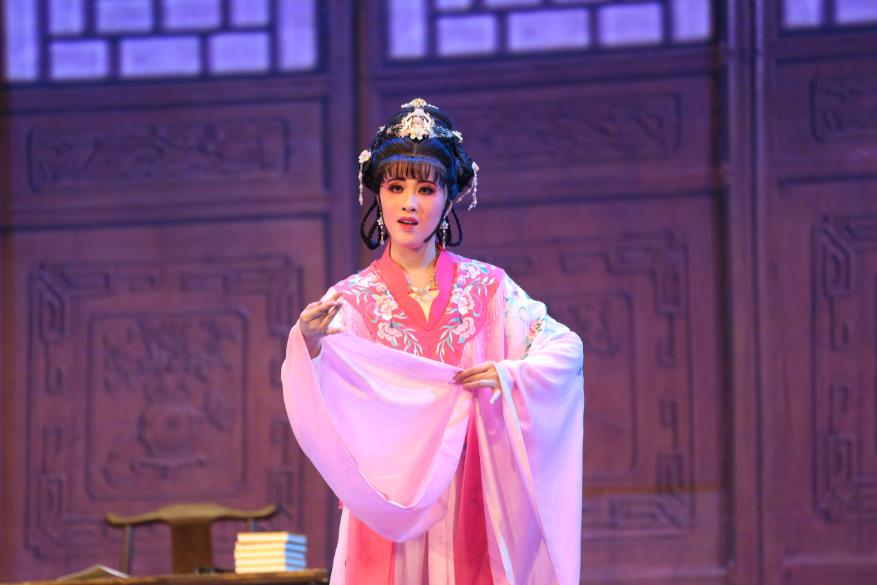
Why Are All the Performers Women?
This grew from circumstance: early training classes recruited mostly girls from poor families. Later, audiences discovered that actresses playing scholars combined heroism with gentleness, while their portrayals of young ladies felt natural and moving. Over time, “women playing men” became tradition — and the art form’s most enchanting feature.
Today there are experiments with mixed-gender casts, but women’s Yue Opera remains dominant.
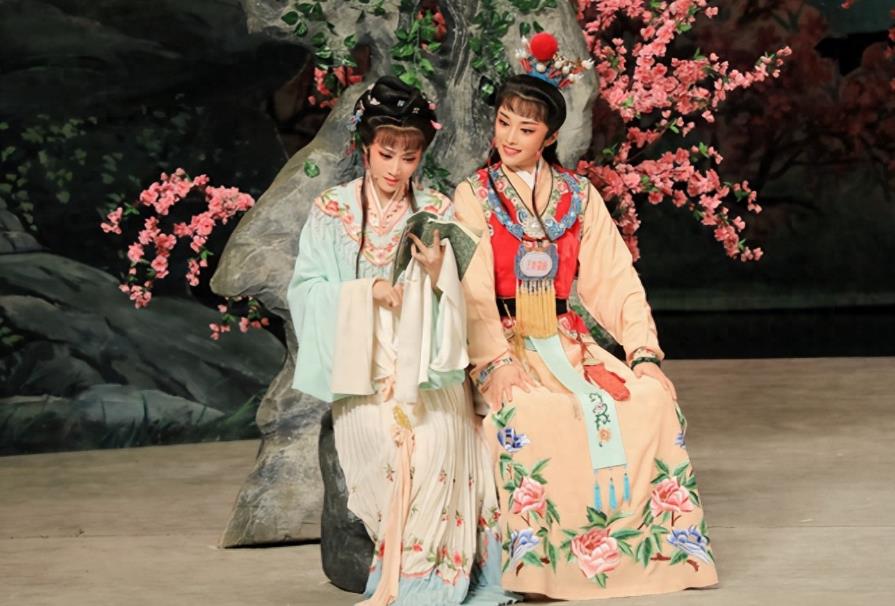
Costumes and Makeup
A Lighter Kind of Beauty
If Peking Opera’s look is a bold oil painting, Yue Opera is a wash of watercolour.
- Makeup: No painted faces. Instead, a light, natural makeup with clear brows and soft lips, so the audience can read every change of expression.
- Costumes: Pale pinks, blues, whites and soft greens, with fine but restrained embroidery. Scholars wear plain long robes; young ladies float in layered skirts and jackets.
- Headdresses: Simple and pretty — pearl flowers,绒 balls, dangling hairpins that tremble with each step.
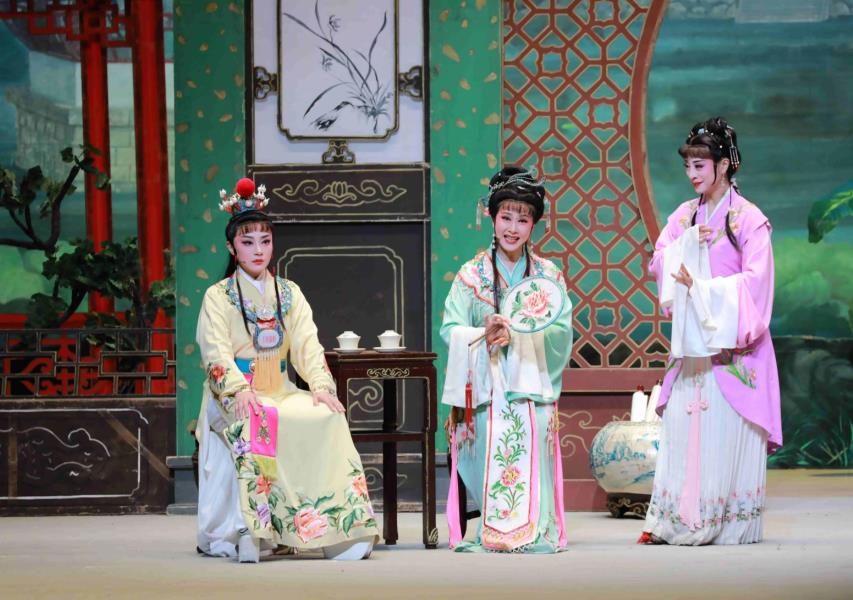
This clean, fresh style suits the love stories Yue Opera tells, and it makes the visual language easy for modern and international audiences to appreciate.
Classic Works to Start With
Butterfly Lovers (Liang Shanbo and Zhu Yingtai)
China’s most famous love story, often called the Eastern Romeo and Juliet. Zhu Yingtai disguises herself as a boy to study, spends three years beside Liang Shanbo, and finds a love that fate will not allow. In the end the two transform into butterflies. This is Yue Opera’s signature work, and the “butterfly transformation” scene is unforgettable.
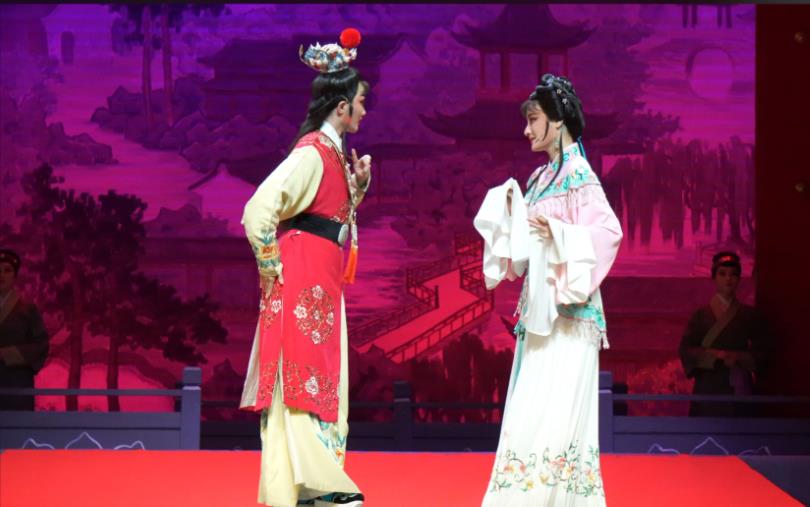
Dream of the Red Chamber
Adapted from the great classical novel. Wang Wenjuan’s Lin Daiyu and Xu Yulan’s Jia Baoyu are classics for generations of viewers. Scenes such as “Daiyu Buries the Flowers” and “Burning the Manuscripts” are heart-breaking.
The West Chamber
The story of Cui Yingying and the scholar Zhang Sheng, who break through rigid convention to be together. Beautiful words, beautiful music, beautiful people.
Xianglin’s Wife
Based on Lu Xun’s story The New Year’s Sacrifice, this is a landmark of modern Yue Opera. It proved the genre could speak about society, not only about romance.
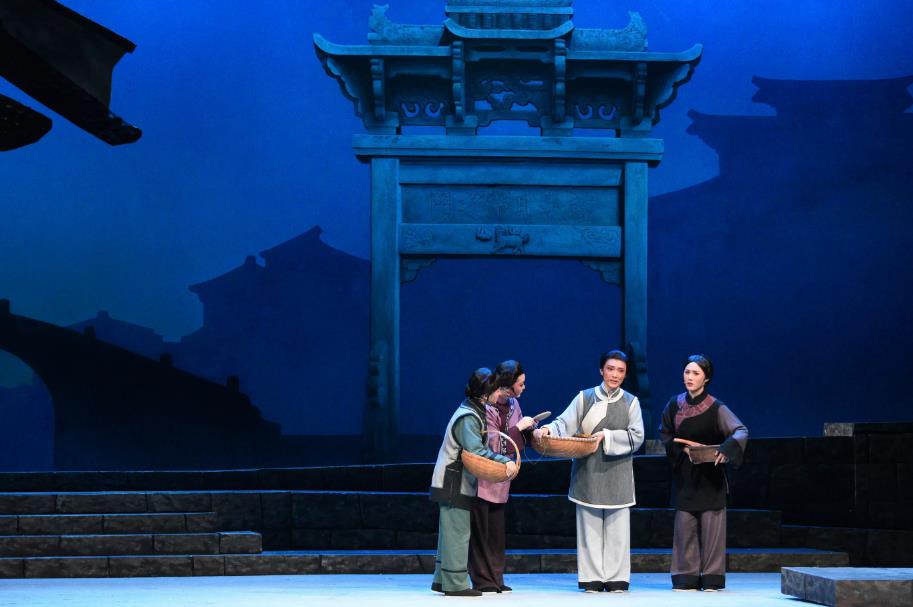
Five Daughters Offering Birthday Greetings / Lu You and Tang Wan
The first is warm and lively, the second quietly sorrowful. Both remain staples of the contemporary stage.
Why Yue Opera Deserves a Global Audience
A Window into Chinese Emotion
Yue Opera tells ancient stories, but what it really carries is a Chinese understanding of love, family, loyalty and fate. It is restrained and indirect, yet deeply felt — which is the very heart of Eastern aesthetics.
A Rare Female Perspective
In a genre where women play men and where women have long formed the core audience, Yue Opera offers an unusual tenderness and equality. Its scholars are devoted rather than domineering; its women are clever and self-possessed. That makes it distinctive among the world’s theatres.
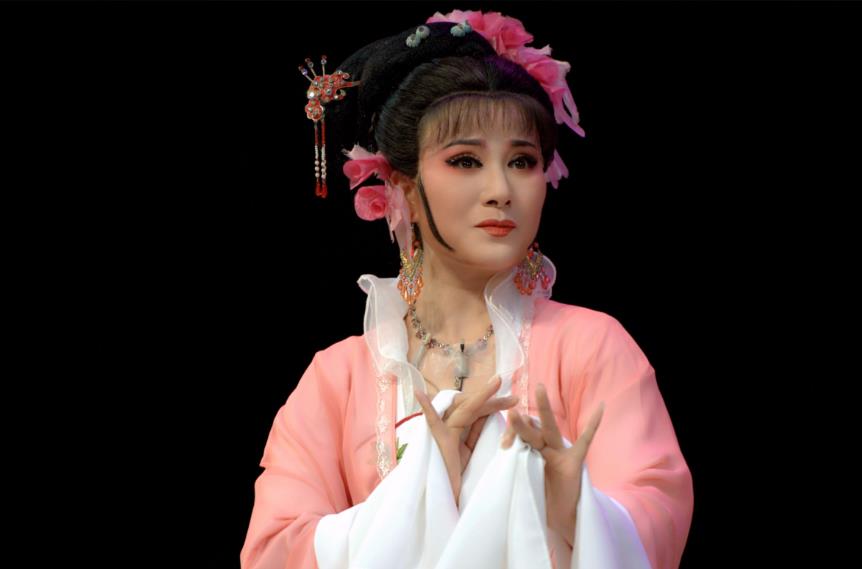
Carefully Protected
In 2006, Yue Opera was included in China’s first national list of Intangible Cultural Heritage. Today, alongside professional companies, countless amateur singers and student clubs keep the songs alive.
Three Tips for First-Time Viewers
- Use subtitles. Yue Opera is sung with a Zhejiang accent. Even Chinese audiences from other provinces rely on subtitles — so don’t worry.
- Start with excerpts. You needn’t begin with a full-length show. Try famous arias such as “A Little Sister Has Fallen from the Sky” or “Seeing Each Other Off for Eighteen Miles.”
- Watch the sleeves and the eyes. Much of Yue Opera’s feeling lives not in the words but in the gestures that hold back.
You may never have imagined yourself enjoying Chinese opera. But give Yue Opera ten minutes. When that clear, tender voice rises, you may hear a kind of beauty that needs no translation.



There are no comments yet, come and comment~